Electric vehicle (EV) assembly with affordable parts from China remains a low-hanging fruit for African countries interested in benefiting from the e-mobility value chain.
In Nigeria, SAGLEV has created a name for itself after partnering with Chinese EV maker Dongfeng to assemble vehicles for the local market.
This partnership is one of the business models helping to build momentum in creating an electric vehicle ecosystem that will build affordable EVs for the Nigerian market. Dr. Sam Faleye is the chairman and CEO of SAGLEV and now joins Njenga Hakeenah to discuss the partnership with Dongfeng and what it means for EV affordability not only in Nigeria but across the continent.
📌 Topics covered in this episode:
- Electric Vehicles as a Solution to Nigeria’s Fuel and Economic Challenges
- Local EV Assembly and Industrial Development
- China’s Role in Nigeria’s Emerging EV Ecosystem
- Business Models Driving EV Adoption in Nigeria
- Infrastructure, Energy, and Scaling Electric Mobility
Show Notes:
About Dr. Sam Faleye:

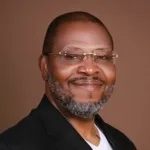
Dr. Sam Faleye is the Chairman & C.E.O. of SAGLEV INC., founder of the Delaware, U.S.A. Incorporated Electric Vehicle Company focused on accelerating the adoption of Zero-Emission Vehicles from ICE vehicles by partnering with commercial and private fleets, as well as individual buyers. SAGLEV INC. is now assembling EVs in Imota, Ikorodu, Lagos. In addition to being a Board-Certified Internist in Private Practice since 1998, he has excelled in Clinical Informatics. He was a Ph.D. Scholar at the University of Tennessee Health Science Center, Memphis, Tennessee. Dr. Faleye holds an M.D. from The University of Ilorin, Nigeria, an MSc. in Informatics from The University of Tennessee Health Science Center, Memphis, TN, and completed an Internal Medicine Residency at Howard University Hospital, Washington, DC. He is Board Certified in Internal Medicine by the American Board of Internal Medicine and was elected a Fellow of the American College of Physicians in 2005.
Transcript:
NJENGA HAKEENAH: Hello and welcome to the Africa EV show. My name is Njenga Hakeenah and today we are heading to Nigeria where one company is trying to tackle three of the country’s biggest challenges at once. There is rising fuel costs, there is urban air pollution and the urgent need for industrial jobs.
Our guest Dr Sam Falaye is the director of SAGLEV, a company with an ambitious mission to accelerate the shift from internal combustion engines to electric mobility in emerging markets. SAGLEV isn’t just importing electric cars, it is assembling vehicles locally, building charging infrastructure and developing an end-to-end ecosystem designed especially for ride-hailing fleets, mass mobility and commercial logistics operators. In a country that spends billions of dollars annually on fuel imports, the price can be high.
And the question is can electric vehicles reduce foreign exchange pressure? Can local assembly build technical skills and strengthen Nigeria’s automotive value chain? And how viable is it to depend on Chinese EV technology while trying to build Nigeria’s manufacturing capacity?
These are some of the questions we are going to answer in this conversation, where we will also explore the gap in Nigeria’s transport and energy ecosystem that SAGLEV set out to solve, why local assembly matters for costs, jobs and skills transfer, the role of Chinese EV platforms and supply chains in making Nigerian assembly viable, the business models, leasing, fleet ownership, partnerships that are actually working, and the biggest barrier slowing adoption today.
Also, what success for Nigeria’s EV industry could look like over the next decade. So now let’s get into it with Dr. Sam Faleye. And hello, Sam Faleye.
DR. SAM FALAYE: Yes, yes, absolutely. Thank you so much for having me.
NJENGA HAKEENAH: And it’s amazing that Nigeria is becoming one of the hotspots, you know, like Kenya is doing with electric mobility. Then Ethiopia has kind of, you know, sprinted and left everyone else behind, including developed nations, in terms of electric policies and whatever they are rolling out. But Nigeria is a mix of many things.
And one of the paradoxes is that you’re an OPEC member, but you import fuel. And this, coupled with the challenges of mass mobility, makes the transport sector an interesting mix of opportunities and challenges. Now, SAGLEV’s mission is to accelerate the transition from ice or internal combustion to electric mobility in emerging markets.
Nigeria is one. What specific gap in Nigeria’s transport or energy ecosystem were you trying to solve when you founded the company?
DR. SAM FALAYE: Well, thank you very much. That’s a great question. The truth is, what we wanted to do was understand that the problem is not just about the cost of fuel or greenhouse gas emissions.
The truth is, in Africa, the electric vehicle story is very much about economics, not just social and climate. So we thought that, yes, you know, the developing countries have their economies pretty much on the back of the emerging markets. But we thought that the cost of power became a big issue.
We had anticipated it because, obviously, Nigeria was literally going bankrupt with the fuel subsidy. So Nigerians, for years, were not paying the true cost of fuel. So it was obvious to us that at some point, Nigerians will start paying the true cost of fuel.
And we thought, oh, my God, that would be a calamity that would need to be addressed emergently. So that was one thing we wanted to solve. But if you remember, to solve the economic challenges, you have to solve the problems of the total cost of ownership.
It’s not just about power. It’s about the maintenance cost. And it’s also about technology transfer.
And then, after technology transfer, the durability of the product. It just turns out that the electric vehicle ecosystem, like I tried to refer to it, solves a lot of these problems. So it’s not just about solving one problem.
And we thought this was an excellent example of where you can touch on many parts at the same time. So that’s what we set out to solve.
NJENGA HAKEENAH: Nice. And I think the problems that are in Nigeria’s e-mobility sector are the same ones that we have in Kenya. Because you find, apart from the fact that we are not producing oil as yet, the same issues that you guys are having to deal with are the same ones.
And so I think, as you are formulating solutions, these can be replicated in the different African countries. Because we don’t need to reinvent the wheel. If it works in Ethiopia, it can probably work in Kenya and Nigeria as well.
And so I think there are solutions that can be copy-pasted. And then there are others that we have to build and localize. Because we also have to be specific to the markets that we are in.
And I think, let me latch onto that and mention that Mozambique is now processing graphite, which is used in the manufacture of batteries, I think the anodes. So the conversation that has been is, can African countries process the natural resources that they have? And I think the fact that Mozambique has started, well, they’re working with the Chinese, but the fact that they have that happening, it means that we have to push for this to happen.
Because the beneficiation of the EV value chain is still extracting from African countries and bringing back those same resources priced 10 times, 100 times over what was acquired from this country. So I think, like you’re saying, it’s going to change. I think we need a reference point.
And I think Mozambique is becoming one of those. Because battery, I think, is the most complex thing to produce for an EV, right?
DR. SAM FALAYE: Yes, the battery is complex, but I look at that with the benefit of my understanding of the automotive supply chain and all the things that have happened before that supply chain even came into being. So yes, it is my wish that we manufacture batteries. It is my wish that the batteries going into the EVs that are used on the continent are manufactured here.
I also understand some nuances of the supply chain. For instance, yes, CATL is the number one battery manufacturer. Then you have CABT and LG, Samsung, all these other companies.
The truth is that an electric vehicle battery is not an electric vehicle battery. What I mean is you have CATL that manufactures electric vehicle batteries for many countries, but you still cannot take a battery from a Tesla and put it in a Geely or a Chang’an or, you know, Avatar, Dongfang. You still can’t do that.
And the reason is that, look, people who start these industries are businessmen who sought for funds and invested upwards of 300, 400 billion dollars in this industry. Therefore, there are patents. They are not going to say, OK, Africa has graphite.
Well, they have graphite in China, too. They’re not going to say, OK, look, we have to make batteries here. Well, if we have four brands of EVs in Mozambique and another four brands in Nigeria, but the market is a total of 10 million dollars, look at what they’ve invested.
So I think that is a gradual process thing. And what I tell people is we have to be realistic. However, that does not mean that we do not insist that value is added to our products, which means what we need to do is rather than supply lithium, rather than supply the graphite, we can say, OK, here’s CATL, we want this much value added to our product so that what we get is 40, 50, 30 cents on a dollar instead of 10 cents.
So in terms of the automotive sector, I think that’s going to be a while. Now, with the growing middle class in Africa, look, most people are simply going to acquire electric vehicles. Look, anybody acquiring a new electric vehicle in Africa now is clear.
It’s not necessary; it’s not likely going to acquire a new internal combustion engine vehicle. Electric vehicles just bring too much value to the table. However, I think the opportunity in battery manufacturing is in grid stabilization and battery energy storage because you can certainly manufacture those batteries on ground and you can use them on ground.
The solar energy industry in Nigeria is massive. Why is it massive? And it’s growing, not even linear, it’s growing exponentially.
We’re talking logarithmic growth. And the reason is that we also have sometimes a problem can become an advantage, but you have to realize that our grid in Nigeria, 240 million people, the grid is just terrible. Even though we can generate power, we can’t transmit it, which means that solar is taking off exponentially here because we have a bad grid.
But that also means that we have a massive opportunity to develop our battery technology. And in the EV ecosystem, where the battery storage and EV ecosystem meets, is in developing battery energy storage and solar for charging. That is still expensive, but we have to have a critical mass of vehicles to make that economically viable.
But that opportunity is there. So, in battery energy storage, we have the ability to now look at smart grid systems and grid stabilization with battery energy. So, we actually have an interesting opportunity to build smarter.
So, that is the way I look at it. There is a lithium plant that has signed a contract here. Electric vehicle manufacturers are already looking.
So, I think people like SAGLEV are just the very tip of the spear. Regardless of what SAGLEV does, we are not going to satisfy the electric vehicle hunger that Nigeria already has. So, I think there’s opportunity here.
It’s a very interesting discussion. In fact, it could be a two-hour discussion by itself. But I think we need to start by insisting on increasing the value we are adding to our minerals.
And we can insist. Okay, look, you have to develop part of the battery here and you can go finish it up there. You have to develop it up to oxide and the cathode, and then you can go finish it up.
At least we’re adding value to what we get. And that is going to change because when it comes time, we are going to be consuming a lot more battery energy storage products than the rest of the world. We have the growth, we have the population, and middle class is rising in Africa.
So, this is the future. A lot of people in business will tell you if you’re not in Africa right now, you’re totally missing the point.
NJENGA HAKEENAH: You’re working with Dongfang. Is there a reason for this?
DR. SAM FALAYE: Well, yes, there is a reason for this. When we started this, frankly speaking, everybody told us this can never be done. There is no electricity in Nigeria.
You cannot use electric vehicles in Nigeria. We had to really convince Dongfang that this was possible. Don’t forget, Dongfang has been dealing with heavy equipment trucks in Nigeria for 40 years.
They know the ground. So, when we went to them, they said, look, we know Nigeria, we don’t think this thing can work. But we said, okay, just give us access.
We started working with one of their subsidiaries. I think somewhere along the line, somebody called Dongfang and said, did you know that somebody is building and selling electric vehicles in Nigeria? So, they said, oh, we know that guy.
But the biggest reason is also that I bought my first electric vehicle in 2012. So, I’m not new to the—I still partly live in the United States. I am a dual citizen.
I practiced as a physician for many years in the United States, over 28 years. So, it was clear to me that somewhere along the line, at some point, there were over 220 to 230 electric vehicle manufacturers in China alone. I said to myself, oh, my God, some of these guys will not survive.
Within two years, probably 20 of them just disappeared. In fact, some of the OEMs we were talking to actually, frankly, disappeared. So, I said, okay, we don’t want to go into this thing and not work with somebody that has staying power.
Well, Dongfang is owned by the Chinese government. They are the number three, number four largest automotive manufacturer in China. They are technically—Dongfang is what I refer to as second autoworks, after FAW, first autoworks.
So, we specifically were targeting Dongfang because I said they are not going anywhere. Dongfang is going to always be there. So, that was important, to secure an OEM that would always be there, can give you stability, can back you with technical support, after-sales support, and Dongfang has been wonderful.
Listen, one thing that I want to start letting people know is that when you buy a vehicle that SAGLEV has manufactured or assembled in Nigeria, that electric vehicle has the same warranty as it would have had if that vehicle was bought and driven in China. You know who’s responsible for that? The power of Dongfang.
So, Dongfang was already ahead of where China is at January 2026. We were able to tell them, look, we know we’re just this tiny company, but this is what we want. And they were able to deliver that.
And today, people already now realize that, oh my God, you know, this is where if you want this, this is where you go and get it. So, yeah, so those were the reasons why we said, okay, we don’t, we want a solid OEM. We don’t want any fluff.
We want somebody that can back us up. And it turned out that, you know, sometimes great companies start with experiments. This is going to pay back to Dongfang over the next few years, because this is going to be a solid Dongfang market.
It’s just as simple as that. It’s going to allow them to compete.
NJENGA HAKEENAH: And so, I think we can now move on to your aims as a company, one of which is to provide end-to-end electromobility infrastructure for all fleets, you know, ride-hailing, logistics, and other operators. What are the business models that are in Nigeria proving that this is what is most sustainable for EV adoption right now? Could it be leasing?
Could it be ownership? Could it be partnerships?
DR. SAM FALAYE: Well, we have a new ecosystem that is developing. I think a lot of what is going on is probably private-driven. In Nigeria specifically, there has been this emphasis on CNG and using our gas resources.
Therefore, it sounded like the government was not that interested in electric vehicles. And if you talk to them, they will say, no, no, no, no, no. We are interested in that.
So, what business models work? First of all, while we are interested in being end-to-end in the entire ecosystem, we are not an electric vehicle charging company. We are only involved in electric vehicle charging to the extent that our users and buyers are able to charge their electric vehicles.
So, that means in ride hailing, yes, a lot of drivers may not have access to, you know, public electric charging. But what we have done is we have our own proprietary electric vehicle that we have developed and now testing that can actually charge at home from a 220-13 amp circuit safely. And that product does not need to rely on the public grid, even though it can charge in a public grid with an adapter.
But our charging interest is in a fleet-based approach because 80 percent, we make sure you have access to a charger for our private buyers. But for the business fleets, we partner with them to do charging. Then they have an option to look at.
But we are not a charging company because charging in the urban centers, particularly Lagos, Abuja, Patlicano, Port Harcourt, there are chargers. So, public charging is taken off. That is not our forte.
So, those are the business models. As far as charging, the business models are usually fleet-based. Public charging is taken off.
The business model of actually having an OEM-provided charging, like what Tesla is doing, where you buy your supercharging with your vehicle, we don’t have that yet. So, that model is not prevalent. In ride-hailing, it’s really the drive to own because the biggest challenge by far is still financing.
A lot of the fleets will be privately owned. The government is looking at electric mobility, but the public funding for that is still very problematic. So, a lot of it is private industry-led and probably will be for a while because the government has a process they want to.
I don’t blame them. All I say is that, yes, in Nigeria, with the CNG focus, electric mobility is going to need power for charging. The other concern is that the average, if I want to put in DC chargers, a 121-80 kilowatt charger is going to rely on probably a 300 kVA generator, just by doing the math and leaving out redundancy.
Those generators can be 6X to 10X gas versus diesel, which means, practically, we’re still going to be burning a lot of diesel. But we have modeling that shows we’re going to be reducing greenhouse gas emissions. So, these are the models directly to answer your questions that are prevailing.
But a lot of our corporate fleets are bringing on EVs. We’re getting questions all the time. And the most exciting thing is banks are now coming around to say, OK, how can we fund electric vehicles?
And why are they doing that? Because their customers are asking. OK.
NJENGA HAKEENAH: That’s interesting because I think a few years ago, awareness was something that was limited, especially when it comes to electric vehicles. But now, if a bank can come to you and tell you, hey, we need this because we have customers that are interested in this, it shows you that these conversations are happening and people are gaining interest. Wow.
That is huge.
DR. SAM FALAYE: Over five. That’s huge because really… That also tells you that the bankers are talking about this.
NJENGA HAKEENAH: Definitely.
DR. SAM FALAYE: That’s important.
NJENGA HAKEENAH: It is important and it shows you that, like you mentioned earlier, that there are several opportunities. If you’re not in Africa now, you’re missing out and you will be missing out big time if you don’t get here soon. Yeah, we have to make this happen.
And my question, like on the AFCFTA and other cross-border agreements and policies. Is it that these people who are in charge of this do not know? Or are they beneficiaries of the inefficiencies?
Because why should it be cheaper for me to import from Europe, from the Americas, wherever, but not from the neighboring Uganda or Tanzania, for instance?
DR. SAM FALAYE: Okay. Look, I’m just a scientist and a businessman. Some of those questions are above my pay scale, pay grade.
But I have to tell you that, look, if you’re in the United States and you’re talking to an American who is not very well-traveled, when they talk about Africa, they think Africa is one country. What they don’t realize is that this is a very, very heterogeneous country. So, we have our own competitive forces and, look, everybody wants to develop their own EV ecosystem.
So you have 52 EV ecosystems that are trying to develop. The winners are going to be the people that have the market, whether you like it or not. So at the end of the day, we all have one vote in ECOWAS and in the African Union, but that economic power is not the same.
So, again, you know, reality is very powerful, but politics is going to play very heavily. But, yeah, if I manufacture a vehicle here in Nigeria and I wanted to export it to Ghana, there are things in ECOWAS, the ETS, that should ordinarily, but I’m going to have so many problems. We had vehicle fleets in Ghana that we had paid full duties for in Ghana and still got into Nigeria and paid import duties to get them in.
Okay, so, you know, and the first time I had the former president of AFDB said something at a speech that it is actually more expensive to move things within Nigeria than to move things from Europe or China here. So, we have this ecosystem and economy that is so import dependent that it is so easy to import, but doing trade within Africa is so difficult. So, these are some of the problems that we have to solve.
But even for us, we have to satisfy that demand. So, our strategy specifically was built from day one. We might have a big, massive assembly plant in Nigeria, but we are still going to have micro, our actual business case is for micro factories in every country.
So, we are going to have a micro factory in Ghana, micro in, you know, and that can satisfy because those economies are only willing to give you import duty concessions to make the EV affordable by manufacturing on ground. They don’t want to hear, oh, I manufactured this car in Nigeria or in Ghana. And now, no, they ask you, why can’t you assemble it here?
So, a lot still has to happen along those lines.
NJENGA HAKEENAH: Thank you so much for this conversation. It’s been very eye-opening. We can have it for days and still not exhaust.
DR. SAM FALAYE: Oh, yeah. This is a very interesting topic. It’s, you know, it’s nice to do something you actually fell in love with.
So, that is my own, what I benefit from this, and I truly feel I’m contributing something. So, yeah.
NJENGA HAKEENAH: Nice. So, that is a Mr, actually Dr. Sam Falaye, the director of SAGLEV, laying out a vision that goes far beyond selling electric vehicles. Now, if SAGLEV’s strategy works, electric mobility in Nigeria wouldn’t just be about cleaner cars.
It could mean local assembly lines, new technical skills, stronger automotive supply chains, and reduced dependence on imported fuel and imported fully built units. It could also mean rethinking how fleets are financed, how charging infrastructure is deployed, and how emerging markets participate in a global EV industry that is still largely shaped by China. The road ahead isn’t simple.
Financing gaps, infrastructure bottlenecks, policy uncertainty, and consumer awareness all remain real barriers. But as we’ve heard today, companies like SAGLEV are betting that those constraints are also opportunities to build an African-centered model of electric mobility from the ground up. If you enjoyed this episode, subscribe, share it with a colleague, and join us next time as we continue exploring how e-mobility is reshaping jobs, industry, and development across the My name is Njenga Hakeenah and I hope to see you again soon.