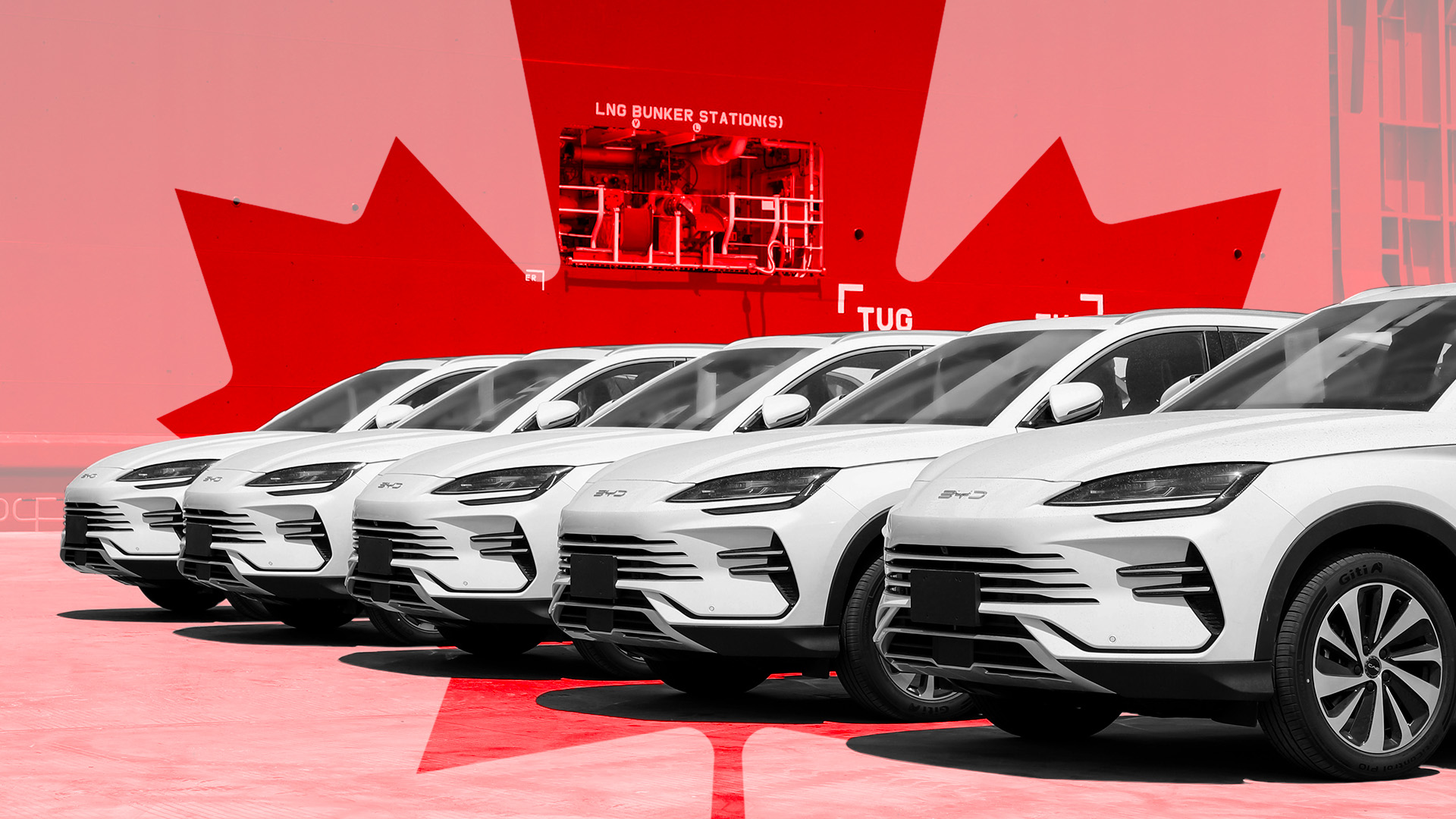
The United States ambassador to Canada said Canadian-made vehicles are not a target of Washington’s trade agenda and that the real threats to American auto manufacturing come from China and three other countries.
Speaking with Canadian outlet Rebel News, Ambassador Pete Hoekstra also warned that the 49,000 Chinese-made EVs Canada has agreed to import annually under a trade deal with Beijing will not be permitted to cross into the United States.
“Canada is not our problem with autos,” Hoekstra said, noting that the bilateral auto trade deficit runs at approximately 400,000 to 600,000 vehicles per year in Canada’s favour.
“To fix the car issue in the US, our biggest threats are from Korea, Japan, Mexico. And then we’ve got to figure out what we’re going to do with China, because that’s the biggest threat.”
Factory Closures
Asked directly whether it is inevitable that Canadian car factories will be repatriated to Michigan, Ohio, and other US states, Hoekstra said: “That’s not inevitable.”
He argued that Canada has a strong case to make to Washington’s trade negotiators.
“Canada can make a compelling case… you are integrated. You have personal relationships between suppliers and customers in Canada, from Canada into the US and vice versa. And you’re reliable,” Hoekstra said.
“That’s a really, really compelling case as to why Americans should be doing business with Canada.”
However, he suggested that Canada’s political class is undermining that case.
“And what we hear from Canada is, you know, we’re at war with the United States. We’re banning your alcohol. We’re banning you from procurement,” he said. “That’s an approach you can take. But… I’ve been in the meetings.”
Chinese EVs and the 49,000 Quota
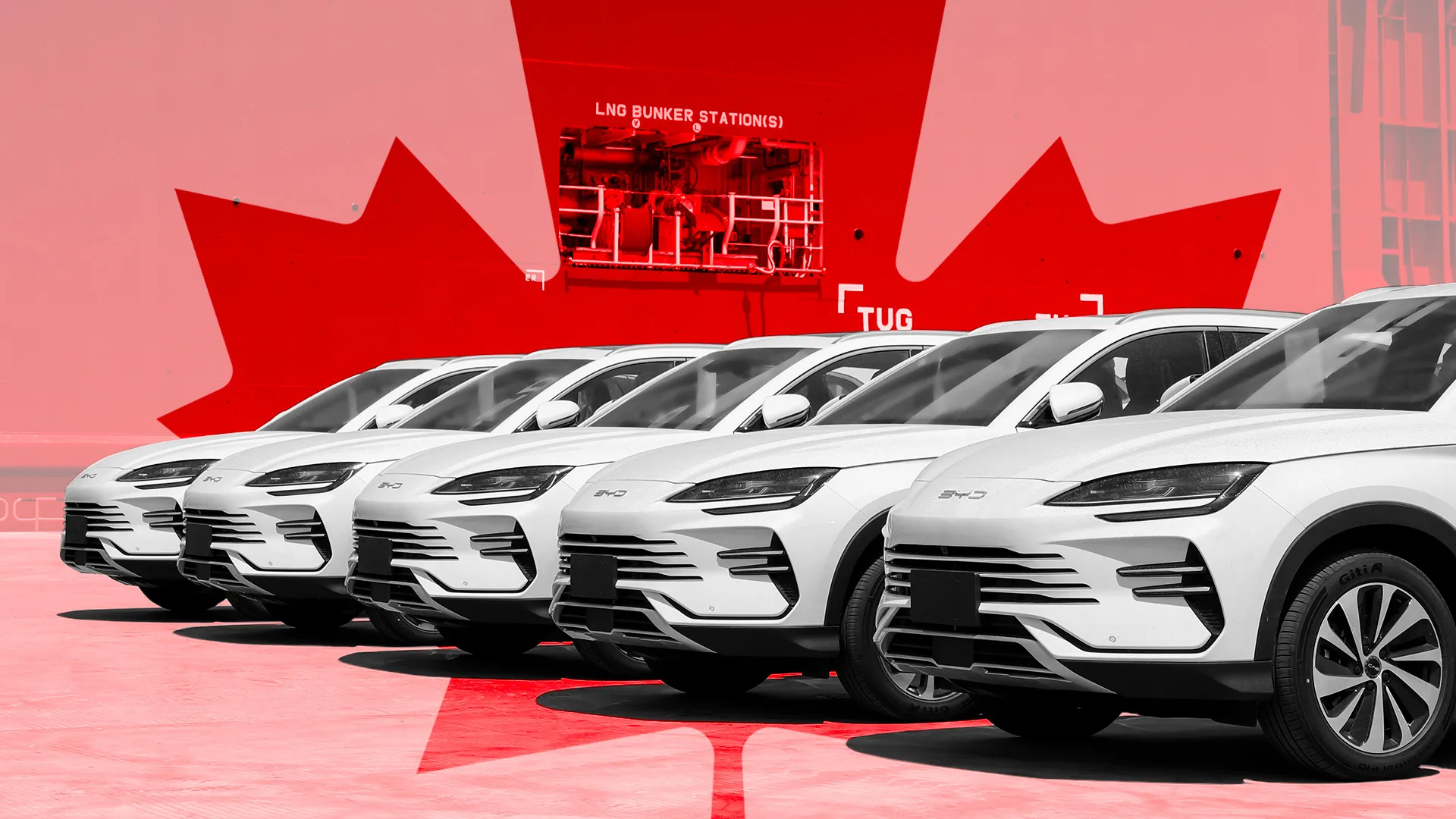
Hoekstra addressed Canada’s January trade deal with China, under which Ottawa agreed to allow up to 49,000 Chinese-made electric vehicles into the country annually at a 6.1% tariff rate, replacing the 100% duty imposed in 2024.
The ambassador was blunt about the implications.
“If you’re buying 49,000 cars that are made in China, that means that you’re probably not going to be buying 49,000 cars that were built in Ontario,” he said.
“That’s a Canadian decision,” Hoekstra added.
He dismissed the possibility that the quota would lead to Chinese auto manufacturing in Canada, saying the volume is too small to justify a plant.
“49,000 cars is not enough cars to build a factory,” he said. “If you really want to build, to scale a car plant, you’ve got to be at least at a quarter of a million cars.”
That assessment directly contradicts Ottawa’s stated ambition of using the quota as leverage to attract Chinese EV joint ventures that would produce vehicles in Canada for global markets.
Industry Minister Mélanie Joly said in early February that she had already held meetings with “BYD, Chery and many Chinese automakers” about the Canadian market, while pushing for domestic production partnerships.
BYD Executive VP Stella Li has recently told Bloomberg the company is considering building a plant in Canada but insisted on full ownership rather than a joint venture.
Geely CEO Andy An also confirmed intent to sell directly in Canada and “will look to localize production.”
Border Closed
On the question of whether Chinese vehicles entering Canada could eventually reach the US market, Hoekstra left no ambiguity.
“Those cars can come into Canada. They’re not going to cross the border into the US,” he said. “Chinese imports brought to you through Canada into the US — that ain’t going to happen.”
Tesla, Polestar, and Volvo — which produce vehicles in China — are widely expected to be the first to secure Canadian import permits.
As EV reported on March 2, Tesla moved to secure quota allocations by pulling US-made Model 3 units in favour of Shanghai-built vehicles.
None of those China-built vehicles would be eligible for re-export to the United States under current US tariff rules, which impose duties exceeding 100% on Chinese-made EVs.
Hoekstra’s position aligns with President Donald Trump’s own escalation on the issue.
In late January, Trump threatened to impose 100% tariffs on all Canadian goods if Ottawa proceeds with the China trade deal, writing on Truth Social that “China will eat Canada alive, completely devour it.”
The threat marked a reversal from Trump’s comments just eight days earlier, when he endorsed Canada’s decision to lower tariffs on Chinese EVs.
“If you can get a deal with China, you should do that,” Trump said at the White House on January 16 — hours after the Carney-Xi agreement was announced in Beijing and hours after his own trade representative, Jamieson Greer, called the deal “problematic.”
Ontario Premier Doug Ford also criticised the agreement, warning it gives Beijing a “foothold in the Canadian market” and labelling Chinese EVs as “spy vehicles.”
Surveillance Concerns
Drawing on his experience chairing the US House Intelligence Committee, Hoekstra flagged security risks from Chinese-made vehicles.
“Coming out of the intelligence world, that car driving around from China, it’s a great gobbler of data and information, it’s consuming and getting information,” he said. “And at times it will be sending information.”
Canada’s Conservative opposition has raised similar concerns.
As reported earlier this month, Conservatives want Chinese EVs barred from the Canadian market entirely and their software banned, citing surveillance risks.
National Security Framing
Hoekstra framed Washington’s insistence on maintaining domestic auto manufacturing in national security terms rather than purely economic ones.
“The reason we want a car industry is because it was the car industry that mobilized for World War II,” he said. “It was the car industry that actually mobilized — Ford, I think, started making these ventilators during COVID. You need to have the industry.”
The former Michigan congressman — who represented the state’s auto-dependent second district for 18 years — said the US is focused on rebuilding industrial capacity that was “hollowed out” over the past two decades, particularly through competition with China.
“In some parts of the country, especially in Michigan and the Rust Belt, some of our core industries and manufacturing capabilities have been hollowed out,” he said. “President Donald Trump has said we are going to reestablish those core capabilities in the United States.”