Rumours of BYD’s increasing interest in the world of Formula 1 have been intensifying in recent weeks and months. The Chinese automotive group’s vice president, Stella Li, attended the Abu Dhabi Grand Prix last December and was also seen last weekend in the Shanghai paddock. Li is considered the key player in the Chinese manufacturer’s global expansion and, in 2025, she was named World Car Person of the Year, becoming the first woman and the first representative of a Chinese brand to receive the prestigious award.
When rumours first began circulating, there was one obvious question: why would a manufacturer focused on all-electric vehicles enter a championship based on hybrid power units when the likes of Formula E exist? The main answer is visibility. Formula 1’s global exposure is simply unmatched, as is its audience and fan engagement.
Advertisement
Additionally, according to reports, BYD could leverage its leading position in the EV market to enter the hybrid segment. In this context, F1 would represent both a testing ground and an ideal showcase.
Rumours about the Chinese group’s interest were immediately linked to the possibility of acquiring a team or even applying as a 12th entrant, reaching the upper limit set by the Concorde Agreement. But there may be much more viable paths for BYD. If the main objective is to leverage F1’s global platform, then there are several more cost-effective and straight-forward ways to come onboard that do not necessarily involve creating or acquiring a team.
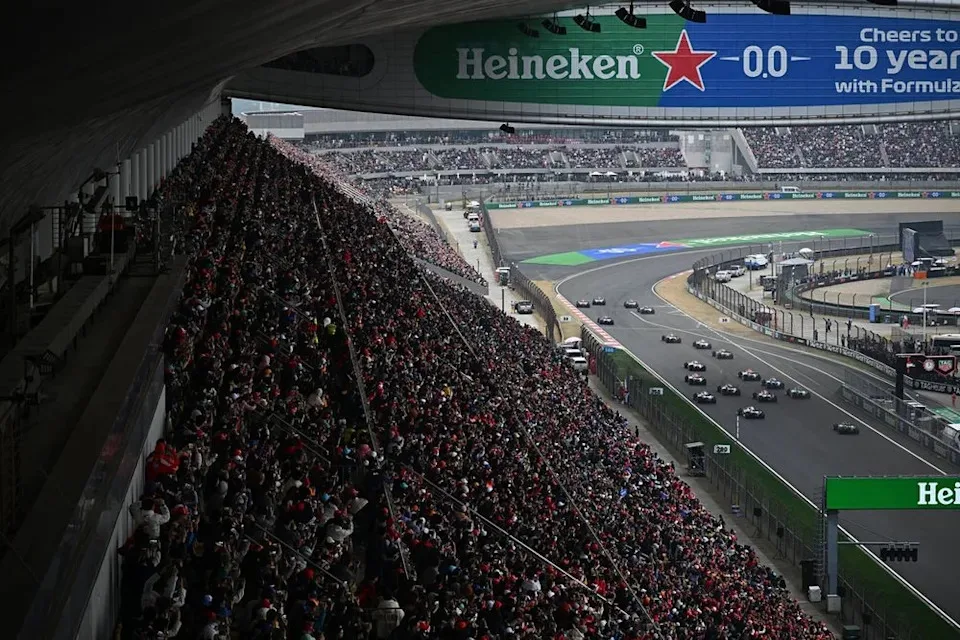
F1 interest in China has grown since the pandemic, with the sold-out 2026 Chinese Grand Prix setting a new attendance of 230,000 spectators.

F1 interest in China has grown since the pandemic, with the sold-out 2026 Chinese Grand Prix setting a new attendance of 230,000 spectators.
There are plenty of recent examples. Audi has chosen a direct and comprehensive entry, with its own team and power unit. Toyota, on the other hand, is currently staying on the sidelines, focusing on a partnership with Haas that is delivering interesting marketing returns and hands-on engineering experience. Then there is the Alfa Romeo precedent, which in 2018 launched a collaboration based on a title sponsorship with Sauber, incorporating the brand’s name into the team’s official designation — a strategy that proved effective from both a communication and commercial standpoint and lasted six seasons.
Advertisement
This type of title sponsorship is also known to be of interest to the Geely Group, the Chinese giant that controls brands such as Volvo, Proton, Polestar and Lotus. Geely Holding Group’s interest in F1 is mainly linked to relaunching the Lotus brand. Two years ago, the group already made an attempt to acquire a team, but the deal stalled due to the sharp rise in team valuations.
The title sponsorship alternative therefore remains on the table, although it is far from inexpensive. F1’s current surge in popularity has driven values up significantly, with industry insiders suggesting any prospective title partner would have to fork out north of $50 million per season, even for a midfield outfit.
Read Also:
Advertisement

Question of the week: Can anything or anyone stop Mercedes from winning both F1 titles in 2026?

Ferrari’s China sprint halo wing: What it could be and why it vanished from the SF-26

Why Ferrari believes F1 engine rules tweak won’t stop Mercedes
To read more Motorsport.com articles visit our website.