Canada is opening the door to Chinese-built EVs again, but despite messaging from the government when the deal was announced, it may not necessarily translate into cheaper EVs for Canadians, especially in the near future.
The first year of the quota has no requirement for sub-$35,000 vehicles, and even when affordability rules kick in, they’ll be based on import prices—not what buyers will ultimately end up paying.
As published in the Canada Gazette last week, the federal government has repealed the 100% tariff on EVs imported from China and introduced a new quota system effective March 1, 2026. Under the new framework, up to 49,000 electrified vehicles—including battery-electric, plug-in hybrid, and hybrid models—can enter Canada annually with a significantly lower 6.1% tariff.
To manage the system, importers must obtain permits on a first-come first-served basis through Global Affairs Canada, with enforcement handled at the border by the Canada Border Services Agency. Once the annual cap is reached, no additional imports will be allowed until the following year. The first-year quota is split equally into two six-month windows, with the 24,500 vehicles allowed from March to August 2026, and the second 24,500 vehicles allowed from September 2026 to the end of February 2027.
No Affordability Requirement in Year One
However, one of the most notable details in the finalized regulations is that none of those first 49,000 vehicles are required to be below $35,000.
While the federal government had previously highlighted the potential for “affordable” EVs as part of its broader strategy, that requirement will not begin until the second year of the program. Even then, it will start modestly, with just 10% of imports needing to meet the price threshold, meaning only 4,900 affordable EVs will be imported in year two of the program.
The share of lower-cost vehicles will gradually increase to 20% in year three, 35% in year four, and finally 50% by year five. The quota operates on a March-to-February cycle however, meaning we likely won’t see any affordable EVs until the second quarter of 2027, at the earliest.
But even then, Canadian consumers may not see any Chinese-made EVs priced under $35,000. That’s because the threshold applies to the vehicle’s import value—referred to as the free-on-board (FOB) price—rather than the final retail price paid by consumers. This means there is no direct mechanism to ensure these vehicles are sold at lower prices in Canada, giving automakers flexibility in how they price them.
Premium EVs Likely to Dominate Imports
With no pricing constraints in year one and only minimal requirements in the following years, automakers are expected to prioritize higher-margin models when entering the Canadian market.
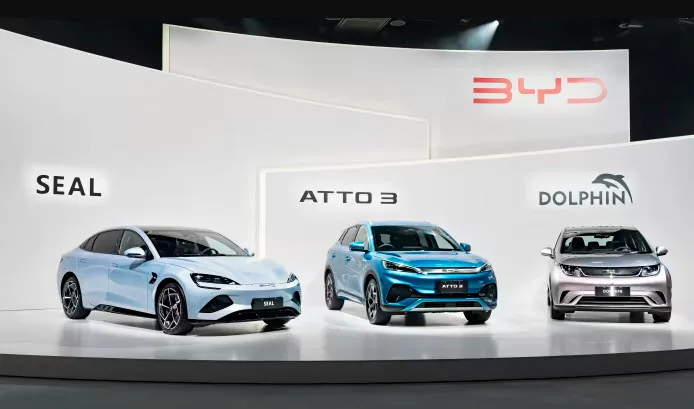
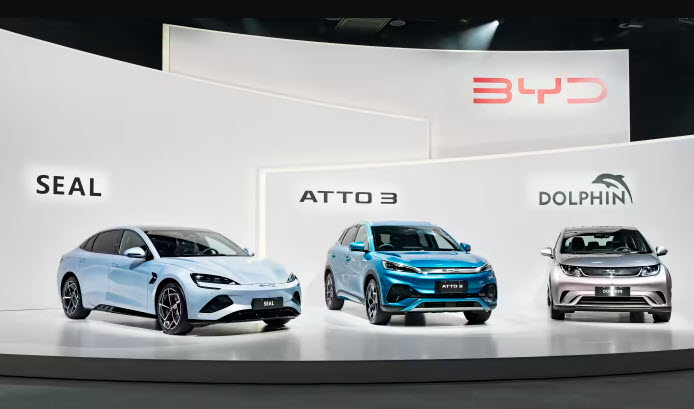
As we have previously reported, brands with existing global production footprints, including Tesla, Polestar, and Volvo, are well positioned to take advantage of the quota by importing vehicles built in China. Several Chinese automakers, including BYD, Geely, and Chery, are also preparing to enter the Canadian market by late 2026.
At the same time, Chinese-built EVs are not eligible for Canada’s $5,000 EVAP incentive, limiting their competitiveness against domestically produced or free-trade partner vehicles.
What It Means for Canadian Buyers
The quota system is part of a broader trade agreement between Canada and China aimed at easing tensions and restoring market access for key Canadian exports, including canola and seafood.
While the policy is expected to expand consumer choice and gradually introduce more affordable EV options, its initial impact will be modest. In the short term, Canadian buyers are more likely to see an increase in premium EV availability rather than a wave of budget-friendly models.
Over time, however, as the quota grows and affordability requirements get higher, the Canadian EV market could begin to see more meaningful price competition—something many consumers have been waiting for.