(Yicai) March 17 — China said that it plans to reduce the average price of hydrogen for end-use to below CNY25 from over CNY35 (USD3.63 to USD5.08) per kilogram by 2030, with some advantageous regions aiming to cut the price to around CNY15 (USD2.18) per kg.
End-use hydrogen includes hydrogen fuel required for such vehicles, according to a notice jointly issued by the Ministry of Industry and Information Technology, the Ministry of Finance, and the National Development and Reform Commission yesterday.
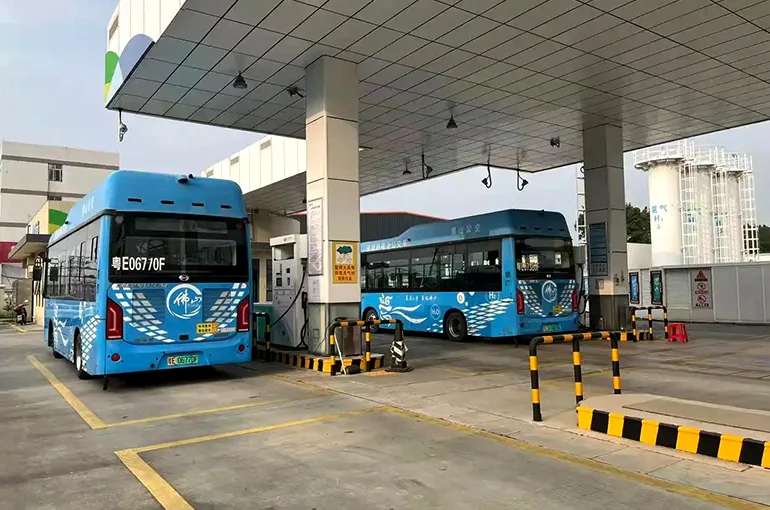
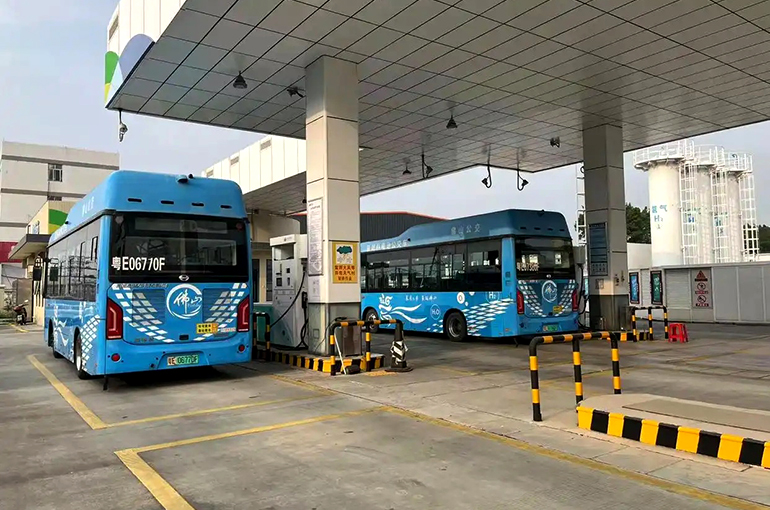
The current price of hydrogen for such vehicles in China generally remains above CNY35 per kg, with the refueling prices ranging from CNY35 to CNY50 per kg even in key hydrogen industry regions such as Foshan, a city in Guangdong province.
If the CNY15 per kg target is achieved, the cost of refueling hydrogen cars would be roughly equivalent to the cost of charging electric vehicles, several professionals in the hydrogen energy industry, including Li Cancheng, a former manager of a hydrogen refueling station in Guangdong, told Yicai. The breakthrough could overcome the price bottleneck for large-scale hydrogen applications and boost the sector’s development, they noted.
Only when the refueling price drops to CNY35 per kg can the operating costs of hydrogen vehicles be roughly comparable to those of gasoline cars. The target of CNY15 per kg would allow hydrogen cars to directly compete with EVs in terms of cost.
If the refueling price can drop to CNY15 per kg, the operating costs of hydrogen vehicles would be roughly on par with those of EVs, industry insiders said to Yicai. When combined with the advantages of longer range and faster refueling, the market acceptance of hydrogen autos is expected to further increase, they noted, adding that hydrogen’s high price has long been a key factor restricting the promotion of such cars and a core bottleneck in the development of the industry.
To promote the adoption of hydrogen vehicles, many local governments, including that of Foshan, have had to implement hydrogen refueling subsidy policies over recent years. However, this has placed significant pressure on their finances.
In addition, the shortage of hydrogen supply is one of the key reasons for high prices.
An official from a relevant government agency in Guangdong told Yicai that to ensure the normal operation of local hydrogen vehicles and meet other needs, the department has had to coordinate extensively to source hydrogen resources. The tight supply has directly driven up end-user prices, the person pointed out.
Editor: Martin Kadiev
Source: yicaiglobal.com