
Americans will soon catch a glimpse of something North American politicians once tried to keep far away: cheap Chinese electric vehicles.
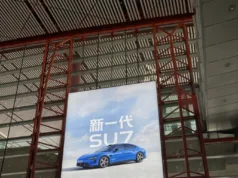
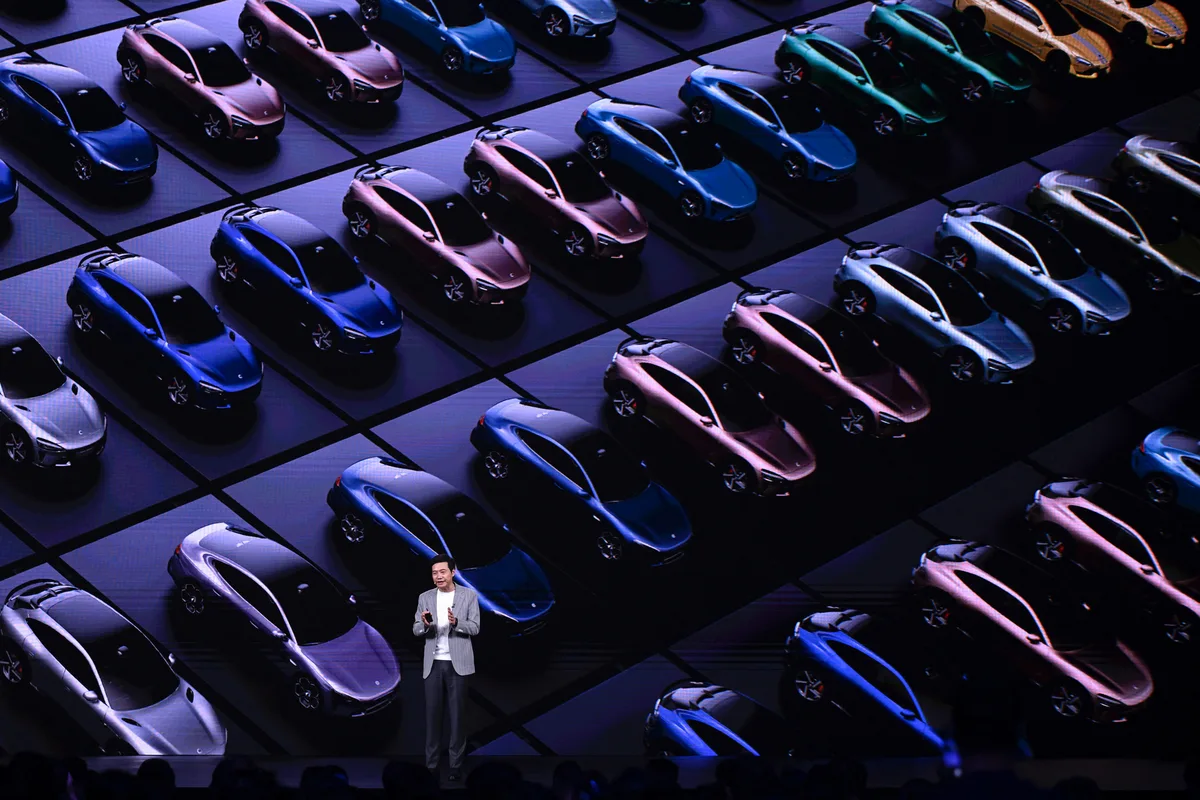
As Canada begins importing the EVs, U.S. residents in border cities like Detroit and Buffalo, New York, may see their northern neighbors at the wheel. Or American tourists visiting Canada may experience brands like Xiaomi, Leapmotor and BYD when taking a ride-share.
It’s a situation that the U.S. and Canada sought to avoid for years, worried that the introduction of China’s low-cost, high-tech EVs would undermine domestic automakers and lead to Chinese surveillance. But President Donald Trump’s 25 percent tariff on Canadian autos and auto parts has scrambled the North American auto market.
Canada is diversifying from its once-reliable, now-unpredictable American partner and seeking a new global role as a maker and exporter of EVs. That could provide China with a beachhead that will familiarize Chinese automakers with American tastes — and help them enter the only major global market they haven’t yet cracked.
“Whether it’s 2027 or 2037, we can expect to see more Chinese automakers coming to the U.S. market,” said Stephanie Brinley, an auto analyst at S&P Global Mobility. “That’s the trajectory.”
In January, Canadian Prime Minister Mark Carney reversed years of Canadian industrial policy and slashed tariffs to allow in a limited number of Chinese EVs. To start, 49,000 vehicles can be imported each year at a tariff rate of 6 percent. Over five years, imports could grow to 70,000 vehicles annually.
This modest beginning — 49,000 vehicles is less than 3 percent of Canada’s new car sales — belies the profound shift underway.
“We don’t want to be hostage of our geography,” is how Mélanie Joly, Canada’s industry minister, put it in a speech in Toronto in February.
Chinese automakers are moving fast. Three companies — BYD, Chery Automobile and Geely Holding — are preparing to sell in Canada as soon as this year, according to Automotive News.
It isn’t Canada’s first choice to ally with China on EVs. The country used to maintain strict 100 percent tariffs on Chinese EVs, in lockstep with the U.S. The U.S. and Canadian auto industries are deeply integrated, and both viewed China’s government-subsidized EVs as a threat.
“The whole idea was to keep China out,” said Brian Kingston, the CEO of the Canadian Vehicle Manufacturers’ Association.
But Trump’s tariffs scrambled the assumptions upon which Canada’s auto industry rests. Major automakers started doing what Trump intended: moving to the American side. Last fall, Stellantis shifted production of the Jeep Compass from Ontario to Illinois, leaving 3,000 Canadian autoworkers in the lurch.
“We built our industry based on an integrated supply chain,” Kingston said. “The Canadian industry is under pressure like it never has been before because of U.S. tariffs.”
Bending toward China
Canada has reasons to tilt its auto industry toward electrics. It has a growing battery supply chain, and its hydropower dams enable the country to produce those batteries with a low carbon footprint.
With Trump all but killing U.S. climate policy — and U.S. automakers scaling back their EV plans — Canada has identified China as a promising manufacturing partner.
Carney’s office said the import agreement “will drive considerable new Chinese joint-venture investment in Canada with trusted partners to protect and create new auto manufacturing careers for Canadian workers, and ensure a robust build-out of Canada’s EV supply chain.”
One of Canada’s weaknesses is that it doesn’t have a home-grown automaker. Its auto plants are owned by American companies like Ford and General Motors and Japanese heavyweights Toyota and Honda.
But Canada punches above its weight among automotive suppliers. Magna International and Linamar, for example, operate around the world. The Canadian government sees them as the asset that, when combined with Chinese manufacturing, could make Canada an EV exporter to markets overseas.
“We believe that these great Canadian champions can partner with Chinese EV companies to make a Canadian-Chinese car to export it around the world,” Joly said in an interview with Bloomberg last month.
Canadians themselves don’t love China but these days find it better than the alternative. Only 19 percent of Canadians held a positive view of China at a low point five years ago, after Chinese authorities imprisoned two Canadians. But a POLITICO poll taken last month found that 57 percent of Canadianswould prefertheir countrydepend on China instead of Trump’s America.
Canada’s auto dealers are also opening up to the idea of Chinese partnerships.
Selling Chinese cars is “not our preference,” said Huw Williams, a spokesperson for the Canadian Automobile Dealers Association.
But while Canadian dealers would prefer to sell American cars, he said, any Chinese vehicles sold in the country “should be through a dealership.”
Not an easy entry
However robustly Canadians buy Chinese EVs or Chinese companies build Canadian factories, the moat separating the cars from American buyers is deep and wide. It is nearly impossible for a Chinese EV to be sold in the United States, and changes could be slow in coming.
One hurdle is a 100 percent tariff.
The tax was erected by the Biden administration in 2024 amid concerns that Chinese vehicles were artificially cheap because of heavy subsidies from its government, and that their presence in U.S. showrooms would undercut U.S. automakers.
Cybersecurity restrictions are another obstacle — one that would affect any Chinese EV, even if it was made in Canada. Created by the Commerce Department under former President Joe Biden, the regulation prohibits the sale of vehicles with hardware or software that connects to larger networks or is connected with any Chinese entities.
However, Chinese automakers could make an end run around those rules by building vehicles in the U.S. with few Chinese ties.
It is a scenario that Trump has welcomed. Speaking to the Detroit Economic Club last year, he said, “If they want to come in and build the plant and hire you and hire your friends and your neighbors, that’s great. Let China come in.”
Some companies have already made that end run, established before tensions between the U.S. and China were so high. The electric brand Polestar is owned by the Chinese automaker Geely and makes one of its models at a factory in South Carolina. That factory is run by automaker Volvo, which Geely also owns. And BYD operates an electric-bus plant in California.
Any future Canadian-Chinese EV would also have to clear a series of safety and technical standards that any new car must meet to be sold in the U.S., and “that process is time and money,” said Brinley, the analyst at S&P Global Mobility.
Finally, it’s not easy to persuade a customer to purchase a new brand. Auto buyers usually don’t sign on the line unless they are assured that the automaker has a well-established service network — a hurdle that has slowed the expansion of all new entrants to the auto market, including domestic electric automakers like Tesla and Rivian.
“There’s a difference between seeing a car on the road and thinking that’s cool, and buying it at scale,” Brinley said.
One sign of how hard it will be for Chinese EVs to enter the U.S. market is that they are already present in large numbers on America’s other border, with Mexico. Mexicans bought nearly 100,000 Chinese EVs last year.
But to Americans, the presence of Chinese vehicles in Canada might feel different. The Canadian auto hub of Windsor is just across the river from Detroit. Canadians speak primarily English and, like Americans, tend to drive bigger pickup trucks than Mexican buyers do.
“Canada strikes closer to home,” said Mike Murphy, a Republican political consultant who runs the EV Politics Project, which seeks to educate GOP voters about EVs. “Canada is the proverbial backyard, psychologically.”