
The Blade Battery introduced in 2020 serves as something of an all-round solution for BYD. The in-house developed and manufactured LFP cell stands out not only for its robust and cost-effective cell chemistry but also for its distinctive form factor: the prismatic cells are extremely long and are intended to resemble the blade of a sword. BYD installs these cells in a wide range of sizes, from the small electric car Dolphin Surf to large electric buses.
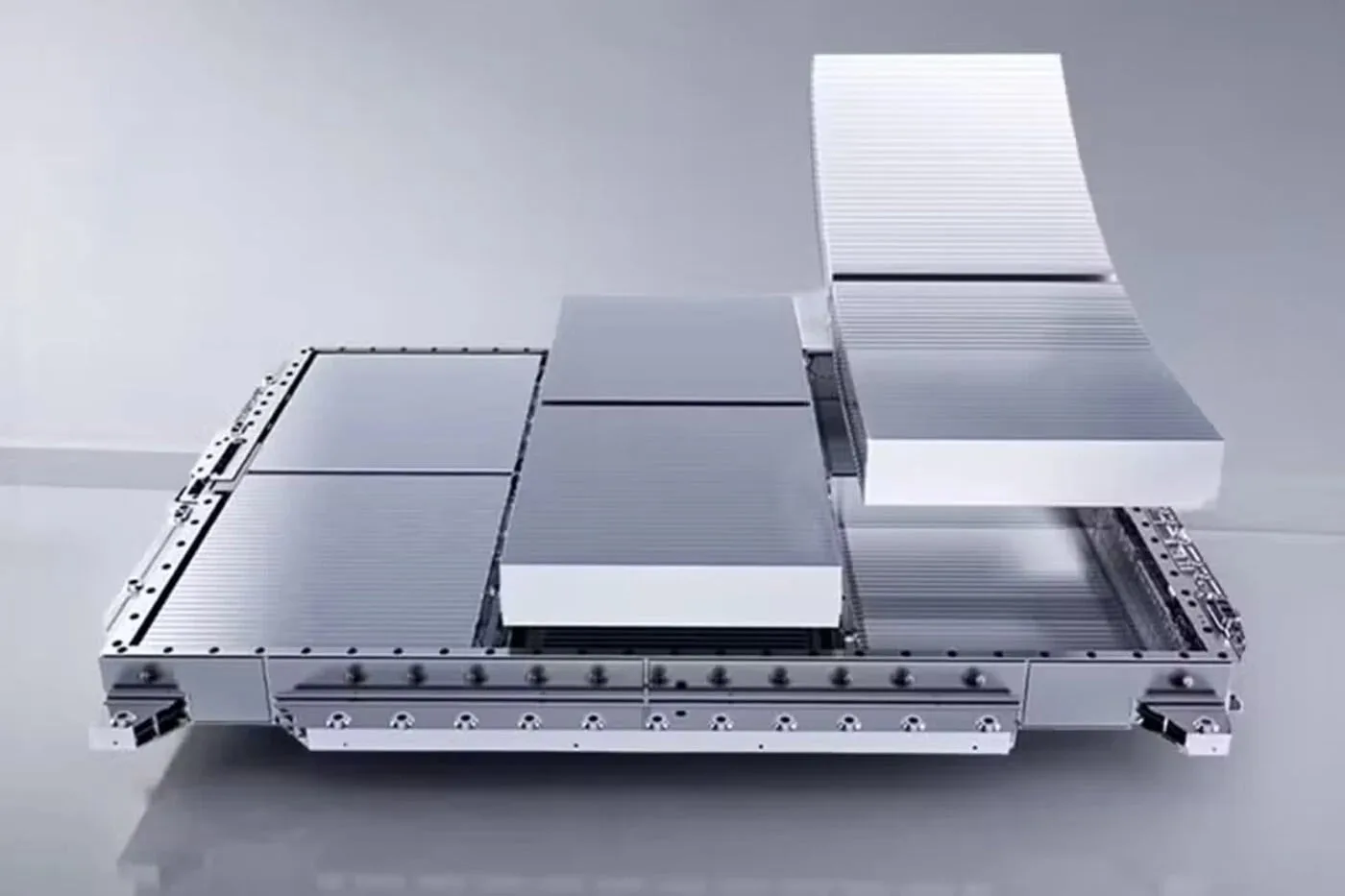
In the first generation of Blade cells, BYD arranged the battery cells in the pack – using either a cell-to-pack or cell-to-body concept – across the vehicle’s direction of travel, spanning the full width of the battery pack depending on the model. In the graphics that BYD has now released for the second generation, the cells are installed longitudinally. Visually, they appear divided into six groups but are not arranged in separate modules. BYD thus appears to be maintaining its CtP or CtB approach to increase energy density at pack level.
Speaking of energy density: according to BYD, this increased by more than five per cent at cell level. The battery is also intended to retain its capacity for longer, and BYD now offers a lifetime warranty on these battery cells. Safety is said to remain at least at the level of the previous Blade cells. After more than 500 fast-charging cycles, the cell reportedly passed a nail penetration test during an ongoing charging process without any visible smoke or flames – charging at high power is considered a particularly sensitive phase for battery safety. The battery pack is also said to withstand a simultaneous short circuit of four cells without damage, and it reportedly passed an impact test at ten times the force required under the new Chinese standards. These claims were presented at the premiere of the cells and cannot currently be independently verified.
Such safety features and a lifetime warranty on battery cells would normally be enough to generate headlines. In the case of the second-generation Blade Battery, however, another feature dominates: fast charging.
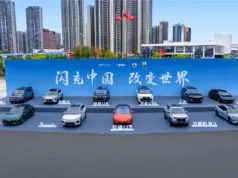
BYD plans to launch the new battery in ten electric vehicles – in the case of the Denza Z9 GT with a CLTC range of 1,036 kilometres. According to the company, these vehicles can charge from ten to 70 per cent in five minutes. Depending on the model, the published figures range from 4:54 minutes in the Yangwang U7 to 5:11 minutes in the Yangwang U8L. The other eight models fall between these values, meaning the difference amounts to only a few seconds. Charging from ten to 97 per cent is said to take just nine minutes, although the range is somewhat wider here, from 8:45 minutes in the Fang Cheng Bao 3 to 9:24 minutes in the BYD Great Tang. The portal CarNewsChina has published the detailed tables, and the link can be found at the end of the article.
The 97 per cent limit was chosen for a specific reason. During a demonstration, BYD chairman Wang Chuanfu explained that ending the charging process at 97 per cent is a deliberate energy-saving measure. The remaining three per cent is reserved for regenerative braking, which helps reduce the vehicle’s overall energy consumption.
BYD also claims to have addressed the well-known issue of lithium iron phosphate cells losing performance in cold temperatures. After the cells were stored for 24 hours at –30 degrees Celsius and therefore completely frozen, charging from 20 to 97 per cent reportedly took just twelve minutes. With this, BYD aims to counter one of the most common arguments against electric vehicles in China: limited usability in the country’s freezing northern regions.
Flash Chargers with 1,500 kW charging power
Vehicles equipped with the new battery can also charge at conventional charging stations in China. However, to achieve these extremely short charging times, special high-power chargers are required – which BYD presented alongside the battery. The second generation of the Flash Charger had already been spotted at several locations in China before the official presentation, where BYD had installed initial units. At the event, the company confirmed that it had already completed 4,239 of these charging stations in the first two months of 2026, with commissioning scheduled for Friday. BYD plans to install 20,000 of these ultra-fast chargers this year.
These T-shaped charging stations feature two charging cables that can both be connected to the same vehicle. A rail system allows the cables, which hang from above, to move easily despite their considerable weight due to cooling requirements at charging powers of up to 1,500 kilowatts.
Installation of such charging stations is also intended to be straightforward. According to BYD chairman Wang, installation is ‘as simple as installing an air conditioner.’ BYD has developed a plug-and-play concept for this purpose: the Flash Chargers are installed as a station within a station. BYD uses the existing fast-charging network in a particular way, as already seen in early images of the installations. The Flash Chargers use their own energy storage systems to provide the extremely high charging power for short periods – without such buffer storage, stations of this type would overload the grid.
These storage units are charged on site from existing electrical installations when no electric vehicle is charging. This approach is intended to allow BYD to expand the Flash Charger network without placing significantly greater strain on the electricity grid than today’s charging infrastructure.
The Flash Chargers are identified by their own logo and turquoise colour scheme. Until now, BYD charging stations have generally followed the brand’s corporate design in silver and red. Vehicles capable of using the Flash Chargers will also display the same turquoise symbol on the boot lid.