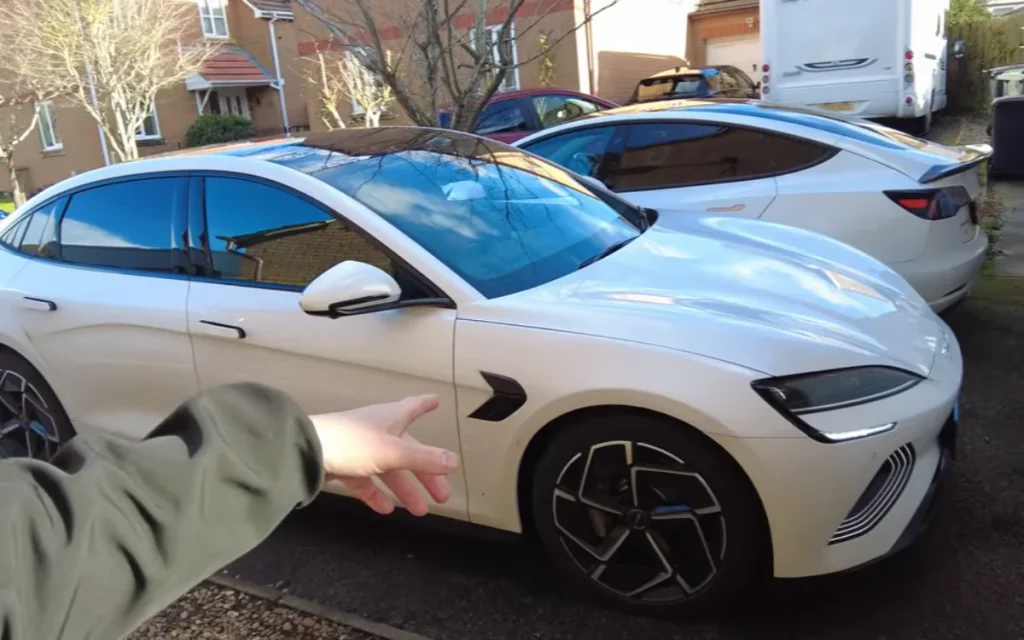
A Tesla owner got the chance to swap keys with a BYD Seal Excellence.
On paper, it matches his Model 3 Long Range closely enough to make it worth testing.
So instead of just talking specs, he takes it for a proper drive.
Then he sits down and works out what the difference in costs actually looks like between the two.
DISCOVER SBX CARS – The global premium auction platform powered by Supercar Blondie
What happens when a Tesla owner drives a BYD Seal Excellence
The benchmark here isn’t theoretical.
YouTuber Chargeheads’ Model 3 Long Range is six years old and has nearly 140,000 miles on it, so he knows exactly how it behaves.
The BYD Seal Excellence AWD that turns up promises 323 miles of WLTP range and 0-60mph in 3.8 seconds, which puts it right in the same conversation.
First impressions are solid.
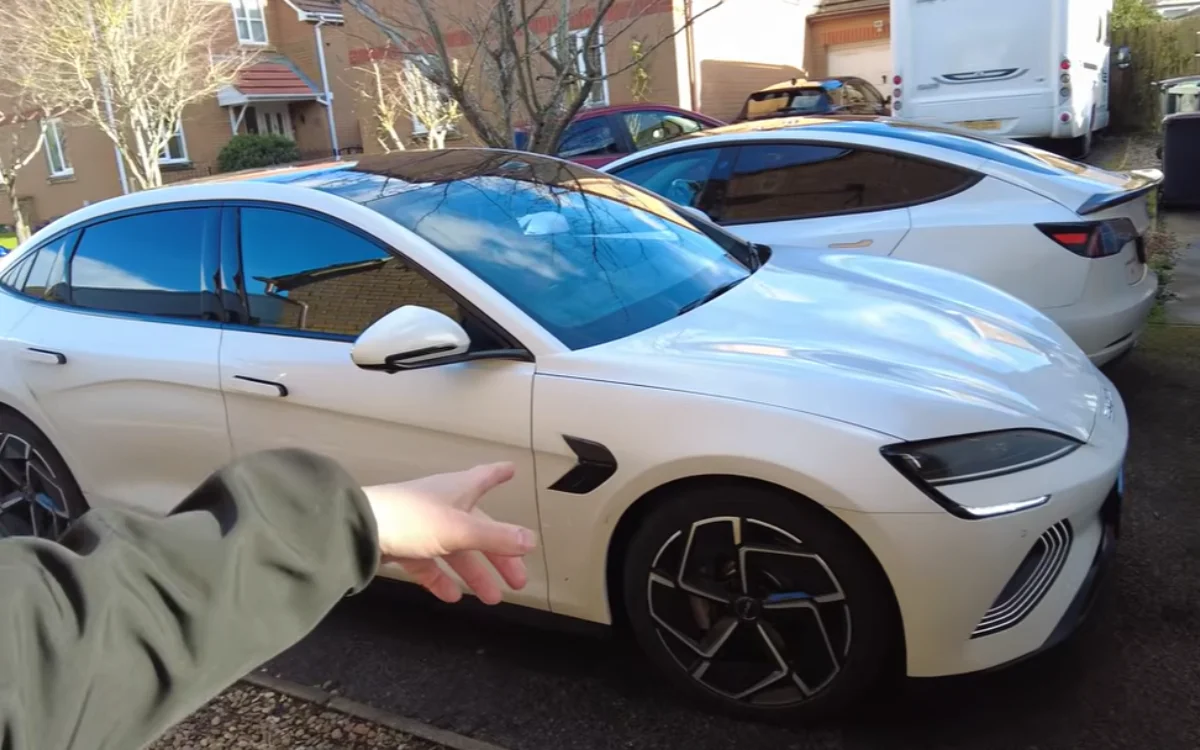
The interior feels modern and well put together, and the head-up display immediately stands out because Teslas don’t offer one.
At the same time, coming from Tesla’s ultra-minimalist setup, the extra screens and physical buttons feel a bit overwhelming.
On the move, the BYD hides its 2.2-tonne weight surprisingly well and rides comfortably.
However, one thing trips him up straight away.
There’s no proper one-pedal driving, and he admits that’s a deal breaker for him personally.
Acceleration feels strong but not wildly different from his own car, and while the braking doesn’t offer huge feedback, he shrugs that off as a modern-EV trait.
Overall, he’s clear: the Seal is a genuinely good all-round car.
But long-term Tesla habits are hard to shake.

Click the star icon next to supercarblondie.com in Google Search to stay ahead of the curve on the latest and greatest supercars, hypercars, and ground-breaking technology
So which costs more?
This is where it gets interesting.
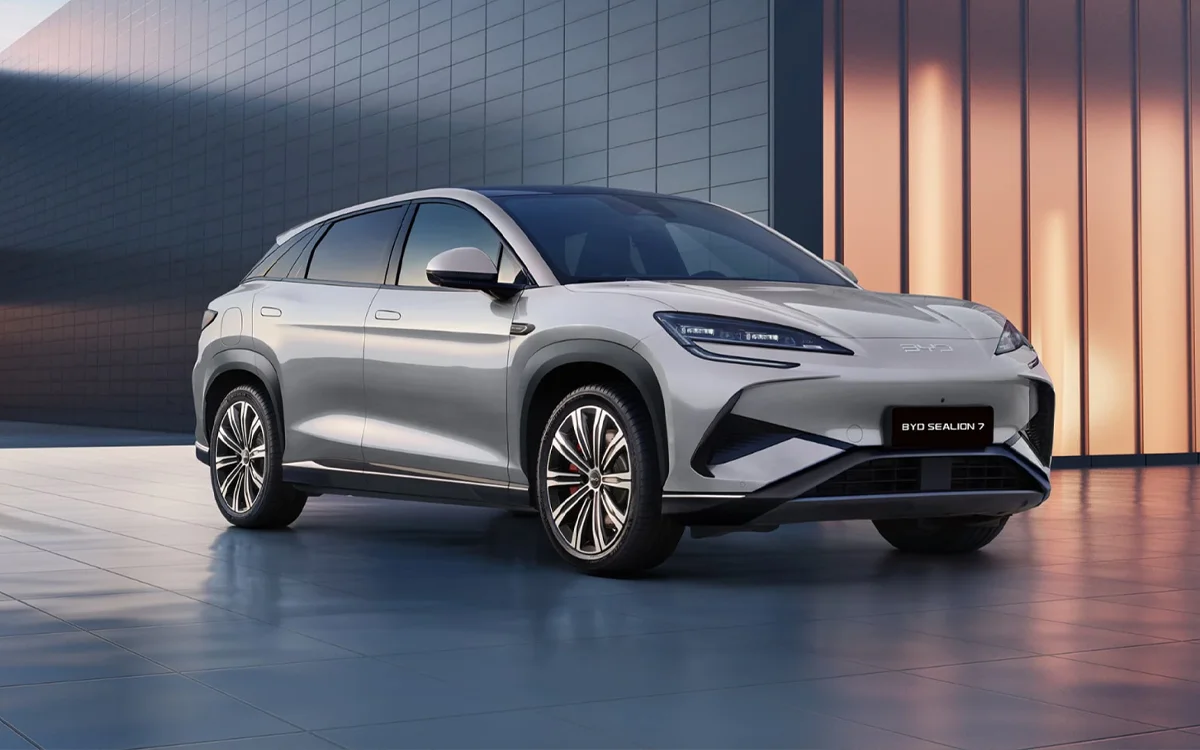
Using the same PCP terms – 48 months, £1,000 deposit, 10,000 miles per year – the BYD comes in at $730 (£541) per month with a guaranteed future value of $26,000 (£19,548).
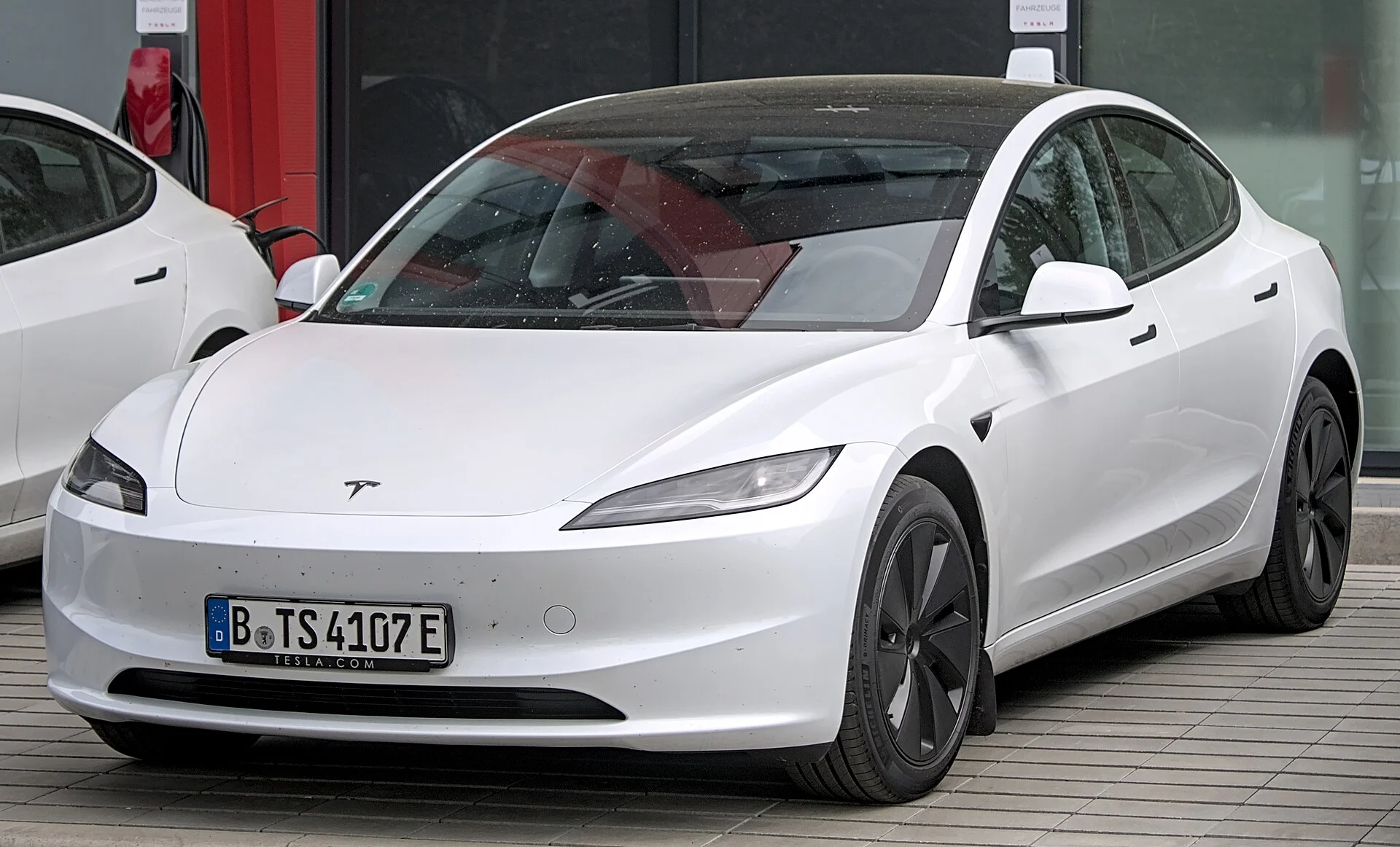
The Tesla Model 3 Long Range, meanwhile, lands at $861 (£637) per month with a lower future value of $25,400 (£18,832).
On monthly payments alone, the Tesla works out at roughly $6,000 (£4,600) more over four years.
Case closed?
Not quite.
He then factors in efficiency.
Referencing EV Database figures, he notes the BYD uses about 300Wh per mile, while the Tesla sits closer to 232Wh per mile.
In simple terms, the Tesla travels roughly an extra mile for every kilowatt-hour of energy.
Over 40,000 miles, that difference starts to matter.
On cheap home charging at around 7p per kWh, the BYD would cost roughly $314 (£233) more in electricity over the term.
But if you’re relying heavily on public DC charging at around 70p per kWh, the Tesla’s efficiency gap widens significantly – roughly $9,400 (£7,000) in energy versus about $12,600 (£9,333) for the BYD in his example.
Then there’s servicing.
BYD recommends annual services, which he estimates at around $1,200 (£900) total over four years.
Tesla doesn’t have a traditional service schedule in the same way.
Put all that together and the neat $6,000 gap starts to narrow.
If you charge mostly at home on a cheap tariff, the BYD keeps its advantage.
If you fast-charge frequently, the Tesla claws a chunk of that difference back.
This creator’s conclusion is that both are quick, capable EVs.
However, the real difference in costs comes down to how and where you charge, not just what the monthly payment says.
DISCOVER SBX CARS:
The global premium car auction platform powered by Supercar Blondie