Chinese researchers have unveiled an organic lithium battery with high energy density and extreme temperature tolerance, marking a milestone in non-traditional materials with potential relevance for electric vehicle (EV) energy storage. On Feb. 18, a team led by Professor Xun Yinhua of Tianjin University and Professor Huang Fei of South China University of Technology published in Nature the first practical organic lithium battery incorporating a new n-type conducting polymer as the cathode material, according to Stdaily.
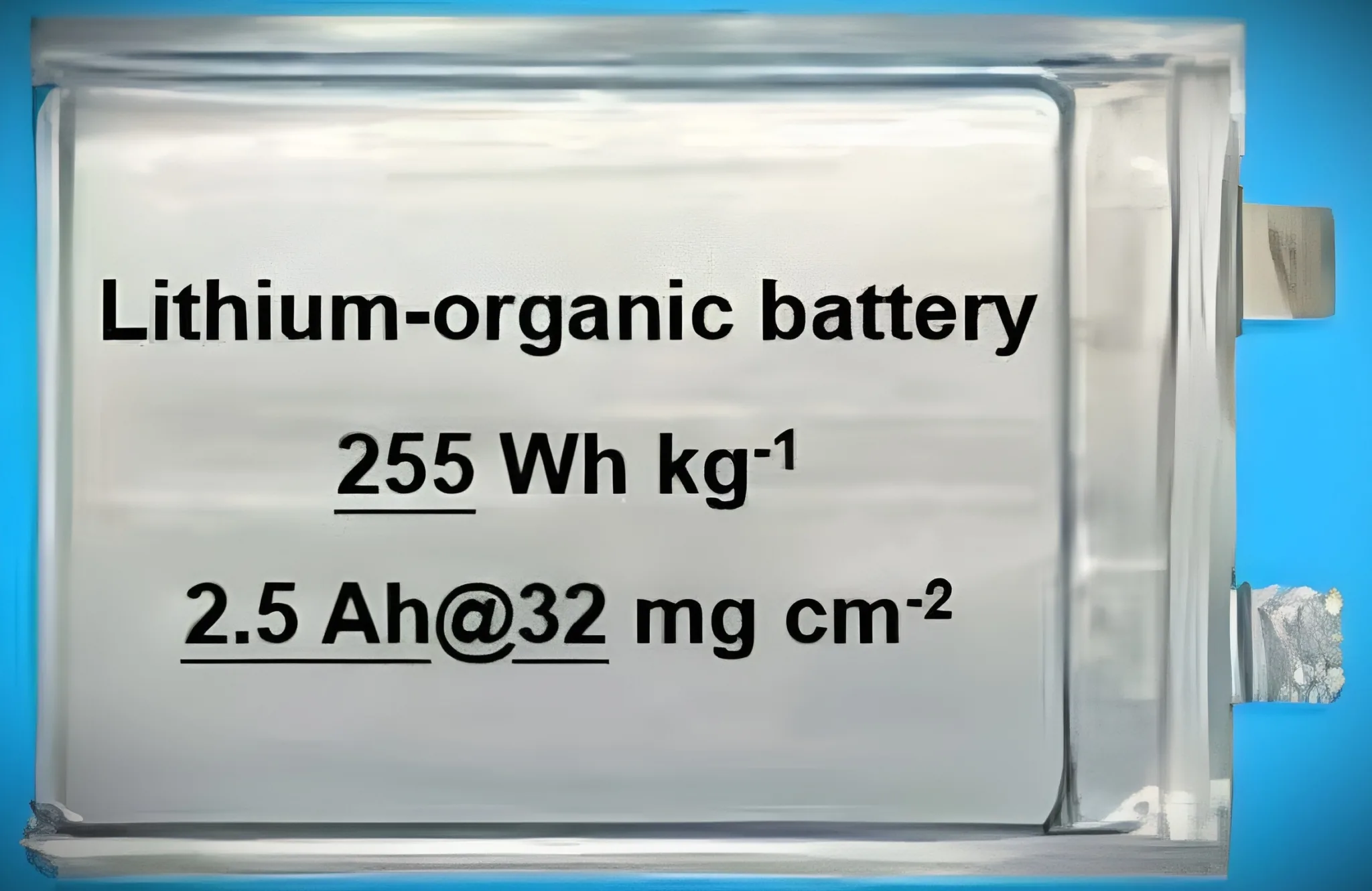
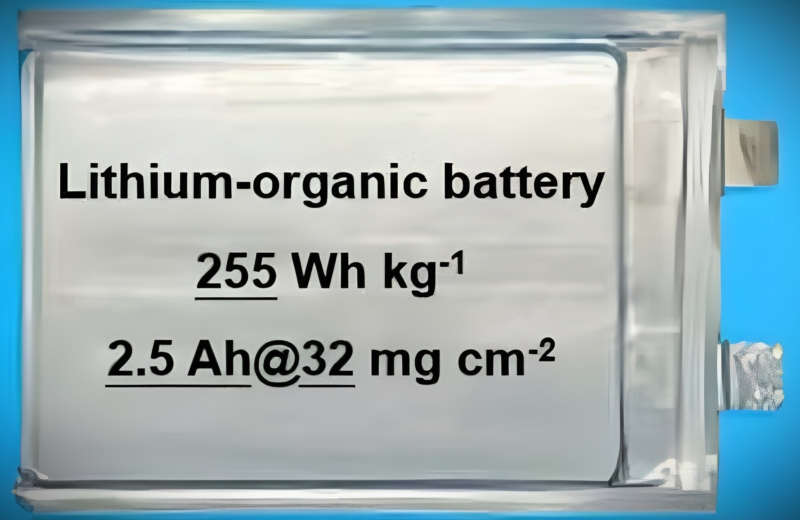
The polymer, poly(benzodifurandione) (PBFDO), enables fast lithium-ion transport, high electronic conductivity, and limited solubility, resulting in pouch cells with energy density exceeding 250 Wh/kg and operability from -70 °C to 80 °C. Researchers fabricated 2.5 Ah practical pouch cells with high areal capacity (~42 mAh/cm²) and ultrahigh mass loading (up to 206 mg/cm²), placing the prototype within the performance range of mainstream lithium-ion chemistries while introducing a novel organic pathway.
Unlike conventional inorganic cathodes that rely on cobalt or nickel, organic polymers are derived from abundant molecular precursors and offer structural flexibility. The team reports that the organic cells maintained mechanical integrity under bending, stretching, and compression, and passed rigorous safety tests, including needle puncture, without deformation or energy release. The polymer’s flexibility could also support future flexible electronics or wearable energy storage applications.
Organic lithium battery research has been an active area globally, with teams in Japan, Korea, and Europe exploring organic cathodes and electrodes as sustainable alternatives to metal-based chemistries. Previous studies have focused on materials-level improvements, such as suppressing dissolution and enhancing conductivity, but most have not produced practical pouch cells with high energy density and mechanical robustness. The Nature-reported work is notable for demonstrating a functional prototype with performance metrics approaching conventional lithium-ion systems while maintaining wide temperature tolerance.
Although this organic lithium technology remains at the prototype stage, it aligns with broader 2026 automotive battery trends toward diversifying energy storage chemistries to meet performance, safety, and sustainability goals. Industry sources and government guidance indicate that multiple Chinese automakers and suppliers are targeting production prototypes of next-generation cells by 2026–2027, including solid-state approaches that could integrate organic polymers alongside sodium-ion and other alternative chemistries.
At this stage, the primary significance of the Nature-described battery lies in opening a materials pathway that could, in time, reduce reliance on critical metals and expand battery operability in extreme environments, a frontier increasingly relevant to next-generation mobility. The cells have not yet been scaled to full automotive formats or undergone vehicle qualification testing.

Follow us for ev updates