By Karan Singh

While Elon Musk has been pushing for a Q1 2026 relaunch of FSD in China, the local executive team is managing expectations and laying the physical groundwork.
Tesla China Vice President Grace Tao recently clarified that there is currently no specific timeline for the official rollout of FSD in the Chinese market. Tesla previously launched FSD V13 to a very small userbase of Chinese HW4 owners, with expectations of future updates and eventual rollout for HW3 owners as well.
However, since the initial wave, China has been stuck at V13, with no further updates due to regulatory restrictions. To address this, Tesla is activating a dedicated local AI training center and actively hiring Autopilot Test Engineers in Shanghai to prepare for testing and approval.
Local AI Training
The most significant development in Tesla’s Chinese FSD push is the launch of the new dedicated AI training center. This center allows Tesla to conduct local training on Chinese vehicles and process them in a local facility. Regulatory restrictions prevented the data from leaving China in the past.
Grace Tao confirmed that the facility is now operational and possesses sufficient computing power to support the development of localized assisted driving features. With data localization solved, Tesla can now work on optimizing FSD for local conditions in China, and help it to better adapt to local driving behaviors and road layouts, rather than relying on internet videos and simulations.
On the Ground in Shanghai
In tandem with the new computing infrastructure, Tesla is also ramping up its physical presence in the Engineering department. New roles for Autopilot Test Engineers have been spotted, based out of Gigafactory Shanghai in Lingang.
Lingang’s Nanhui New City has become a designated testing zone where local authorities have permitted Tesla to run advanced autonomous driving tests on public roads under real traffic conditions. Hiring validation engineers specifically for this zone indicates that localized road testing is likely moving into its validation phases.
Closing the Gap
While the lack of a firm launch date, contrasting with statements from the Q4 2025 Earnings Call, might be testing the patience of Chinese owners, the activation of the new AI training center is good news.
By establishing a local data engine, Tesla can initiate its proven training system in the world’s largest EV market. More cars will generate more training data, leading to more improvements for local Chinese FSD builds in the near future.
As local competitors such as Huawei, Xpeng, and Li Auto are deploying their own AI datacenters in China to train on domestic data, Tesla’s local infrastructure will make sure it doesn’t fall behind.
By Karan Singh

The dust is finally settling from Tesla’s Valentine’s Day shift to a subscription-only model for FSD, and we are starting to see the fine-print casualties.
When the $8,000 upfront FSD purchase option was eliminated, the Luxe Package – standard on the 2026 Model S, Model X, and Cyberbeast – looked like the last remaining loophole to actually buy FSD outright. However, a quiet update to Tesla’s terms and conditions on their website and in purchase agreements has revealed a catch that fundamentally alters the long-term resale value of these flagship vehicles.
Fine Print Changes
Before the February 14th deadline, the rules surrounding the Luxe Package were slightly fragmented. If you sold your Luxe-equipped vehicle on the private market, perks like Free Unlimited Supercharging and Premium Connectivity would vanish. However, the included FSD license stayed with the car and transferred to the new owner.
That is no longer the case. According to the new terms, for any Luxe Package vehicles ordered after February 14, 2026, the included FSD is now strictly non-transferable to subsequent owners. FSD is now only for the original owner, similar to the free Supercharger and Premium Connectivity perks. The other benefits of the Luxe package, including the four-year maintenance, windshield, and tire protection, will still transfer to future buyers.
However, once the car changes hands, FSD access is wiped, and the new owner will have to subscribe.
In practice, this means that the Luxe Package no longer provides an “owned” FSD license – it simply provides a free lifetime subscription tied to the original buyer of the vehicle.
Resale Reality Check
This is a massive blow to the secondary market value of Tesla’s most expensive vehicles.
Historically, having FSD tied to a vehicle’s VIN allowed sellers to command a significant premium on the private market. Now, a 2026 Model S or Model X will lose a massive chunk of its residual value the second the title is signed over, and Tesla conducts the ownership transfer.
The new owner will inherit a vehicle that suddenly forgets how to drive itself, unless they are willing to fork over the $99/mo subscription fee.
Pushing for Subscriptions
While frustrating for buyers hoping to leverage FSD for resale value, this move makes sense for Tesla’s = strategy.
The Valentine’s Day shift wasn’t just about stopping the upfront purchase for the Model 3 and Model Y, but instead a purge of perpetual FSD licenses across the Tesla ecosystem.
By making the Luxe Package FSD non-transferable, Tesla ensures that the secondary market will eventually run completely dry of permanent FSD titles – even if that may be 20 years down the road.
In the near future, every second-hand Tesla buyer will be forced into a monthly subscription model if they want access to autonomy, securing the steady, recurring software-as-a-service revenue that Wall Street loves.
By Nehal Malik
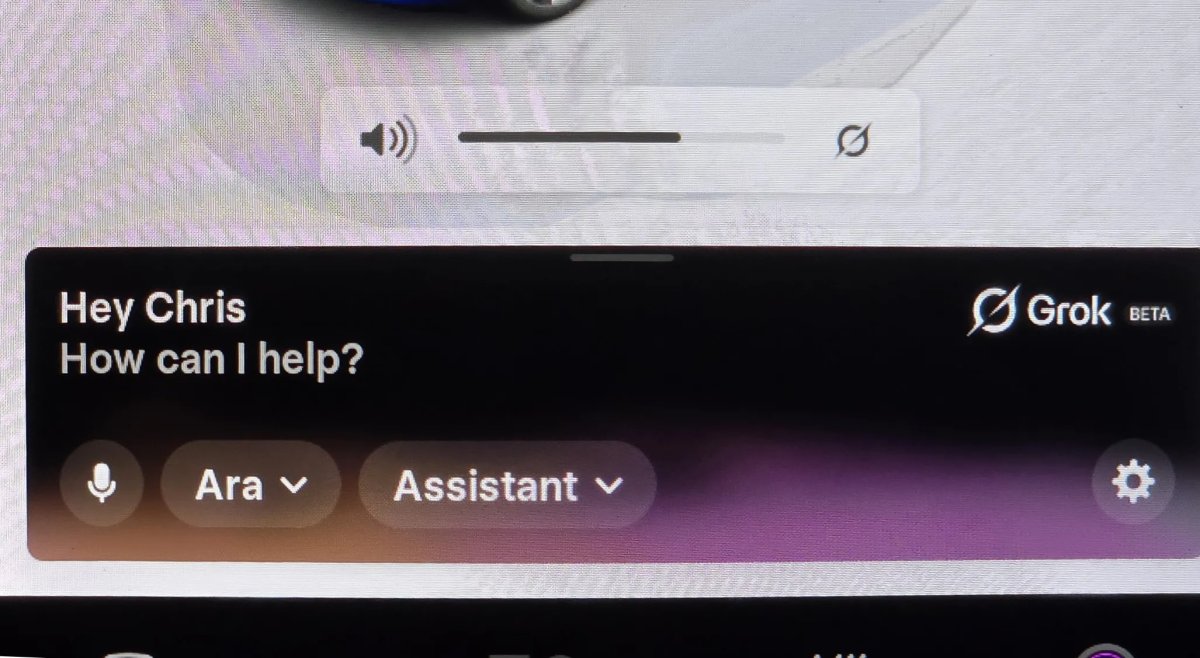
Tesla vehicles across Europe are getting a significant intelligence boost this week as xAI’s Grok chatbot officially begins its international rollout. After making its debut in North America last year, the advanced assistant is now landing in European vehicles via software update 2026.2.6.
This is a major milestone for Tesla’s in-car experience because it represents the first time Grok has been expanded to non-English speaking markets with localized support. While North American owners have been using the chatbot for general queries since software version 2025.26, and more recently for navigation commands, European owners are receiving the general assistant and navigation support in one go.
Update 2026.2.6
Installed on 1.1% of fleet
106 Installs today
Last updated: Feb 16, 7:05 pm UTC
Grok Becomes Your Personal Guide
The standout feature of this release is Grok with Navigation Commands. Unlike the standard voice system that requires rigid phrases, Grok understands natural language. You can simply talk to Grok, and it will add, edit, and organize navigation destinations for you, becoming your personal guide.
You can also ask complex, multi-step questions, such as finding a highly rated Thai restaurant near your current location or planning a sightseeing tour. It can even handle nuanced requests like finding a Supercharger that is within walking distance of a coffee shop. This level of conversational intelligence effectively turns the vehicle into a proactive assistant rather than just a passive screen.
Availability
Tesla has confirmed that the rollout has initially started in nine countries: the U.K., Ireland, Germany, Switzerland, Austria, Italy, France, Portugal, and Spain. Owners in these regions will need an active Premium Connectivity subscription and a vehicle equipped with an AMD Ryzen processor to access the feature.
To get started, you can find the assistant in the App Launcher or simply long-press the voice button on the steering wheel. Grok has different voices and personalities that you can choose from, including Assistant, Storyteller, Unhinged, Therapist, Argumentative, and more. You’re going to have to set Grok’s personality to Assistant in order to enable support for those helpful navigation commands.
What is Next for Europe?
While this initial list covers most of Western Europe, Tesla has already promised that more is to come. Based on how the company typically handles European feature releases, we can likely expect an expansion into the Nordic countries and Central Europe in the coming weeks.
This update brings European owners one step closer to the features released in North America, with FSD, hopefully, being the next big feature to arrive in Europe.
There’s still no word on when Grok will become available for vehicles with Intel infotainment units, but we hope it’s still in the plans.