
Although BYD is primarily known in Europe as an electric vehicle manufacturer, the company from Shenzhen is also the world’s second-largest battery producer behind CATL. Last year, BYD achieved an annual production volume of 194.8 GWh, according to SNE Research. That is 27.7% more than in 2023. To remain at the forefront of the industry, BYD operates extensive battery research facilities, which have recently reached important milestones.
One focus is on sodium-ion batteries, which are expected to significantly reduce costs in the electric vehicle sector. The reason is that inexpensive sodium replaces lithium, which has become increasingly expensive. However, sodium-ion batteries are known for their lower energy density—a challenge that BYD and other providers must address.
The company has now announced that it is advancing the development of its third-generation sodium-ion battery platform. The technology is expected to enable up to 10,000 charge cycles, with market introduction dependent on customer demand and application plans, as reported by Car News China. That would be significantly more than conventional LFP batteries, which typically achieve 2,000 to 3,000 charge cycles. However, no further details about the sodium-ion battery’s specifications—including its critical energy density—have been disclosed. What is known is that BYD began constructing its first sodium-ion battery factory in Xuzhou in early 2024, which it plans to operate in collaboration with Huaihai, a manufacturer of electric two- and three-wheelers.
Meanwhile, BYD is also developing a sulphide-based solid-state battery and has achieved significant improvements in this area, though details remain undisclosed. The sulphide solid-state battery is expected to deliver groundbreaking advancements in battery lifespan and fast-charging capabilities, representing a major technological leap. Based on current research and development progress, BYD anticipates that its sulphide solid-state batteries could enter small-scale production by 2027.
Solid-state batteries replace the liquid electrolyte with a solid one, which can improve safety, energy density, and lifespan. BYD is focusing on sulphide-based solid electrolytes, as these offer high ionic conductivity and good processability. As Sun Huajun, CTO of BYD’s battery business, reported at an event in early 2025, the company produced its first solid-state cells with capacities of 20Ah and 60Ah on its pilot production line in 2024.
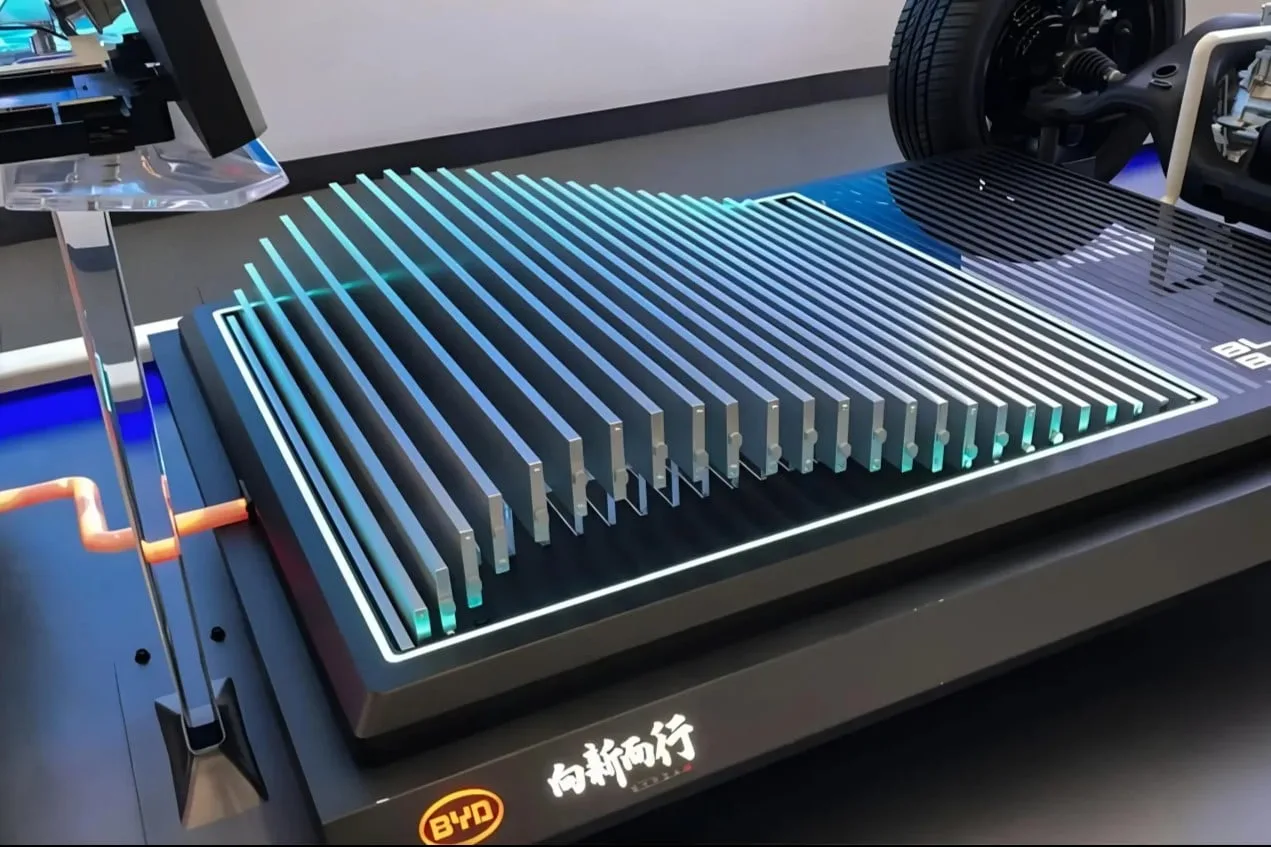
Today, BYD is best known for its Blade Batteries, which use LFP cell chemistry. These lithium iron phosphate cells are considered more robust and cost-effective than cell chemistries based on nickel and cobalt, though they typically have a lower energy density. It is reasonable to assume that BYD will pursue multiple technological pathways in the future—continuing to serve the mass market with LFP batteries while initially deploying sodium-ion and solid-state batteries in selected applications.