Support CleanTechnica’s work through a Substack subscription or on Stripe.
Or support our Kickstarter campaign!

Hopscotching the world for headlines pertaining to the EV revolution this morning, the teletype machines in the CleanTechnica newsroom have been clattering away with news from Canada and India. Executive editor Zachary Shahan has been busy cranking out a memo to all writers with the latest news. And so, with the scent of castor oil from the mimeograph machine in the air, here is the latest information culled from the overnight headlines.
Canada & South Korea Get Cozier
Canadian Prime Minister Mark Carney told the world in Davos this month, “We are in the midst of a rupture, not a transition. Over the past two decades, a series of crises in finance, health, energy, and geopolitics laid bare the risks of extreme global integration. More recently, great powers began using economic integration as weapons. Tariffs as leverage. Financial infrastructure as coercion. Supply chains as vulnerabilities to be exploited.”
He went on to say that the middle nations — those not called the United States, China, or Russia — will need to forge closer ties with each other in order to counter the physical and economic aggression of the most powerful nations. A common expression in Southeast Asia is, “When the elephants fight, the grass gets trampled.” Carney understands that concept clearly and is working to forge new global partnerships that exclude the US.
According to the New York Times, Canada and South Korea this week announced an agreement to explore bringing Korean automotive manufacturing to Canada. This is what might be called a framework agreement. There are few specifics about what exactly South Korean companies will do to bolster auto manufacturing in Canada, but it stands in stark contrast to the bombast and threats from the blustering buffoon in what’s left of the White House, who this week has been threatening both countries with burdensome new tariffs if they don’t come scampering to Washington to “kiss my ass,” as he so delicately puts it.
The Times‘ Ian Austin says, “The agreement [follows] Carney’s widely hailed call at the World Economic Forum last week for middle power nations to band together after what he characterized as an irreversible ‘rupture’ to the world order by Trump’s aggressive economic and diplomatic policies. Trump has repeatedly said the United States does not need autos from Canada and has imposed a 25 percent tariff on Canadian vehicles, ending a period of duty-free entry dating back to 1965.”
Canada’s industry minister said, “This agreement will grow our auto sector, create good jobs and reinforce Canada’s position as a global leader in future-ready vehicle manufacturing.” Exactly how any of those things happen remains to be seen.
In a comment on the New York Times article, one person wrote, “I fully support our wonderful Canadian friends in their efforts to move away from the economic hegemony of the US. We do not deserve friends as good as you and I wish you great success. Meanwhile the Republicans who control the U.S. will strengthen our friendships with those that reflect our values, such as the murderers of Saudi Arabia and the war criminals of Israel and Russia.”
Another said, “Carney has negotiated twelve new trade and security deals on four continents in six months. More are in the works. Coincident with this, the country is expediting infrastructure projects that will facilitate increased exports. More importantly, the country provides something the United States does not — it’s reliable.”
BYD Turns Its Attention To India
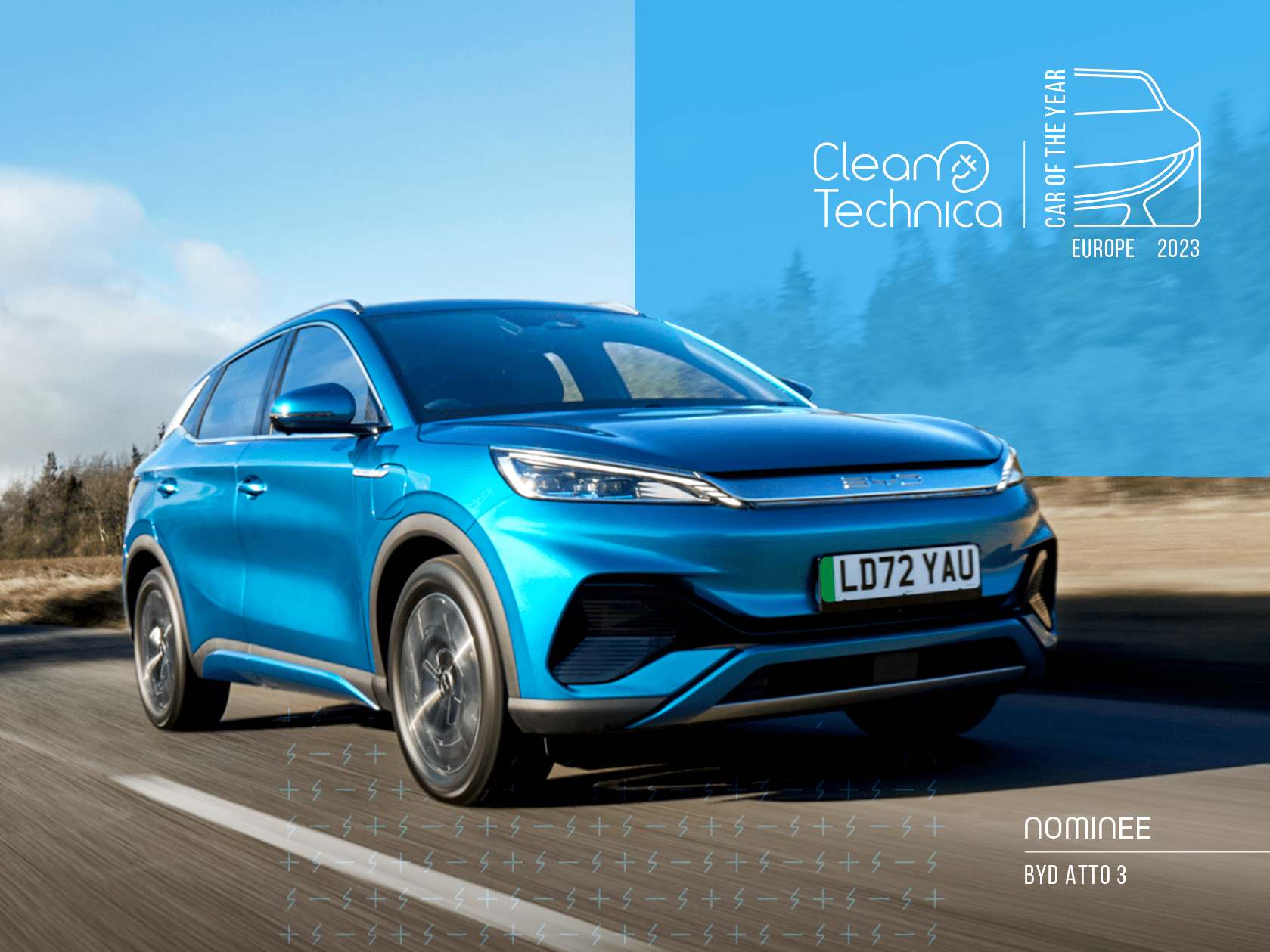
On the other side of the world, the idiotic fulminations of the American president are also having an effect. After the so-called president deemed it appropriate to insult India Prime Minister Narendra Modi, India decided its longtime rival — China — might be a more desirable ally than the US. China and India have had on-again, off-again border disputes for decades, but the bile and biliousness emanating from the headwaters of the Potomac have convinced India to consider warmer relations with its next door neighbor.
Like many nations, India favors local manufacturers. It currently has two large domestic automakers — Tata and Mahindra — who enjoy a close relationship with the government in much the same way as Ford and GM do in the US. For years, BYD has been seeking access to the new car market in India with little success. But the thaw in diplomatic relations between India and China may lead to an opening for BYD.
Bloomberg reports that BYD is evaluating some form of local assembly in India and working on obtaining local safety and regulatory certifications for more models because of import quotas, according to anonymous sources.
Although India rejected BYD plans to build a full assembly plant in the country, the company is considering SKD assembly — industry code for “semi-knock down,” which means components are manufactured elsewhere, then imported and assembled in the host country. Think of it as IKEA for cars. The SKD approach would overcome some of the regulatory and import restrictions foreign manufacturers in India currently have to deal with.
BYD is experiencing strong demand for its vehicles in India, with dealers currently managing a backlog of hundreds of orders. That is in sharp contrast to Tesla, which has been offering discounts on some variants to boost sales in India but finding fewer buyers than it would like. India is now one of the fastest growing new car markets in the world.
BYD sales in India increased 88 percent in 2025 to about 5,500 cars, but that increase made it difficult for the company to comply with rules that cap imports of each fully built model at 2,500 units. The sales increase came despite import duties of up to 110 percent on fully assembled cars. Using SKD assembly would slash tariffs from 70 percent to 30 percent.
BYD sells the Atto 3 compact SUV and the eMax7 multi-purpose vehicle in India — both of which are approved for imports beyond the 2,500 car quota — together with the Sealion 7 and Seal sedan. The company has approached regulators in India to point out how import limits constrain growth. “Despite a tentative thaw between Chinese President Xi Jinping and Indian Prime Minister Narendra Modi, policy support remains inconsistent,” Bloomberg reports.
It is expected that senior company officials, likely including the omnipresent and peripatetic Stella Li, will be visiting India soon to press the case for lowering barriers to BYD vehicles.
In the US, tariffs and import restrictions have built a wall around domestic automakers, who seem not to realize they have become largely irrelevant to the global auto market. They intend to just keep on building gargantuan gasoline-powered vehicles until rising sea levels flood their factories. Cadillac, which once proclaimed itself to be the “standard of the world,” is now close to being the laughingstock of the world, as Toyota, Hyundai, and BYD close in like sharks circling a disabled swimmer.
Protectionist tariffs make those they protect weaker. As Robert Frost once said, “Before I built a wall, I’d ask to know what I was walling in or walling out, and to whom I was like to give offense.” How unfortunate the chief executive of the United States cannot be bothered with such mundane activities as reading.
Support CleanTechnica via Kickstarter

Sign up for CleanTechnica’s Weekly Substack for Zach and Scott’s in-depth analyses and high level summaries, sign up for our daily newsletter, and follow us on Google News!
Have a tip for CleanTechnica? Want to advertise? Want to suggest a guest for our CleanTech Talk podcast? Contact us here.
Sign up for our daily newsletter for 15 new cleantech stories a day. Or sign up for our weekly one on top stories of the week if daily is too frequent.
CleanTechnica uses affiliate links. See our policy here.
CleanTechnica’s Comment Policy