CATL, a global battery giant, is to expand the application of its “Naxtra” sodium-ion batteries, with a formal entry into the passenger vehicle sector. Following deployment in commercial vehicles, the battery technology is now confirmed for integration into passenger car models, beginning with Changan Oshan. CarNewsChina estimates the model to be Changan Oshan 520 since it is a vehicle equipped with CATL’s chocolate battery swap system.
Sources close to the matter confirmed to the Chinese media CLS on January 30 that CATL’s Naxtra brand is preparing for public winter testing in passenger vehicles. “Models participating in this test include Changan Oshan, with GAC and JAC passenger vehicle models expected to follow,” an informed source revealed.
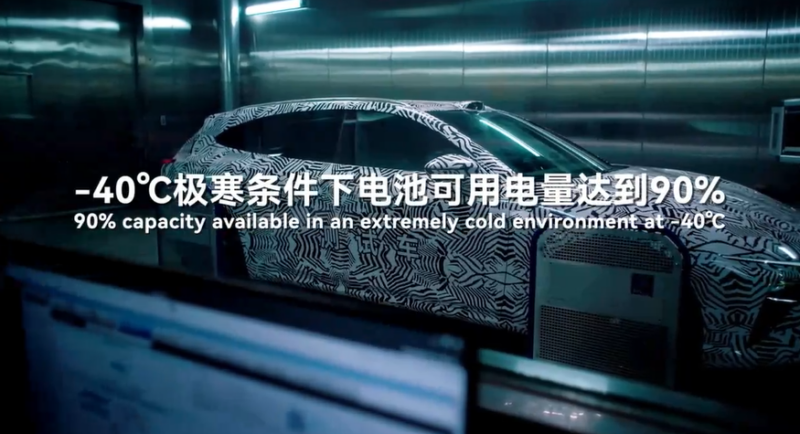
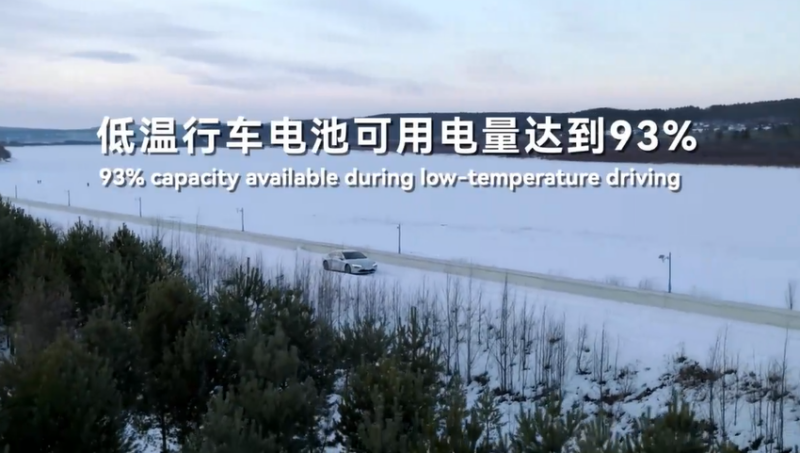
This move builds on CATL’s recent advancements in the commercial vehicle segment. On January 22, the company officially launched its “Tianxing (Techtrans) II Light Commercial Vehicle Solution” and related mass-produced sodium-ion battery products. These 45kWh sodium batteries, designed for light trucks and small-to-medium vans, address a critical pain point for new energy commercial vehicles operating in low temperatures, including plug-and-charge capability and full-load climbing in extreme cold conditions as low as -30℃.
The trajectory of sodium-ion batteries gained significant momentum starting in 2021, driven by a sharp increase in lithium carbonate prices. CATL was at the forefront, unveiling its first-generation sodium-ion battery in July of that year, which ignited widespread industry interest. In 2025, CATL officially launched the “Naxtra” battery brand. At its supplier conference in December, the company announced plans for large-scale application of sodium batteries across four key areas – battery swapping, passenger vehicles, commercial vehicles, and energy storage – by 2026.
Despite the burgeoning interest in sodium-ion technology, lithium-ion batteries remain the dominant force in China’s new energy battery landscape. According to the latest data from the China Automotive Power Battery Industry Innovation Alliance, cumulative installed capacity for power batteries in 2025 reached 769.7 GWh, a year-on-year increase of 40.4%. Ternary batteries accounted for 144.1 GWh (18.7% of total), growing by 3.7%, while lithium iron phosphate (LFP) batteries comprised 625.3 GWh (81.2%), surging by 52.9%.
However, CATL is confident in the future of sodium-ion technology. “We plan for sodium battery energy density to reach the level of LFP batteries within the next three years, and to replace a portion of the lithium battery market in customized scenarios,” stated Gao Huan, CATL’s Chief Technology Officer, on January 22. He acknowledged that sodium batteries are still in their early development stages but predicted a faster development curve and slope compared to lithium batteries. “Reliable startup in severe cold environments and no fire or explosion even under rigorous testing – these performances constitute the differentiated advantages of sodium batteries.”
Gao Huan highlighted two distinct benefits of sodium batteries over lithium-ion:
- Superior low-temperature performance: At -20℃, sodium battery cells maintain over 92% of their energy retention, compared to approximately 80% for lithium battery cells. This means sodium batteries require minimal additional heating, allowing more energy to be dedicated to vehicle propulsion.
- Excellent high-rate discharge capability: Sodium batteries exhibit a temperature rise of less than 5℃ during 5C charging, eliminating the need for additional cooling and enabling a more streamlined thermal management system.
Furthermore, Gao Huan emphasized the exceptional safety of “Naxtra Gen 2,” stating, “Even when sawed or punctured, they do not catch fire, let alone explode.”
Industry analysts quoted by CLS are optimistic about the cost trajectory of sodium batteries. Morgan Stanley forecasts that as supply chain capacity increases over the next three years, cost reductions will accelerate. When production capacity reaches 100 GWh, sodium battery prices could be more than 30% lower than LFP batteries. Relevant data indicates that effective capacity for sodium-ion battery enterprises is projected to reach 19 GWh in 2023, 25 GWh in 2024, and 60 GWh in 2025. Shipments are expected to jump to around 20 GWh in 2025 and exceed 200 GWh by 2030.
“As market scale expands and technological maturity improves, the cost of iterating sodium battery technology will also rapidly decrease,” said Chen Guangqiang, Executive President of CATL’s Logistics Business Unit, regarding cost. He noted that CATL’s “vehicle-battery separation” battery swapping model has already reduced initial vehicle purchase costs by 10% and usage costs by another 10% for light trucks and vans, creating growth opportunities for these vehicle types.
Industry experts quoted by CLS predict that CATL’s entry into passenger vehicles with sodium batteries will likely first target the battery swapping sector. This approach aims to significantly reduce end-consumer costs and enhance user experience, thereby facilitating large-scale adoption across the passenger vehicle industry.
Editor’s comment
Although the current energy density of sodium-ion batteries at 175Wh/kg is lower than that of lithium iron phosphate batteries, the performance of sodium-ion batteries in low temperatures can help them gain an advantage. That is to say, under conditions of minus twenty degrees Celsius, the energy density of sodium-ion batteries is likely to be higher than that of lithium iron phosphate batteries.
It is said that cars equipped with the new sodium batteries will begin testing soon. We’ll wait and see.

Follow us for ev updates