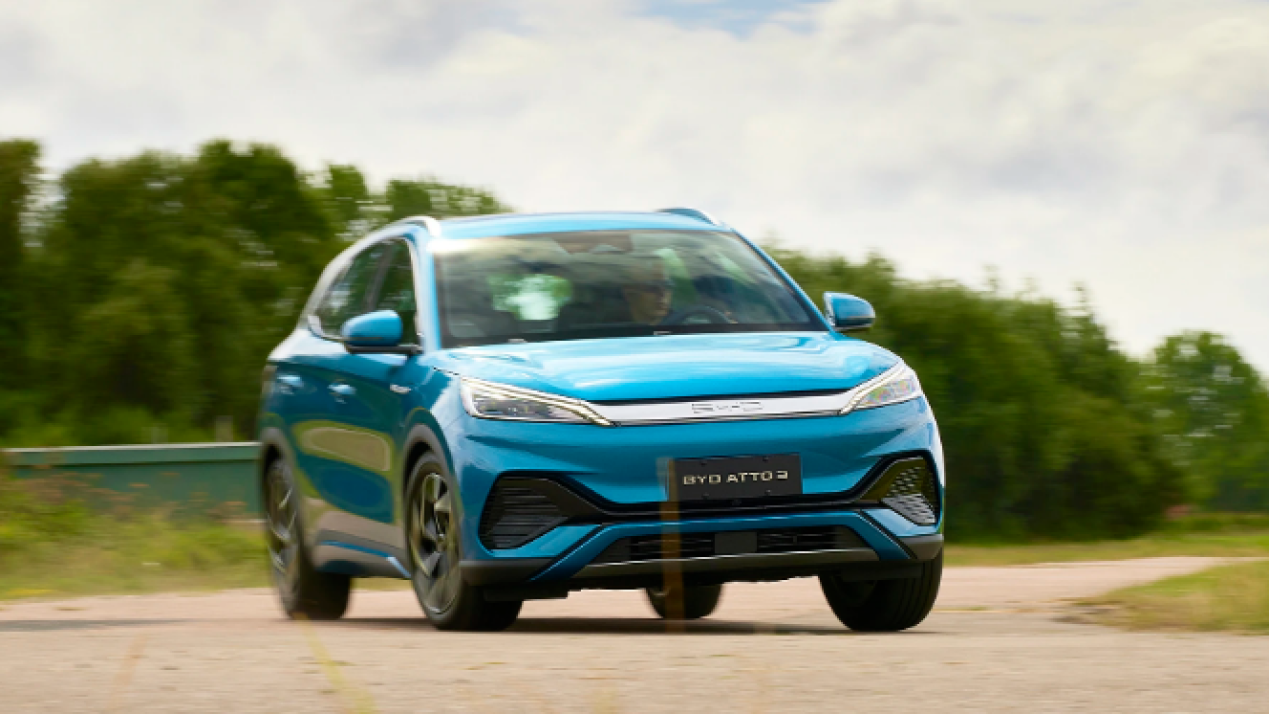

Chinese automaker BYD has consolidated its lead in Mexico’s electric vehicle market, accounting for roughly seven out of every 10 electric and plug-in hybrid vehicles sold in the country, even as new tariffs on Chinese-made vehicles took effect this year. Data from BloombergNEF show that BYD nearly doubled its sales volume in Mexico last year, reinforcing its position as the dominant player in a segment that continues to expand despite trade pressure and regulatory uncertainty.
Electric and plug-in hybrid vehicles represented about 9% of new vehicle sales in Mexico, according to BloombergNEFBN, making them one of the fastest-growing segments in the country’s auto market. While the share remains small relative to total vehicle sales, the growth contrasts with limited participation by US, European, and Japanese automakers, many of which have prioritized gasoline or hybrid models over battery electric vehicles.
“If you go to any city in Mexico, you can see that BYD is the favorite,” Stella Li, president, BYD Americas, said at a press conference in Zhengzhou, China, with Mexican journalists in November. She compared BYD dealerships to Apple stores, adding, “Every time we have a weekend event, it is full of people. They dream of having their own BYD.”
BYD’s success is largely tied to pricing. Its Dolphin Mini EV, the company’s best-selling model in Mexico, is priced about US$2,000 below its closest competitor, the Chevrolet Spark EUV, which entered the market just over six months ago. BYD’s hybrid and electric models are also priced well below comparable vehicles from US and European brands, a key advantage in a price-sensitive market.
Despite the introduction of tariffs, the impact on sales remains uncertain. In December, Mexico’s Congress approved tariffs of up to 50% on certain products from countries without free trade agreements, including Chinese vehicles, with the measures taking effect Jan. 1. The policy followed pressure from the US government and concerns from domestic manufacturers about growing dependence on Chinese imports.
David González, a BYD sales assistant in Mexico City, said the company offered year-end discounts to boost sales ahead of the tariffs. He added that BYD did not expect to raise prices by more than MX$15,000 (US$859) per vehicle and would absorb much of the additional cost. BYD’s local representatives did not respond to requests for comment.
Industry participants say tariffs alone are unlikely to significantly alter market dynamics. Roberto Rocha, co-founder and CEO, Vemo, an electric taxi and charging company partnered with Uber Technologies in Mexico, said Chinese automakers could remain competitive even under higher duties. “We believe large companies will continue betting on the market and will have to absorb some of those increases,” Rocha said.
BYD is reconsidering plans to establish a manufacturing plant in Mexico, according to Julián Villarroel, the company’s corporate vice president, speaking at Expo Transporte 2025. Villarroel said BYD, which produces its own vehicle batteries, could announce the project before January 2026. He added that the automaker is in talks with the Mexican government to avoid paying tariffs on electric vehicles, which can reach up to 50% on imports from countries without trade agreements.
China has urged Mexico to withdraw newly approved tariffs of up to 50% on more than 1,400 products from Asia, warning they could harm bilateral trade. A spokesperson for China’s Ministry of Commerce said Beijing expects Mexico to “act with prudence” and abandon what it described as unilateral and protectionist measures. Despite the dispute, Chinese automakers including MG, Changan and BYD have confirmed interest in investing in Mexico, though none have indicated plans to acquire Nissan facilities.
Analysts point to limited investment by non-Chinese manufacturers in Mexico’s EV market. “Non-Chinese manufacturers have invested very little in bringing these technologies to Mexico,” said Eugenio Grandio, president of Mexico’s electromobility association and a former Tesla executive. “They say there is no demand and then complain that the Chinese are selling them. So is there demand or not?”
Sales data underscore the gap. General Motors sold 1,540 electric vehicles in Mexico last year, according to INEGI, excluding its China-built Spark EUV. Ford produces the Mustang Mach-E in Mexico but sells it locally at a price roughly US$10,000 higher than in the United States. Nissan stopped selling its Leaf model in Mexico three years ago. Tesla sold fewer than 4,000 vehicles in Mexico in 2024—about a quarter of BYD’s estimated battery electric vehicle volume— according to BloombergNEF.
Beyond pricing, financing has also supported Chinese brands’ growth. Nearly 63% of Chinese vehicles sold in Mexico in the first 10 months of last year were financed with loans, up from 56% a year earlier, according to a joint report by AMDA, JATO Dynamics and Urban Science. BYD has offered loans with interest rates as low as 7.9%, compared with market averages of 13% to 14%.
Government incentives have further supported demand. Battery electric and plug-in hybrid vehicles are exempt from federal purchase taxes and qualify for income tax deductions. Under the Plan México program, vehicles purchased between 2025 and 2030 are eligible for immediate tax deductions of up to 86% of their value. Additional incentives support charging infrastructure, including a 30% tax credit for public charging investments.
BYD plans to introduce its fast-charging technology in Mexico starting in April, Li said previously. The system can provide up to 400 kilometers of range with a five-minute charge, according to the company.