By Karan Singh

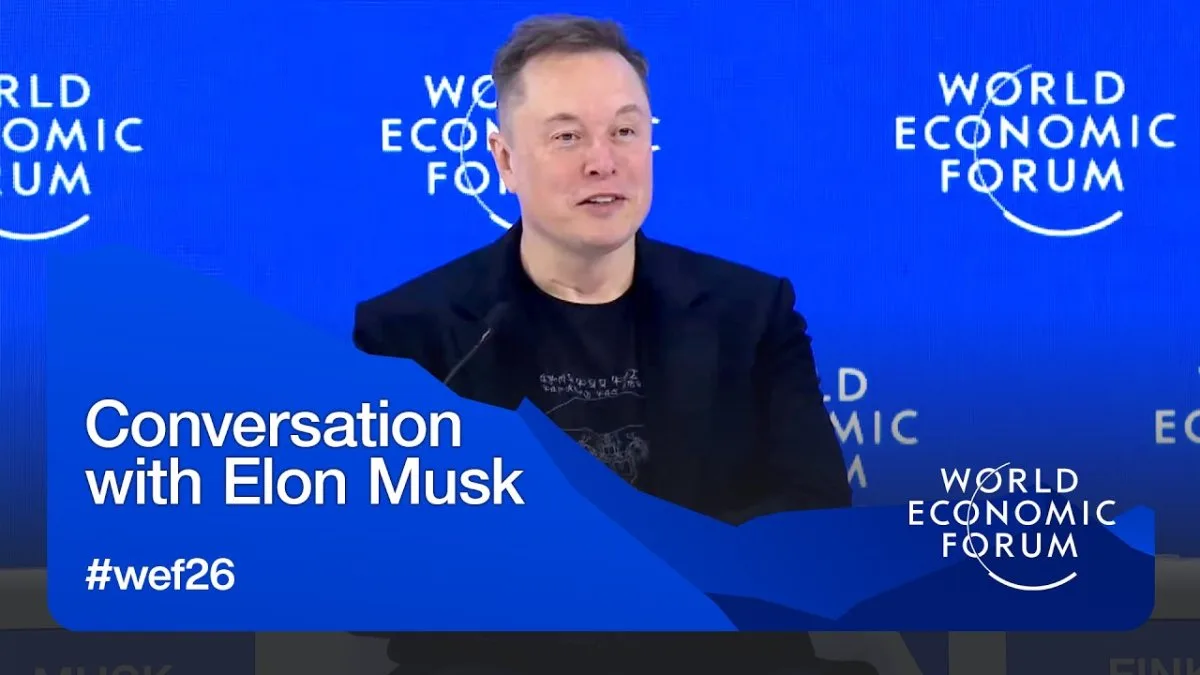
Speaking at the World Economic Forum (WEF) in Davos this week, Elon Musk presented yet another one of his aggressive timelines regarding the deployment of Tesla’s autonomy suite.
«Self-driving is essentially a solved problem at this point,» Musk told the audience of world leaders. «We hope to get Supervised self-driving approval in Europe next month, and hopefully similar timing for China.»
While the solved problem soundbite helped to grab headlines, bolstered by the simultaneous launch of unsupervised Robotaxi rides in Austin, the real news for millions of owners in Europe lies in next month’s target.
Europe: Next Month
Elon’s comment aligns with the timeline laid out late last year in cooperation with the Dutch vehicle authority, RDW.
In November, Tesla made an announcement via X that confirmed that RDW had committed to a February 2026 timeline to review and potentially grant national-level approval for FSD (Supervised).
Tesla is pursuing a national exemption in the Netherlands. If the RDW grants approval, it effectively creates a domino effect. Other EU member states can choose to recognize that exemption immediately on an individual basis, bypassing the otherwise stagnant EU-wide legislative grind.
This approval push follows months of preparation. Tesla recently launched an FSD Ride-Along program across Europe (including Germany, France, Denmark, and others), allowing regulators and the public to experience the software firsthand. If RDW signs off next month, drivers across Europe could finally see the FSD actually launch for the first time.
China: Optimism vs Reality
Musk hopes for similar timing in China, but it faces stiffer headwinds.
While Tesla has made progress – including partnering with Chinese data giant Baidu for lane-level mapping and clearing key data security hurdles – official pushback via China’s MIIT remains. Following Elon’s comments, Chinese state media cited government sources stating that approval next month is “not true.”
The source cited ongoing safety and mapping compliance reviews, which have stalled Tesla’s rollout of FSD on an earlier-approved version of FSD v13 for AI4-equipped vehicles.
Autonomy is “Solved”
Elon’s confidence that autonomy is solved is no longer just the same rhetoric we’ve been hearing since 2016. It comes alongside Tesla finally offering unsupervised Robotaxi rides, leaps in progress with FSD v14, and further progress essentially guaranteed by in-vehicle compute leaps with AI5 in the near future.
For regulators in Europe and China, the existence of a growing driverless fleet in the US and improvements in FSD v14 may be the strongest evidence yet that FSD Supervised is ready for primetime.
The full interview with Elon Musk at the World Economic Forum can be watched below:
Ordering a New Tesla?
Use our referral code and get 3 months free of FSD or $1,000 off your new Tesla.
By Karan Singh

U.S. insurer Lemonade has officially announced a new “Autonomous Car” insurance product that offers a massive 50% rate cut for every mile driven while Tesla’s FSD (Supervised) is active.
This move validates Tesla’s safety data by an external entity – and an insurance provider. While Tesla has long claimed that data show its Autopilot and FSD (Supervised) software actively prevent accidents, this is the first time another company has validated that claim.
Lemonade is the first major underwriter outside of Tesla to review the actuarial data and agree to slash prices based solely on FSD’s performance.
How the Price is Determined
Lemonade’s new policy uses a pay-per-mile structure. The pricing is dynamic – human miles get charged at a standard rate, based on the driver’s history and risk profile. That part is treated just like a normal insurance company.
Miles driven on FSD, however, are charged at 50% of the normal, human-driven rate. This distinction is made possible by Lemonade’s integration with Tesla’s Fleet API, which pulls live telemetry data from vehicles. Lemonade can see, second-by-second, when the car is being driven by the human and when it is under the control of FSD, just like Tesla Insurance can.
Cars Don’t Get Drowsy
The justification for the discount is simple: Lemonade’s data indicates that when FSD is being supervised, it crashes less often than people do.
«A car that sees 360 degrees, never gets drowsy, and reacts in milliseconds can’t be compared to a human,» said Shai Wininger, Lemonade co-founder and president.
Wininger added a promise that aligns the insurer’s incentives directly with Tesla’s engineering progress. As FSD (Supervised) becomes safer, Lemonade will look towards dropping prices even further for Tesla owners.
Availability
Lemonade’s new program will begin rolling out in Arizona on January 26 and in Oregon on February 26. Tesla owners will be able to apply for and receive a quote for their new insurance product through either the Lemonade app or their webpage aimed at Tesla owners.
Lemonade is expected to continue expanding the program throughout the other states it operates in, including California, Colorado, Illinois, Indiana, Ohio, Tennessee, Texas, and Washington.
Starting A Trend
This announcement is arguably more significant than just offering a simple discount for owning or using FSD. For years, critics have argued that if FSD were truly safer, insurance rates would reflect it.
By offering a discount that undercuts even Tesla’s own in-house insurance program and FSD bonuses (which typically caps discounts between 10-15%), Lemonade is providing the first market-based proof that autonomous miles are statistically safer – and thereby cheaper to insure.
By Karan Singh

With AI continuing to use more of the world’s energy, major AI training deployments need something that no major energy provider can supply – true stability. That stability comes from stationary battery storage – something that Tesla Energy has been deploying in droves.
Now, Tesla Energy has achieved two back-to-back deployment milestones: powering the world’s largest supercomputer in Memphis for xAI, and powering the brains behind the next generation of FSD at its own Giga Texas.
Colossus 2: $585 Million of Batteries
The sheer scale of xAI’s Colossus 2 supercomputer – already the most powerful in the world – now has an equally immense battery backup to match. xAI and Tesla Energy have recently completed the installation of approximately 600 Megapacks at the site in Memphis, Tennessee.
That represents roughly 2.3GWh of energy storage capacity. For context, that is enough energy to power a small city – or back up the massive grid load required by over 100,000 NVIDIA H100 and H200 GPUs present on site.
Based on current Tesla Energy pricing, this represents approximately $585 million, making it one of the largest battery energy storage projects on the planet. Unlike a typical grid utility project, these batteries aren’t here for grid arbitrage.
Instead, they’re serving as a critical buffer for Colossus and Colossus 2, ensuring that the massive power spikes from AI training runs don’t destabilize the local grid or cause brownouts during peak compute loads.
Cortex 2 in Austin
Meanwhile, in Austin, the hardware to train the next generation of FSD – both Unsupervised and for Optimus – is arriving on site.
Drone footage captured by Giga Texas observer Joe Tegtmeyer confirms that Tesla has begun taking delivery of Megapacks for its new Cortex 2 Supercomputer. The new Cortex 2 cluster is expected to be a 500MW supercomputer cluster, focused primarily on training for Optimus.
The Cortex 2 chiller systems (Part 1 & 2) are making quick progress at Giga Texas today, with Part 1 having 4 of the 6 fan enclosures, pipe systems and even some exterior wall segments being installed. The overall height of this chiller is significantly higher than the Cortex… pic.twitter.com/HRZxe8qyM1
— Joe Tegtmeyer 🚀 🤠🛸😎 (@JoeTegtmeyer) January 20, 2026
The arrival of Megapacks suggests that Tesla is getting closer to powering up the facility for the first time. Just as in Memphis, these batteries will stabilize the massive 500MW energy load required to train end-to-end neural networks that will allow Optimus to navigate factories, perform complex tasks, and more.
Overcoming Grid Limitations
These two projects highlight a bottleneck in the AI race: Power. As xAI and Tesla race to build these massive training clusters, the limiting factor is no longer just obtaining enough GPU allocations from NVIDIA. Instead, it’s finding the sheer amount of stable electricity to turn them on.
By vertically integrating the battery storage with the compute, Elon Musk is effectively building his own utility infrastructure to bypass grid limitations.