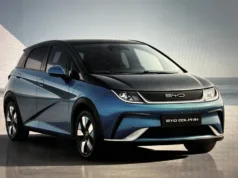
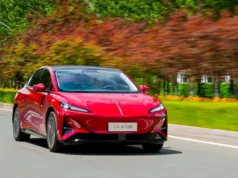
Chery cars for export are shown at the port in Lianyungang, China, on Jan. 12.STR/AFP/Getty Images
Chinese car company Chery Automobile Co. Ltd. is laying the groundwork to sell its electric vehicles in Canada, after last week’s announcement of a deal that will see Canada reduce tariffs on a limited number of Chinese-made EVs.
Chery is jockeying to be the first Chinese car company to sell mainstream passenger cars in Canada. Several Western brands, including Tesla and Volvo, manufacture cars in China, but homegrown Chinese car companies have yet to enter the Canadian market. So far, it has stuck mainly to taxis and buses rather than mass-market passenger cars.
The Globe and Mail spoke to three people with extensive experience in the Canadian auto industry who have all recently been contacted on LinkedIn by recruiters who say they are working on behalf of Chery.
How the arrival of Chinese EVs in Canada might lead to cheaper cars
The Globe and Mail is not naming these sources because doing so would jeopardize their current and future job prospects.
The recruiters all say, in messages seen by The Globe, that they are looking to hire for several roles that would support Chery’s expansion into Canada. In some cases, the recruiters specifically mention Chery’s subbrands Omoda and Jaecoo.
The messages suggest Chery is hiring for all the key roles needed to build a Canadian sales operation from scratch. The messages also said Chery will open an office in the Toronto area and that the move was part of the company’s “long-term decision to invest and grow its business in Canada.”
Chery did not respond to e-mailed questions.
Chery’s Omoda E5 electric cars are unloaded from a cargo ship at the Royal Portbury Dock near Bristol, U.K., in 2024. Recruiters mentioned the brand by name in messages seen by The Globe.Toby Melville/Reuters
Sources familiar with the industry said Vietnamese auto maker VinFast spun up its Canadian operations in a similar way in 2022, poaching key people from Canadian branches of major car companies.
Chery was one of two Chinese automakers, BYD BYDDY being the other, that met with Industry Minister Mélanie Joly during her trip to China last week with Prime Minister Mark Carney.
Part of Chery’s strategy involves rapid expansion into markets across the globe, with operations in 47 countries and counting, including the U.K., Italy, Australia and Mexico. As of July last year, Chery Group claimed it was China’s No.1 vehicle exporter. MotorTrend magazine reported in 2023 that Chery was then aiming to enter the U.S. market, before then-U.S. president Joe Biden imposed a 100-per-cent tariff on Chinese-made EVs.
Chery is the third-largest Chinese auto maker, having sold 2.6 million vehicles in 2025, according to data compiled by CarNewsChina. To compare, Chinese rivals BYD and Geely sold 4.6 million and three million vehicles, respectively. The global leader is Toyota, which routinely sells more than 10 million vehicles annually.
Mr. Carney on Jan. 16 said Canada would reduce tariffs on Chinese electric cars to 6.1 per cent from 100 per cent, in exchange for reduced tariffs on Canadian canola, seafood and peas. He said 49,000 Chinese EVs would be allowed annually, rising to 70,000 in five years.
“It is expected that within three years, this agreement will drive considerable new Chinese joint-venture investment in Canada with trusted partners to protect and create new auto manufacturing careers for Canadian workers and ensure a robust build-out of Canada’s EV supply chain,” the Prime Minister’s office said in a statement, without providing details.
Ms. Joly “is advancing discussions with global companies, including Chinese companies, to further investments in Canada’s automotive industry and will continue to do so in the coming weeks,” said a statement from her press secretary Gabrielle Landry.
Erin Quevillon, spokeswoman for Trade Minister Maninder Sidhu, said no additional details of the deal were available. She did not immediately respond to questions about how the quota will be divided, nor which car makers would take part, nor if commitments were made to open joint ventures.
Andrew King, managing partner of DesRosiers Automotive Consultants, said the car companies that will benefit from the change in the short term include Tesla and Volvo.
Volvo is owned by Chinese giant Zhejiang Geely Holding Group, maker of such brands as Geely, Polestar and Zeekr.
Tesla TSLA-Q, which saw its Canadian sales fall by more than 60 per cent in 2025, could import its Model 3 from Shanghai, Mr. King said, avoiding the 25-per-cent tariff it faces on the U.S.-made version of that car.
Volvo and Polestar both imported Chinese-made cars to Canada, including the EX30 and Polestar 2 before the tariffs began.
New entrants would be expected to sell in Canada in the longer term, Mr. King said, and they are expected to be very competitive.
Shahin Alizadeh, chief executive officer of Downtown Auto Group, which owns several Toronto car dealerships, lamented the lack of information from the federal government.
“This guy Carney just goes and does a deal with no explanations, no communication, not telling anybody, including our own premier,” Mr. Alizadeh said by phone.
He said it is not clear if cars currently imported from China – Polestars, Volvos – would be included in the 49,000 cap. If so, that would take up a large chunk of the quota, and would not leave enough for a car maker to establish viable sales outlets.
Should the 49,000 be an entirely new stream of cars, “then you may have one or two of them saying, ‘You know what, 20,000 to 25,000 vehicles a year isn’t such a bad gig, you know, let’s give it a shot and see where it takes us.”
He said he has not been contacted recently by any Chinese company looking to establish a sales base.
EVs have fallen out of favour with buyers in Canada and the United States as governments ended subsidies and other financial incentives.
Geely and several other Chinese car makers did not respond to e-mailed questions.