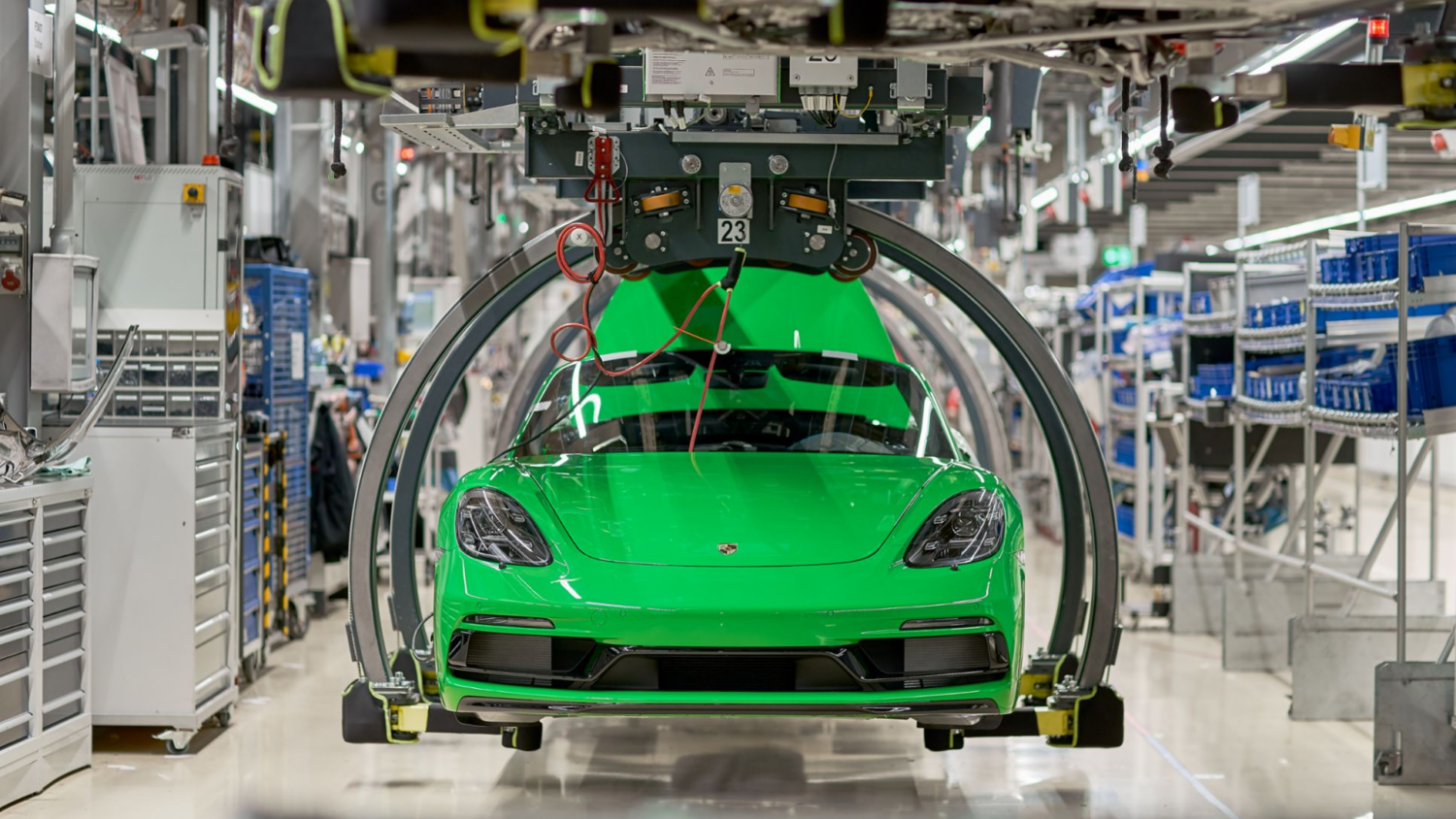
Porsche reported a sharp decline in China deliveries in 2025, underscoring continued pressure in the country’s high-end passenger vehicle market. The automaker delivered 41,938 vehicles in China last year, a 26% year-on-year decrease. The decline occurred alongside a broader contraction in the luxury and ultra-luxury segments, despite modest overall passenger-car market growth, driven mainly by pure-electric brands.
Sales data released on January 17 show that Porsche’s global deliveries reached 279,449 vehicles in 2025, down 10% from 310,718 units a year earlier. China accounted for roughly 15% of total deliveries, while North America remained Porsche’s largest regional market with 86,229 units delivered, unchanged year on year. Deliveries in Europe excluding Germany fell 13% to 66,340 units, while deliveries in Germany declined 16% to 29,968 units, partly due to supply constraints linked to regulatory compliance affecting certain models.
Porsche China President and CEO Alexander Pollich said the 2025 result was within internal expectations. He stated that while the overall Chinese passenger vehicle market showed slight growth, this was largely driven by domestic pure electric manufacturers. In contrast, the premium, luxury, and ultra-luxury segments continued to contract, directly affecting Porsche’s core market positioning in China.
In September 2025, Porsche adjusted its global product strategy in response to differing regional demand trends. The company decided to increase the share of internal combustion engine models in its lineup and to delay the launch schedules of some battery-electric vehicles. Pollich said this adjustment was intended to maintain flexibility across markets, noting that acceptance of new energy vehicles outside China is progressing more slowly, including in Europe and the United States, while demand for internal combustion engine vehicles remains strong in the global luxury segment.
For the Chinese market, Porsche plans to unveil the all-electric Cayenne at the Beijing Auto Show in April, followed by the launch of the all-electric 718. The company also plans to introduce a new internal combustion engine and plug-in hybrid model in the B-segment SUV category, which in China typically refers to small SUVs positioned below compact models and generally measuring around 4.1 to 4.3 meters in length. In the higher-positioned D-segment SUV category above the Cayenne, which corresponds to large SUVs comparable in size to the BMW X5 or Mercedes-Benz GLE, Porsche plans to prioritize internal combustion engine variants.
Market pressure remains significant. Data from the China Passenger Car Association show that cumulative luxury brand sales in China reached about 2.201 million units in the first eleven months of 2025, down 10.6% year on year. Against this backdrop, Porsche has continued restructuring its dealer network, reducing the number of sales outlets in China from around 150 in 2024 to 114 by the end of 2025, with a plan to further optimize the network to about 80 outlets in 2026.
In the luxury vehicle price band above 700,000 yuan (approximately 97,500 USD), the Huawei-JAC Maextro S800 electric sedan recorded higher December 2025 China sales than the combined deliveries of the Porsche Panamera, BMW 7 Series, and Mercedes-Maybach S-Class, as CarNewsChina reported.
Pollich stated that Porsche currently has no plans to manufacture vehicles in China or develop China-exclusive electric models, while continuing to monitor market developments and localization initiatives within the Volkswagen Group.

Follow us for ev updates