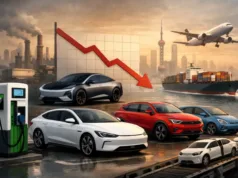
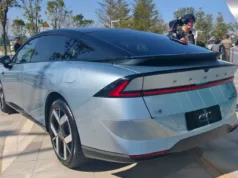
In October 2024, the EU introduced definitive anti-subsidy duties on Chinese-made battery electric vehicles (EVs), following a high-profile investigation launched without any industry complaint (European Commission 2024) – the first ‘own-initiative’ case of its kind.
Policymakers justified the measures on two grounds:
- Chinese producers were allegedly benefiting from extensive state subsidies that allowed them to gain market share in Europe at unfairly low prices
- Tariffs would defend EU manufacturers from a flood of low-cost imports that threatened Europe’s industrial base and the green transition
This narrative fits also with the warning of a second China shock (Marin 2025). Kee and Xie (2024) examined the larger trend of the use of both tariff and nontariff measures. Ex ante studies (Felbermayr et al. 2024) predicted large effects: significant price increases for Chinese EVs in Europe, large shifts in market share toward EU producers, and a reduction in imports. This is not what happened.
Europe’s EV trade surplus contradicts the ‘China threat’ narrative
A striking starting point is Europe’s overall trade position. Table 1 shows that the EU has run a consistently large and growing trade surplus in EVs (not just in cars overall). In 2024, the surplus was worth over €10 billion and imports from China actually fell, contradicting the narrative of a flood of Chinese imports. By the first half of 2025, the annualised surplus had grown to €16 billion, with exports up and imports (especially those from China) down.
Table 1 EU EV trade (in billions of euros)
Source: Eurostat (2025).
The reason for the export surplus is simple: the prevailing narrative is based on counting the number of EVs China exports to Europe, but Europe exports high-value EVs and imports lower-value ones. Indeed, the average export price of an EU-made EV is more than double the unit value of Chinese-made EVs entering the EU (Figure 1).
Figure 1 EU import and export unit value for EVs (price per car in US dollars)
Source: Comtrade (UN 2025) units in USD. Data from Eurostat (2025)
This suggests that EU manufacturers are not being undercut across the board, and that the EU’s EV trade dynamic is not one of displacement but of specialisation. Put differently, counting cars instead of value obscures the reality: Europe imports many Chinese small and mid-range EVs while exporting many high-end models. The EU’s trade position is strong, not fragile as the popular narrative wants to suggest.
Consumer prices did not rise despite tariffs above 30% for some brands
A central fear in Brussels was that countervailing duties would make electric vehicles more expensive for European consumers, slowing the green transition (Gros and Hu 2025). However, careful model-level comparison of prices before and after the tariffs reveals that Chinese EV prices to EU consumers have not increased. Indeed, most have fallen:
- BYD Seal U: –9%
- MG4: –7%
- Polestar models: –6%
- XPeng G6/G9: –3–4%
Even European models made in China showed no price increases in the EU. This result sharply contrasts with evidence from US tariffs during 2018–19, where consumer prices rose almost one-for-one with tariff levels (Cavallo et al. 2021, Fajgelbaum and Khandelwal 2022).
Why did this not happen in Europe? Two potential explanations are in order. First, Chinese firms absorbed the tariffs, maintaining EU consumer prices to defend market entry and build brand presence. The second reason might be that competitive dynamics in the EU EV market have intensified, with global manufacturers cutting prices across the board. Critically, this means the tariffs achieved none of their stated price-related policy goals.
Import prices did not fall either, contradicting standard tariff incidence expectations
If exporters absorb tariffs, their pre-tariff export prices should fall. Yet, the data show that import unit values for Chinese EVs in the EU fell only marginally, by amounts comparable to markets without tariffs. Moreover, Norway, Switzerland, and the UK – none of which introduced EV tariffs – experienced similar declines in Chinese import prices. Figure 2 illustrates a gentle downward trend in Chinese EV unit values across all European destinations. Thus, neither consumers nor importers bore significant tariff-induced price changes.
Figure 2 Average border price per imported Chinese EV (in US dollars)
Source: Comtrade (UN 2025).
To measure the impact of tariffs, a simple ‘before and after’ analysis is not enough
So far, we have just presented simple ‘before and after’ data. But this simple comparison is not conclusive since many other factors might have changed in the meantime. A possible control group is the three non-EU European countries that did not impose tariffs, namely Norway, Switzerland, and the UK. Their car markets are like those of the EU, with smaller cars dominating the market. The best way to measure the impact of the tariffs is thus to compare how Chinese EVs fare in these comparator markets without tariff protection.
Import shares of Chinese EVs fell, but no more than in countries with no tariffs
The data seem at first to support the Commission’s claim that tariffs curtailed Chinese imports: China’s value share in EU EV imports fell from about 55% in early 2024 to about 42% by mid-2025. But this trend is misleading unless placed in context.
Using Norway, Switzerland, and the UK as counterfactuals, in a recent paper we show that Chinese EV market shares fell everywhere, not only in the EU (Gros et al. 2025). The size of the decline was almost identical in non-EU markets without tariffs (Table 2). For Q2 2025, the fall in market share was greater in non-EU markets (–40%) than in the EU (–33%).
Table 2 Chinese market share reduction 2025
Notes: Every entry in this table shows the market share of China in total imports of the country concerned in Q2 or H1 2025, as a percentage of the corresponding value of 2024.
Source: Own calculations based on Comtrade (UN 2025).
This suggests that the decline reflects global dynamics, not EU trade policy. Chinese EV export growth peaked in 2021–22 and has been slowing ever since.
A simple difference-in-differences analysis provides an econometric confirmation. The coefficient capturing the EU tariff effect on Chinese import shares is negative, but it is small and not statistically significant. In short, the tariffs had no detectable impact on Chinese EV market penetration.
The tariffs achieved little but delivered one thing: tariff revenue
With no clear effect on prices or quantities, the most concrete impact of the tariffs has been fiscal. Based on actual import patterns in 2024–25, we estimate that tariff revenues amount to roughly €500 million per quarter, or €2 billion per year for the EU budget.
Around 80% of tariff receipts come from Chinese firms, with smaller amounts from BMW, MINI, Tesla, Volvo, and other companies producing EVs in China. This revenue is non-trivial, as it represents over 1% of the EU’s annual budget (Council of the European Union 2024). Moreover, it flows directly to Brussels (75%) and EU member states (25%) and arrives at a moment when EU finances face rising demands – from defence to green investment. Ironically, this windfall may be the only reason to retain the tariffs.
Why replacing tariffs with price floors would be a mistake
Reports suggest Chinese negotiators proposed a ‘minimum price agreement’ to replace countervailing duties, an approach reminiscent of the EU’s photovoltaic panel case in the early 2010s (Gros and Rotondi 2025). But this would be a poor policy choice, because a price floor keeps consumer prices artificially high, effectively transferring income from European consumers to Chinese producers. It would eliminate €2 billion in annual tariff revenue – a direct fiscal loss. Moreover, enforcement of a price floor is more complex and more prone to disputes or circumvention. Clearly, Chinese firms prefer a system that raises their export prices rather than one that taxes them.
What the evidence reveals about Europe’s EV competitiveness
Thus, the dominant narrative – that China is overwhelming EU carmakers (European Parliament 2024) – is misleading. The EU’s industrial base is far more competitive than political discourse implies. The real challenge is not imminent displacement by China, but the EU’s slow rollout of charging infrastructure, sluggish domestic demand for EVs, and the need for scale in battery production – structural issues tariffs cannot fix.
Policy implications: If the goal is competitiveness, tariffs are the wrong tool
The findings invite a broader reflection on Europe’s industrial strategy, because tariffs do not address Europe’s real competitiveness issues. Europe’s core EV challenges – limited charging networks, slow consumer adoption, fragmented industrial supply chains – are structural and domestic. Countervailing duties do nothing to address battery cost gaps, innovation bottlenecks, regulatory uncertainty, or the slow pace of scale-up.
Tariffs risk diverting attention away from needed reforms. The focus on Chinese competition has fuelled political narratives but may be crowding out more productive debates about the EU’s carbon-pricing and energy-taxation structure, incentives for R&D and battery innovation, reforms to accelerate permitting, and grid expansion (Cervantes et al. 2023).
The only strong argument for keeping tariffs is fiscal – €2 billion per year is a meaningful revenue stream. But a fiscal justification is very different from an industrial or strategic one. If the EU chooses to keep the tariffs, it should be honest about why.
The deeper lesson is that Europe’s competitive position in EVs is stronger than many believe, but its policy priorities are misaligned. Industrial strength will not come from shielding firms against Chinese competition but from enabling them to innovate, scale, and produce cost-effective EVs at home. Tariffs may be politically expedient, but they are no substitute for the hard work of building a globally competitive, green industrial ecosystem.
References
Cavallo, A, G Gopinath, B Neiman, and J Tang (2021), “Tariff pass-through at the border and at the store: Evidence from US trade policy”, American Economic Review: Insights 3(1): 19–34.
Cervantes, M, C Criscuolo, A Dechezleprêtre, and D Pilat (2023), “Fostering innovation for climate neutrality”, VoxEU.org,1 June.
Council of the European Union (2024), “Council gives go-ahead to EU annual budget for 2025”, press release, 25 November.
European Commission (2024), “Commission implementing regulation (EU) 2024/2754 of 17 October 2024 imposing a definitive countervailing duty on imports of new battery electric vehicles designed for the transport of persons originating in the People’s Republic of China”, C/2024/7490.
European Parliament (2024), “The future of European electric vehicles”, Think Tank, 22 November.
Eurostat (2025), International trade in goods (HS Code 870380), EUROSTAT Database.
Felbermayr, G, K Friesenbichler, J Hinz, and H Mahlkow (2024), “Time to be open, sustainable, and assertive: Tariffs on Chinese BEVs and retaliatory measures”, Policy Article, Kiel Institute for World Economics.
Fajgelbaum, P D, and A K Khandelwal (2022), “The economic impacts of the US–China trade war”, Annual Review of Economics 14(1): 205–28.
Gros, D, and W Hu (2025), “The EU’s anti-subsidy investigation against Chinese battery electric vehicle imports”, Policy Brief No. 39, Institute for European Policymaking at Bocconi University.
Gros, D, G Presidente, and N Rotondi (2025), “Who’s afraid of the Chinese?”, Policy Brief No. 47, Institute for European Policymaking at Bocconi University.
Gros, D, and N Rotondi (2025), “EU trade defence for PV, enviromental costs with gains”, Institute for European Policymaking at Bocconi University.
Kee, H L, and E Xie (2024), “Sino-EU battery electric vehicle dispute: Mixing tariff and non-tariff measures”, VoxEU.org, 9 October.
Marin, D (2025), “The China shock hits Germany”, VoxEU.org, 7 August.
United Nations (2025), EU imports of battery electric vehicles (HS Code 870380), UN Comtrade Database.