KEY POINTS
- China’s BYD became world’s leading EV maker in 2025
- Elon Musk-owned Tesla marks second straight year of sales declines
- In spite of sales data, Tesla is still a hit with investors
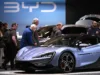
After years of dominating the global electric vehicle market, Tesla, Inc. was toppled by Chinese EV giant BYD in 2025. BYD outsold the Elon Musk-owned maker by over half a million vehicles last year.
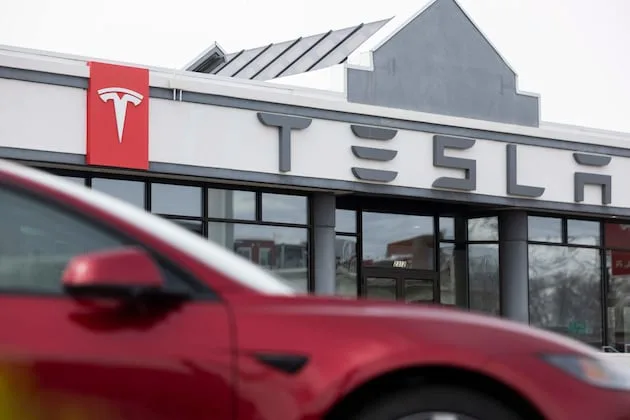
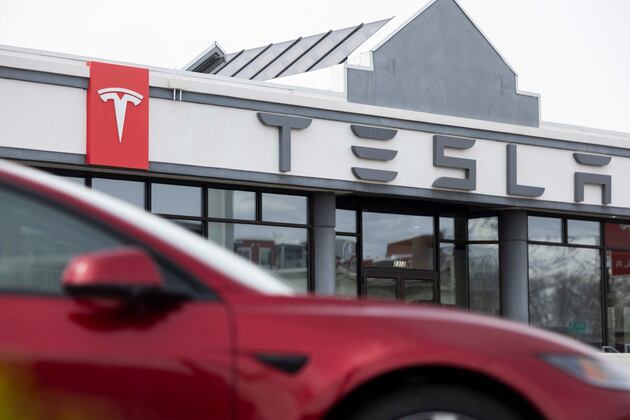
BYD’s annual sales figures were released Friday, just one day after Tesla shared fourth quarter data showing the U.S. company’s vehicle sales declined some 16% in the last three months of the year and were down around 8% for all of 2025. While Tesla reports vehicle deliveries versus actual sales, the volume figure marks the second straight year of declines for the Tesla, which launched in 2003 and delivered its first vehicle in 2008.
Tesla reported delivering 1.64 million vehicles in 2025 against BYD’s sales of 2.26 million vehicles. Global electric vehicles sales were up over 20% in the first 11 months of 2025 and BYD says its sales for the year jumped by 28% over 2024.
Tesla saw a surge in sales in the third quarter of 2025 as U.S. buyers scrambled to make purchases before a long-running federal tax credit program worth $7,500 on new vehicles came to an end, but the rest of the year saw declining interest in the vehicles.
Sales dropped but Tesla still gaining value
In spite of the dismal EV sales figures, Tesla stock ended the year up some 11%, driven by investor confidence that the company’s other endeavors, which included developing fully autonomous vehicles and humanoid robots, bode well for Tesla’s future prospects.
“Investors are so focused on the future with Tesla that they are ignoring delivery numbers,” Dennis Dick, a trader at Triple D Trading, which owns Tesla shares, told Reuters on Friday. “It’s about Optimus, Robotaxi and physical AI.”
Back in October, Tesla unveiled new, cheaper models of its Model Y crossover SUV and Model 3 sedan, two of the world’s best-selling vehicles.
Tesla has long touted plans to bring cheaper EV models to market and the move may have been driven by the end of the federal EV tax credit program, nixed in President Donald Trump’s budget for fiscal year 2026, which began Oct. 1.
Public perception of Musk’s once-close relationship with the president, and his actions as the former head of the Department of Government Efficiency, have soured some consumers on the Tesla brand while competition from both domestic and international electric vehicle makers has eroded the company’s market lead.
Industry watchers also point to Tesla’s stale model offerings, and lack of interest in the company’s Cybertruck, as factors behind the brand’s fall from dominance.
Some analysts point to Musk’s close personal association with the Tesla brand as a plus for those who view his actions outside the company as positive, but it’s also one that can have adverse consequences if those activities are viewed by potential customers in a negative light.
“Tesla has played a pivotal role in accelerating the adoption of electric vehicles, but our findings show that Elon Musk’s personal involvement in Tesla’s brand appears to be polarizing, pushing many buyers to look elsewhere,” said Ginny Buckley, chief executive of Electrifying.com, per a Newsweek report earlier this year.