A major milestone in clean aviation was confirmed on December 11 when Guinness World Records announced that a Chinese hydrogen-powered drone had completed the longest multirotor flight ever recorded.
The achievement was revealed at the 7th Zhejiang International Intelligent Transportation Industry Expo in Hangzhou, where officials confirmed that the Tianmushan-1 drone flew 117.17 miles (188.605 km) during a mission on November 16.
A record confirmed after a four-hour flight
According to Beihang University, the Tianmushan-1 remained airborne for more than four hours during its long-range mission over Hangzhou.
The team reported that every part of the flight was tracked in real time and later reviewed to meet Guinness World Records’ certification requirements.
Engineers involved in the project said the propulsion system performed stably from start to finish, while the drone’s overall handling remained consistent throughout the journey.
Guinness World Records accepted the data and confirmed that the drone had met all required standards for distance, endurance, and system integrity. University researchers described the accomplishment as a turning point for hydrogen-powered multirotor aircraft.
Hydrogen drone designed for long endurance
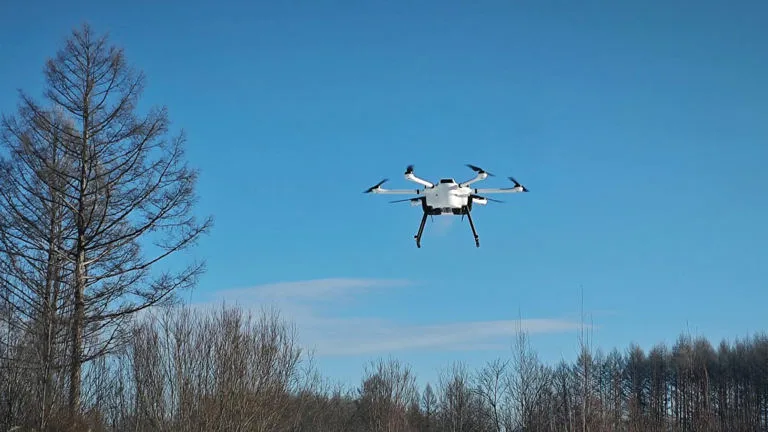
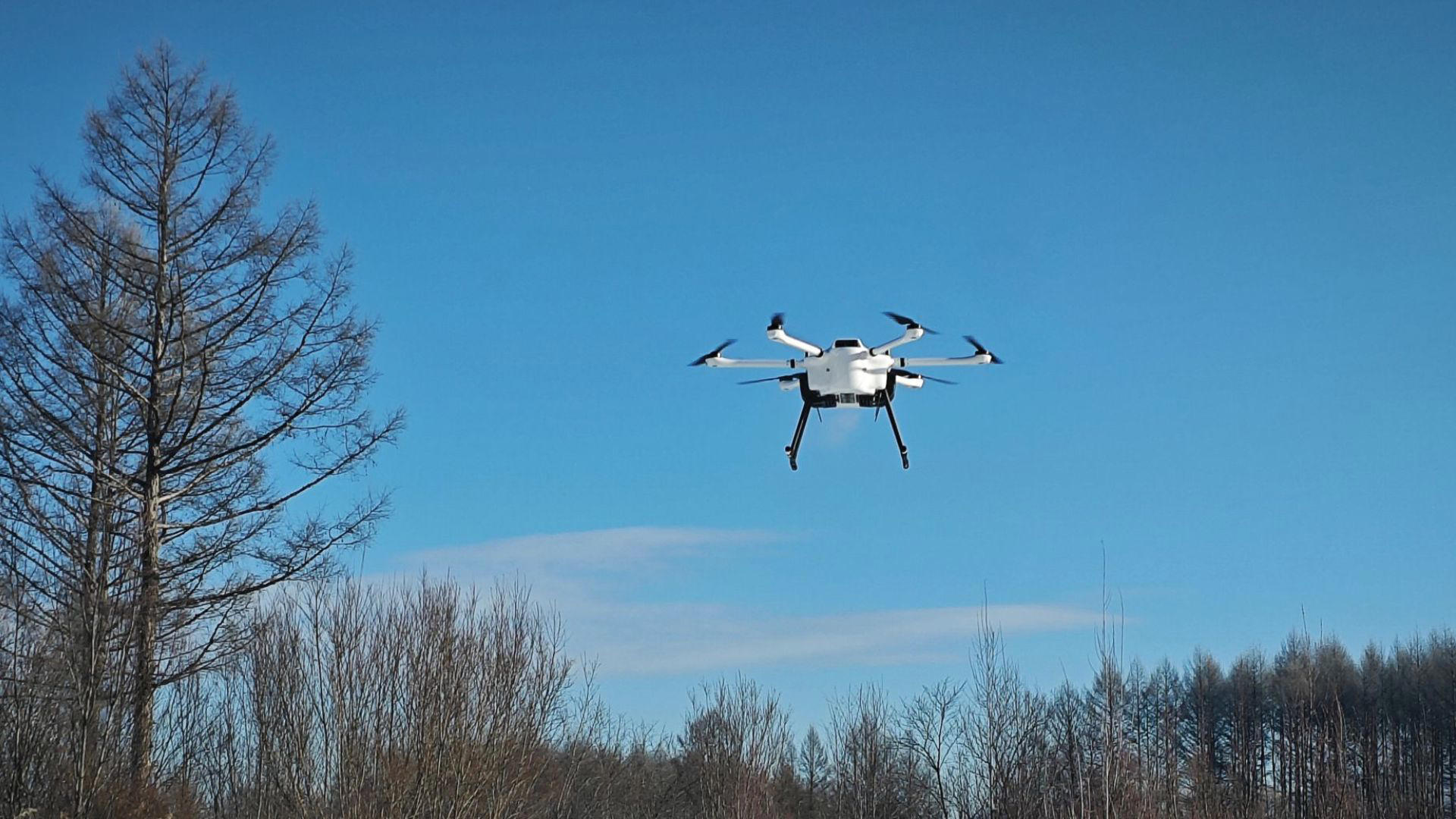
Tianmushan-1 was first introduced during its maiden flight in August 2024 and entered production in April 2025. Developed by Tianmushan Laboratory at Beihang University, the drone uses a hydrogen fuel cell as one of its defining engineering features.
The aircraft has a wheelbase of 63 inches (1,600 mm), weighs 41.9 pounds (19 kg) empty, and can carry up to 13.2 pounds (6 kg) of payload.
The university stated that the drone can fly for 240 minutes with no payload, giving it one of the longest endurance capabilities of any hydrogen-powered multirotor. It also performs reliably over a temperature range of −40°F to 122°F (−40 °C to 50 °C).
Another key feature is its ability to conduct 62-mile (100 km) BVLOS autonomous missions, which expands its reach for long-distance operations.
Applications expanding across multiple industries
The drone is already being deployed for a wide set of low-altitude tasks. Its long endurance and zero-emission design make it suitable for ecological patrols, oil and gas pipeline inspections, and monitoring new-energy plants.
Operators are also using it for island supply missions, urban traffic observation, and various emergency-response roles.
These applications benefit from the drone’s stable propulsion system and design focus on extended-range missions. Engineers highlighted that the record-setting flight supports broader national goals for greener aviation and improved industrial drone operations.
Hydrogen propulsion signals a new market opportunity
Industry observers say this world record highlights the strong commercial potential for hydrogen aviation as demand grows for clean, long-range drone systems.
Beihang University cited Tianmushan-1’s performance as evidence that hydrogen fuel cell technology is ready for wider deployment in large-scale drone fleets.
Officials at the expo noted that the new record is expected to accelerate research investments and encourage more companies to explore zero-emission aerial platforms.
Source: msn.com