Tesla slump sets up an EV battle with China
;)
Tesla sales have fallen sharply in Europe. Credit: Getty.




December 4, 2025 – 6:00pm
Late last month, prominent investor Michael Burry shut down his hedge fund, citing fears of an AI bubble. This week, newly liberated from the 9-5, he has once again made waves by going after Tesla in his newsletter, labelling the company as “overvalued” by stock markets. But Burry — the inspiration for the book and subsequent film The Big Short — is only one reason why Tesla’s stock has dipped by 10% in recent days.
Tesla’s fragile market value has been baked in since it became a darling stock in late 2019. Typically, an earnings benchmark is missed, the stock deflates, then rallies as the next big narrative arc falls from CEO Elon Musk’s lips. But as the headwinds increase, the conflict between a narrative of total future domination and the day-to-day reality of competing in a tight market is becoming more and more unavoidable.
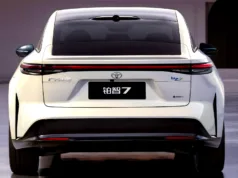
In particular, competition is coming from the emerging Chinese electric vehicle market, as shown by the news that BYD has registered more cars in Europe than Tesla for the year. Competition from both China and Western rivals has eaten into Musk’s dream of market supremacy. In the past couple of years, General Motors has used an “internal startup” model to slingshot its own highly successful electric vehicle brand, while Volkswagen is gaining quickly.
Of course, Musk’s supporters will argue that this was never a car company anyway. To get to a valuation of 60 times earnings, as Tesla commands, you can’t just be selling mid-range saloons: you need to be selling narrative, the prospect of a limitless tomorrow and technological development. The Tesla project, which will surely be the most lucrative in the long run is the world’s first genuine self-driving car, whose success would herald a national network of robotaxis controlled by his company. With that kind of technical lead, Musk would eat Uber in a single bound and effectively own the stock of taxis in North America. In that scenario, the stock would be wildly undervalued.
But we haven’t yet seen large-scale developments that would inspire confidence for investors. In June, Tesla launched a paid robotaxi service in Austin which still had safety staff in the passenger seat. The plan is to roll out these vehicles in around 10 US metro areas by the end of this year, also with safety drivers — but the stretch target that will net Musk his proposed trillion-dollar payday from the Tesla board calls for a million robotaxis on the roads in the next decade. Currently, there are 29.
Then there’s robotics involved in Musk’s Optimus project — also part of the Tesla brand — which could be bigger than the car stuff altogether. It’s a humanoid robot designed to perform “boring and dangerous work” in place of humans and has drawn hype from investors and Musk alike.
Yet recent showcase events were plagued by questions over what was genuine autonomy, and what was an actor with a wire doing their best C3PO. It’s not presently clear when Optimus will be ready for production. And while Musk would like us to believe that he alone has the Randian will to make the personal robot happen, there are half a dozen companies whose CEOs exhibit a similar sociopathic dedication to the task. Figure AI is backed by Microsoft, Nvidia and OpenAI, while Agility Robotics’ Digit is being piloted in Amazon warehouses. Then there is the Chinese competition from the likes of Unitree, whose robots are inevitably cheaper.
In fact, on many frontiers, there is a convergence now in exactly the space that Musk once made his own: between battery technology, advanced software, and high-value heavy manufacturing, be it in drones, robots or cars. The US and China are each in their own ways trying to organise their industrial base to support this coming world, sensing that this is where the 21st century will be won or lost. In the meantime, fickle markets will only back Tesla, or any other company, as far as they can prove short-term wins. For Tesla, these are becoming increasingly rare.