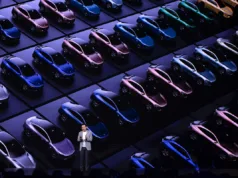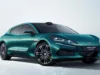
Saic (Shangjie), the brand collaborated by Huawei and SAIC under HIMA, has announced today that its recently unveiled mid-to-large size sedans, the Saic Z7 and Saic Z7T, are set to officially debut and open for pre-orders on March 23.
Both models have already completed their Ministry of Industry and Information Technology (MIIT) declarations and will fully integrate Huawei’s Tuling platform and Qiankun intelligent driving systems. They are positioned to compete in the 250,000 to 350,000 yuan (36,200 to 50,700 USD) price segment.
A selling point for both vehicles is their integration of Huawei’s technologies. This includes the Huawei Tuling platform and the Huawei Qiankun intelligent driving system. Saic is the most affordable brand under HIMA.
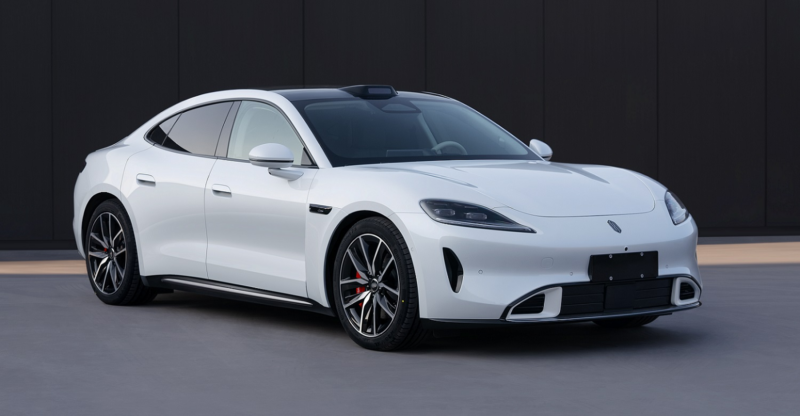
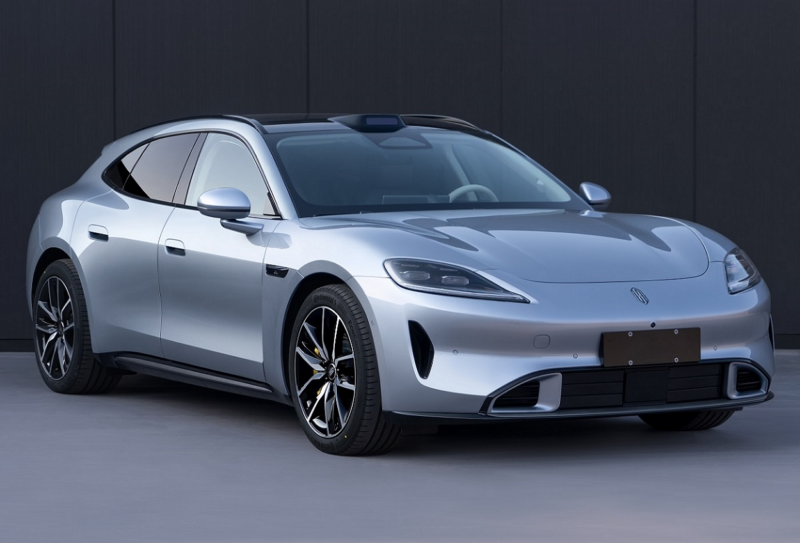
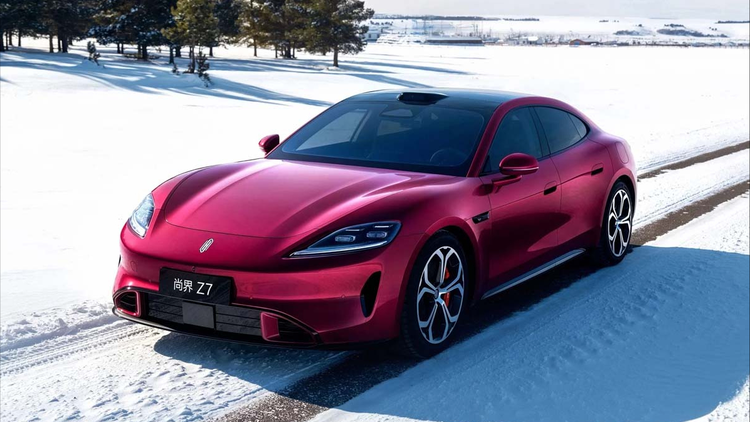
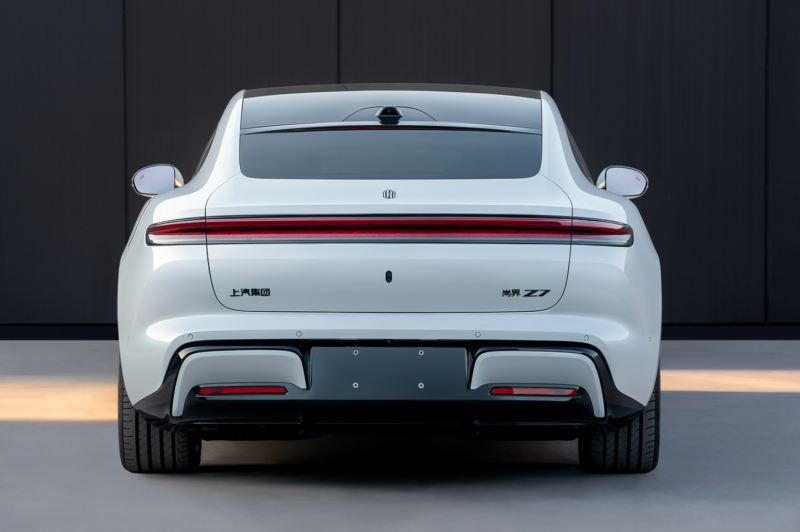
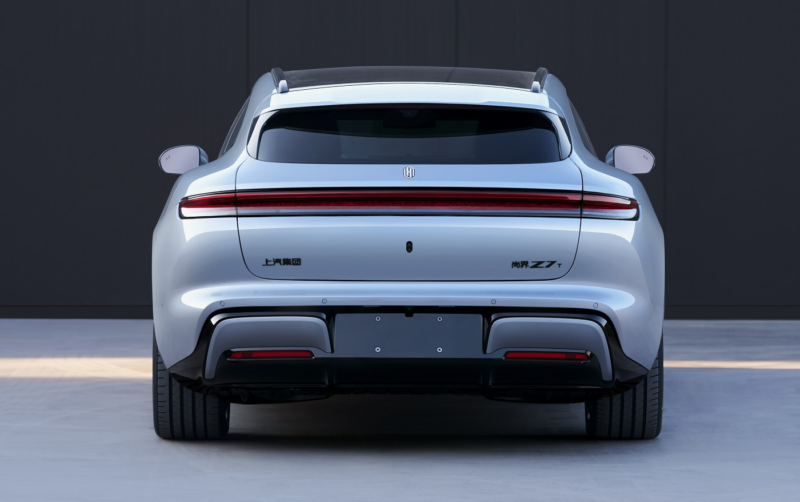
The front fascia of Saic Z7 and Z7T features a closed grille, complemented by narrow, elongated headlight clusters and a three-section air intake. At the rear, both models boast a through-type taillight design paired with a styled diffuser.
Dimensionally, the Saic Z7 and Z7T features lengths ranging from 5036 mm to 5051 mm, widths from 1976 mm to 1980 mm, and heights from 1445 mm to 1465 mm. Both sedans share a wheelbase of 3000 mm.
Under the hood, the Saic Z7 and Z7T will offer both single-motor and dual-motor powertrain configurations. The single-motor variant delivers a maximum power output of 264 kW (354 hp) and will be available with both Lithium Iron Phosphate (LFP) and Ternary Lithium battery options, achieving a top speed of 220 km/h. The dual-motor ‘Ultra’ version combines a 170 kW (228 hp) front motor with a 264 kW (354 hp) rear motor, utilising a Ternary Lithium battery. This setup propels the vehicle to top speeds of 239 km/h and 242 km/h. The battery comes from CATL or CALB.
Editor’s comment
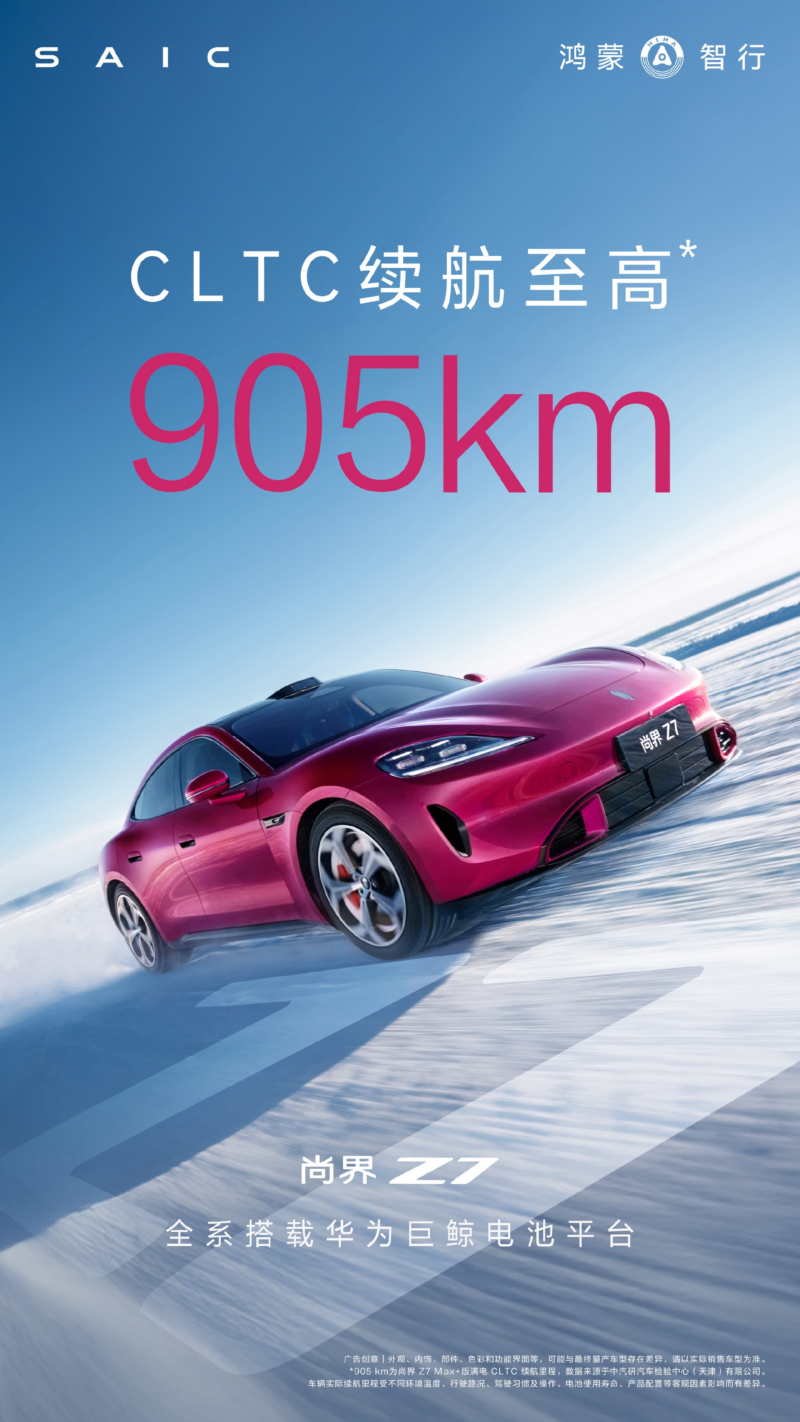
From every perspective, the Z7 appears to be directly aimed at the Xiaomi SU7. Why do I make this assertion? The new generation Xiaomi SU7 boasts a CLTC range of 902KM, a nice one, wouldn’t you agree? Yet, just recently, Saic Z7 revealed on social media that its maximum range is 905KM, surpassing the new Xiaomi SU7 by 3KM.
Aesthetically, the Z7’s exterior bears a striking resemblance to the Xiaomi SU7. This similarity has led to jokes on the Chinese internet, with some netizens quipping that the Z7 “solves the problem” of the SU7 not looking enough like a Porsche Taycan. But was that ever truly a “problem”?
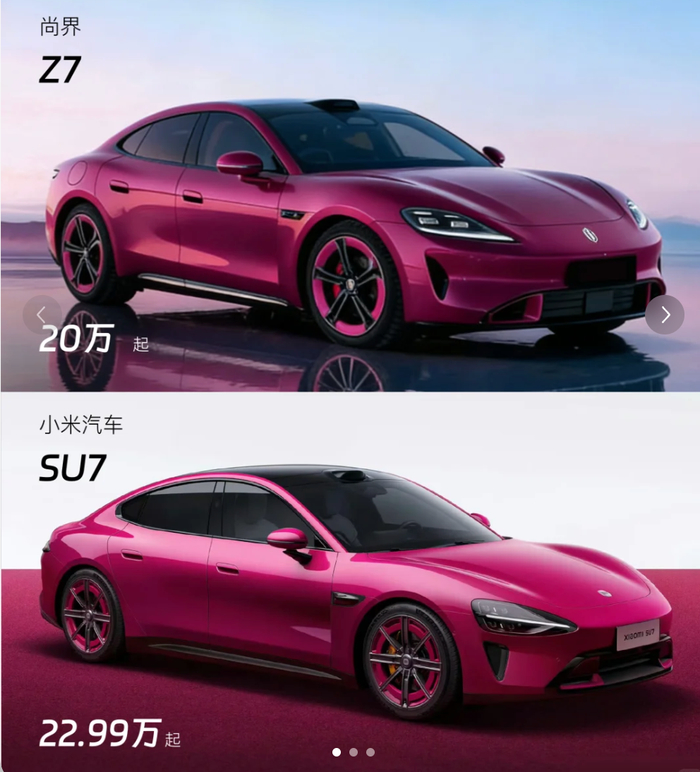
SAIC and Huawei likely believe that the Xiaomi SU7’s success stems primarily from its design, though this is clearly not the sole factor. This mirrors a trend where numerous automakers, including SAIC’s IM Motors, rushed to introduce extended-range electric vehicles (EREVs) after witnessing Li Auto’s pioneering success in that segment. However, IM Motors’ EREVs have not performed well in sales. Can the Z7, by merely following this trend, truly achieve success? I remain sceptical.
Let’s briefly review the history of the Saic brand. Last May, SAIC and Huawei announced their collaboration, and remarkably, just three months later, their first vehicle, the Saic (Shangjie) H5, commenced pre-sales. Even accounting for “China speed,” it’s implausible to develop a new car from the ground up in such a short timeframe. The only logical explanation is that the Saic H5 is based on an existing SAIC model. No wonder, it’s derived from the RC7, a model under SAIC’s largely defunct Marvel brand.
Regarding the sales performance of the Saic H5, I’ll be blunt: it’s been a failure. In February of this year, it sold only 2,727 units. Considering it’s the most affordable model within the HIMA lineup, this sales figure is far from satisfactory.
Now, it’s been merely ten months since the two companies officially announced their partnership last May. Yet, following the H5, Saic has already unveiled another vehicle: the Z7 and Z7T. Even by the standards of “China speed,” this pace remains exceptionally rapid. It compels me to question whether this latest model is also built upon an existing SAIC platform.
Nevertheless, the abrupt introduction of the Saic Z7 and Z7T may have, to some extent, disrupted the launch schedule for the new generation Xiaomi SU7. As early as early February, rumours circulated that the new generation Xiaomi SU7 would launch on March 17th, a date about which I published a report. However, in a subsequent live broadcast, Xiaomi CEO Lei Jun consistently indicated that the new generation SU7’s launch would occur in April of this year.
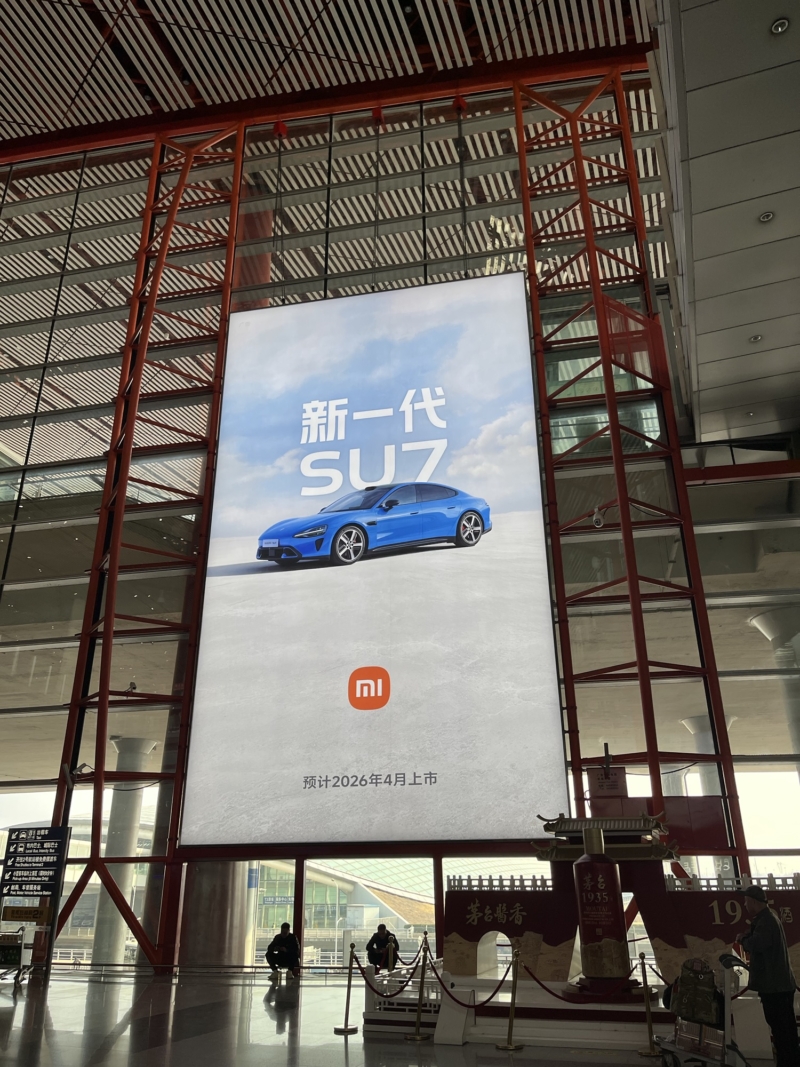
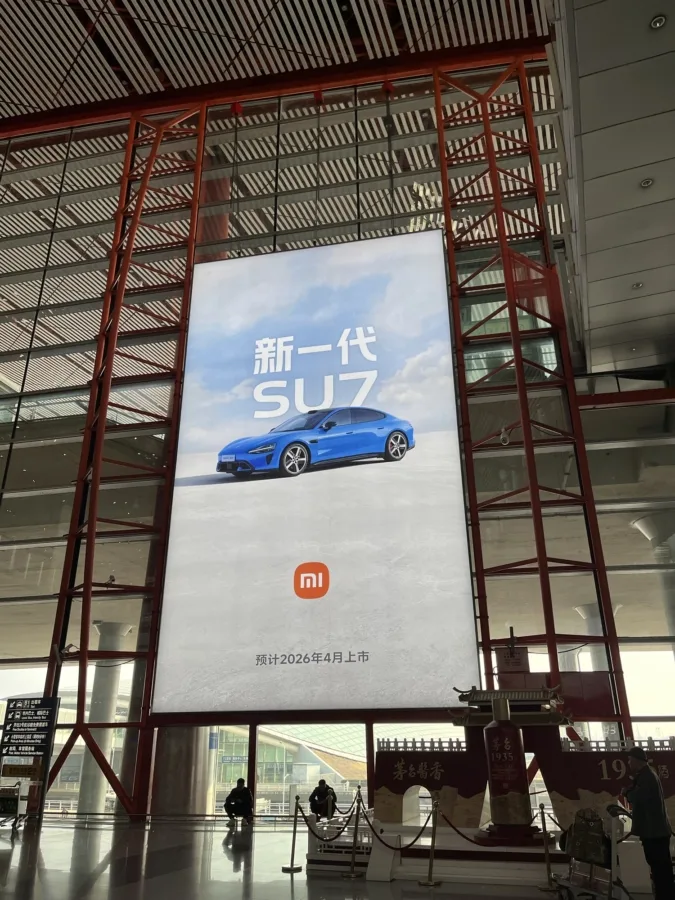
Even as recently as last week, when I test-drove the new generation Xiaomi SU7 in Beijing – yes, I did test it, and I’ll share my full driving impressions once the vehicle officially launches, but for now, I can confirm it’s good – advertisements for the new generation Xiaomi SU7 at the airport still prominently displayed “Expected release in April.”
Today, Xiaomi abruptly made an official announcement: the new generation SU7 will launch on March 19th, effectively reverting to its initial rumoured release date. I suspect this sudden shift is directly related to the Saic Z7/Z7T commencing pre-sales on March 23rd.

Follow us for ev updates