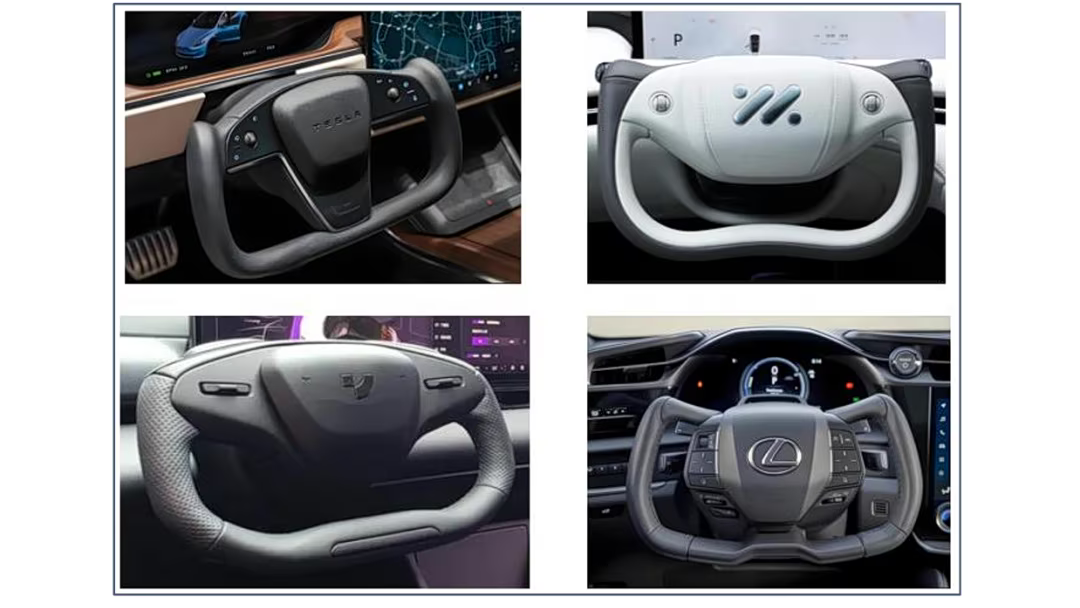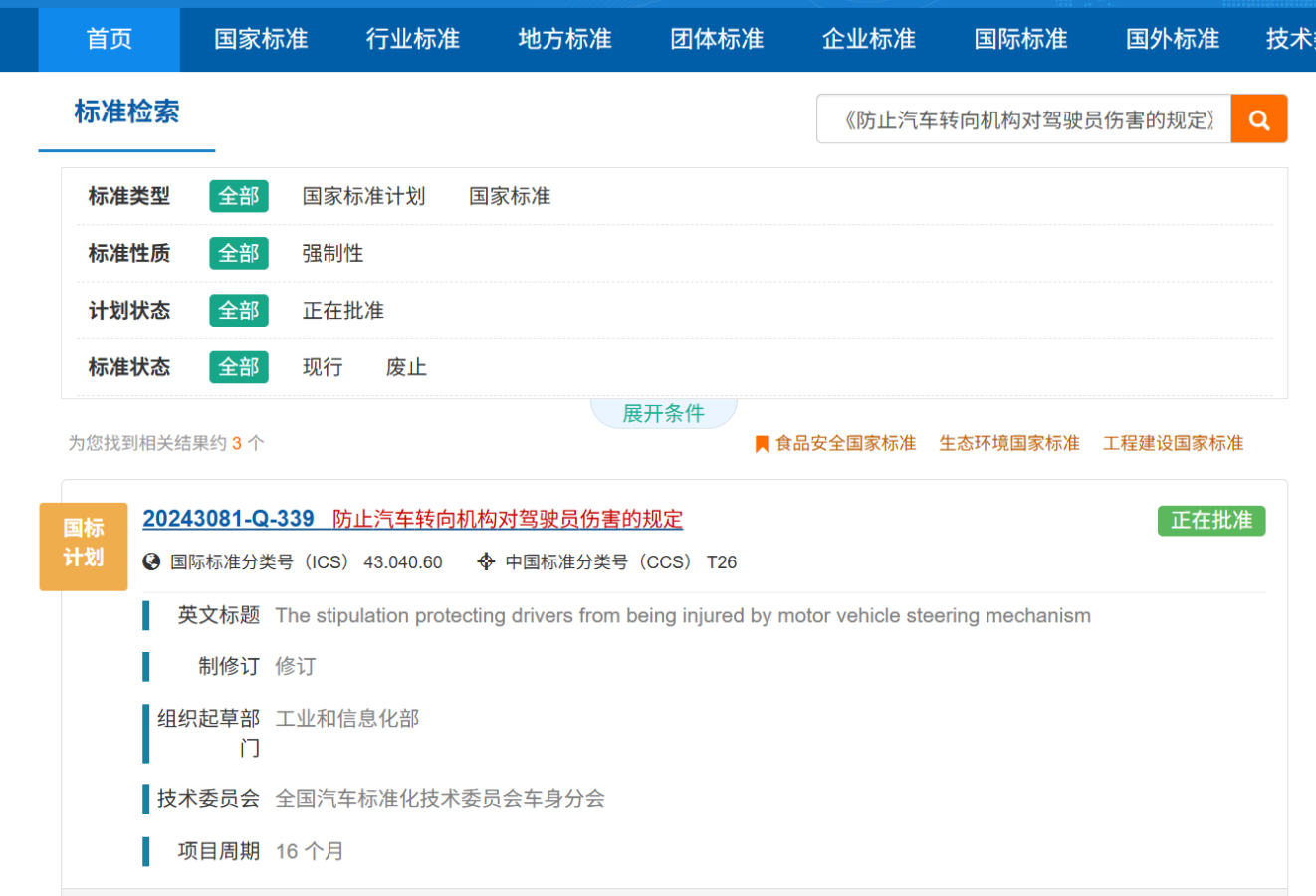

China’s Ministry of Industry and Information Technology (MIIT) has recently published the approval draft of mandatory national standard GB 11557-202X “The stipulation protecting drivers from being injured by motor vehicle steering mechanism.” The new standard, set to take effect on January 1, 2027, notably removes all technical content related to half-steering wheels (yoke steering), signalling regulatory caution regarding unconventional steering designs.
The current steering safety standard (GB 11557-2011) has been in use for over a decade and has become inadequate for evaluating new technologies emerging with the explosive growth of electric vehicles. The updated regulation tightens requirements in several key areas.
Compared to the previous version, the new standard aligns with international regulations by reducing the horizontal force limit in human module tests to 11,110N, matching UN R12 specifications. It also establishes strict thresholds for upward and backward displacement of the steering column during collisions.
Perhaps most significantly, the new standard eliminates exemptions for human impact testing that were previously allowed under certain conditions. All vehicle models must now pass this verification test, regardless of circumstances.
Half-steering wheels face fundamental compliance challenges under the new regulations. The standard requires impact testing at ten specific points on the steering wheel rim, including “the midpoint of the weakest area” and “the midpoint of the shortest unsupported area.” For half-steering wheels missing the upper section, these critical test points physically don’t exist, which means these kinds of steering wheels will be impossible to meet the new national standard.
Accident statistics quoted by Autohome show 46% of driver injuries originate from steering mechanisms. Traditional circular steering wheels provide large-area buffering when drivers pitch forward, while half-steering wheels allow the body to bypass the steering wheel during secondary collisions, dramatically increasing injury risks.”
Another key concern is airbag deployment safety. The new standard specifically prohibits hard projectiles (such as metal or plastic parts) from facing occupants during airbag deployment. Half-steering wheels, with their irregular covers and supporting structures, present unpredictable fracture patterns during the instantaneous airbag deployment that are difficult to validate through high-speed camera testing.
Beyond regulatory concerns, drivers have reported practical challenges with half-steering wheels. Unlike Formula 1 race cars that use minimal steering ratios appropriate for track conditions, consumer vehicles require much larger steering inputs for everyday manoeuvres like U-turns and parking. Many users report difficulties with one-handed operation and accidental contact with dashboard screens when using half-steering wheels.
When the new standard takes effect in 2027, all new vehicle models seeking type approval must comply with the updated regulations. Existing approved models will likely receive a transition period of approximately 13 months to adjust their designs.

Follow us for ev updates