

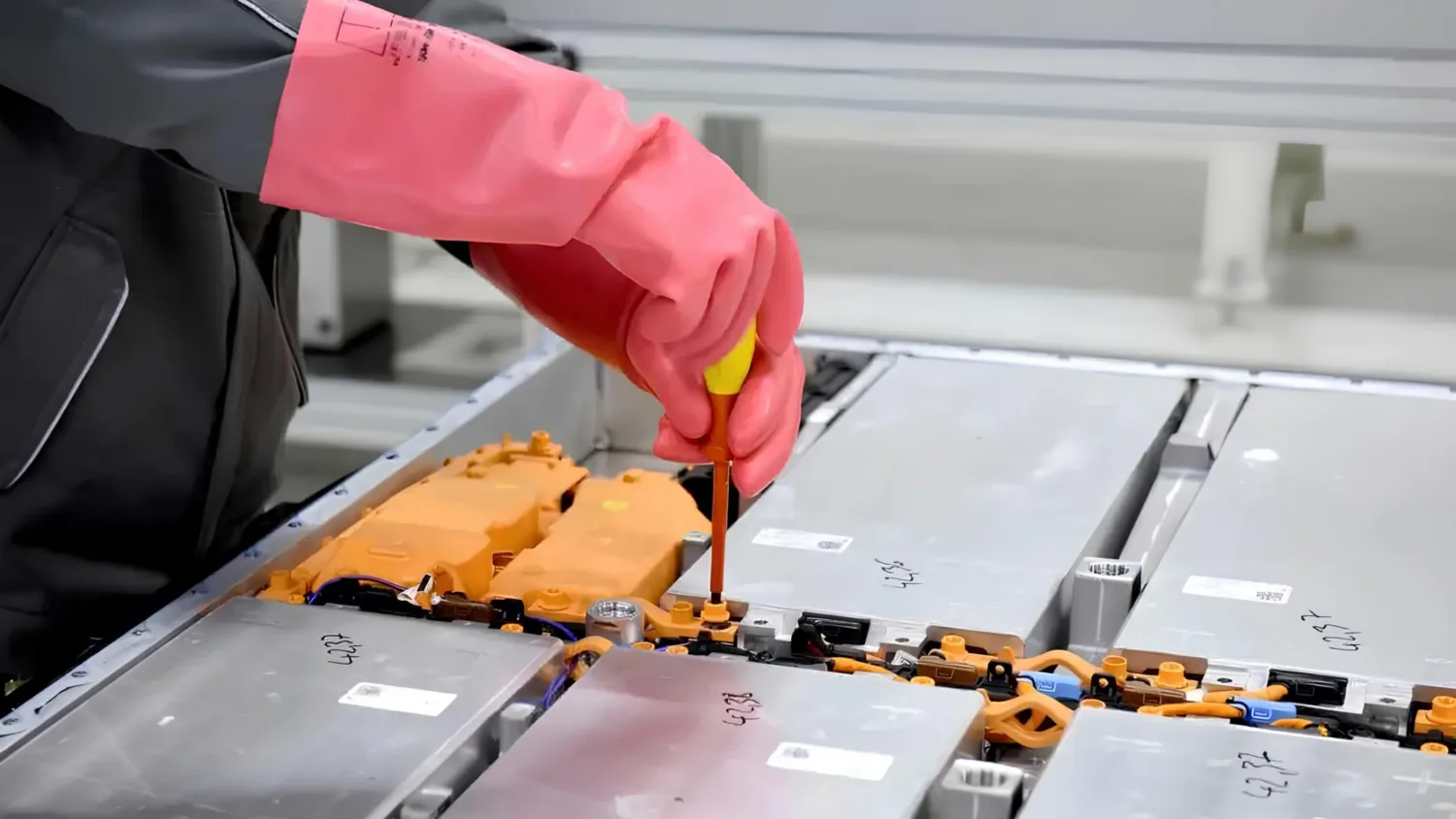
China implemented strict EV battery recycling rules as it issued the “Interim Measures for the Management of Recycling and Comprehensive Utilization of Retired Power Batteries of NEVs”. It will come into force on April 1 to control the flow of used batteries, requiring EV batteries remain with vehicles upon scrapping.
Previously, EV battery recycling faced some major challenges. They include a lack of infrastructure, ignition risks, and an expensive disassembly process due to non-standardized design. However, China was at the forefront of this industry as the world’s leading EV manufacturer. It was reported in October 2025 that some local companies can recover 96.5% of lithium and 99.6% of nickel, cobalt, and manganese.
Last year, the Chinese General Administration of Market Supervision and the Ministry of Industry and Information Technology (MIIT) formed a national technical committee to standardize battery recycling. On January 16, new battery recycling standards were defined by the regulator.
Core information about new battery recycling rules
According to the issued Measures of Management, the MIIT will establish a national information platform that will trace new energy vehicle batteries throughout their lifecycle, which includes production, sales, repair, replacement, dismantling, recycling, and comprehensive utilization. It will prevent situations in which the flow of retired batteries is difficult to track.
China will establish a standard system for the EV batteries comprehensive utilization and support the demonstration, promotion, and application of new technologies, processes, and equipment. The government also requires local manufacturers and importers of EV batteries to use low-toxic easy-recyclable materials during battery production. Each battery should be identified according to the GB/T 34014 GB/T standard.
NEV manufacturers and importers should submit technical information, such as the disassembly and dismantling of the battery, within six months after obtaining the mandatory product certification. They should submit information regarding the battery within 20 days of receiving the certificate of conformity. Vehicle sales date, battery code, and other information should be reported.
Measures of Management declare that every EV battery manufacturer or importer should fulfill several recycling obligations. They include establishing recycling service stations in regions where batteries are sold, publicizing and updating contact information of recycling service stations, and accepting all the retired batteries that should be recycled. The same rule goes for entities that sell new energy cars in China. EV batteries must remain with vehicles upon scrapping.
The utilization of used batteries shall comply with laws, regulations, and standards. No entity may engage in the comprehensive utilization without legal approval. Battery swapping and battery service enterprises should entrust retired batteries to comprehensive utilization enterprises, or to recycling centers established by battery and NEV manufacturers.
Battery recycling prospects in China
According to the Autohome report, Chinese research institutions expect the amount of retired batteries to reach 1 million tons in 2030. Previously, CarNewsChina reported that China’s battery recycling market reached 558 billion yuan (approximately 78 billion USD) last year. The current industry leader is the CATL-affiliated Brunp Recycling. It claims to recycle 50.4% of EV batteries in China, with an existing capacity of 120,000 tons of waste.
China needs to boost the battery recycling capacity while keeping it under control, as it is not only ecologically important but also capital-intensive. The newly issued rules will make it easier for the regulator to track each battery and control the recycling process. They will also create conditions for increasing the number of recycling stations, as each battery or NEV manufacturer and importer will be responsible for the retired batteries.
Follow us for ev updates


