


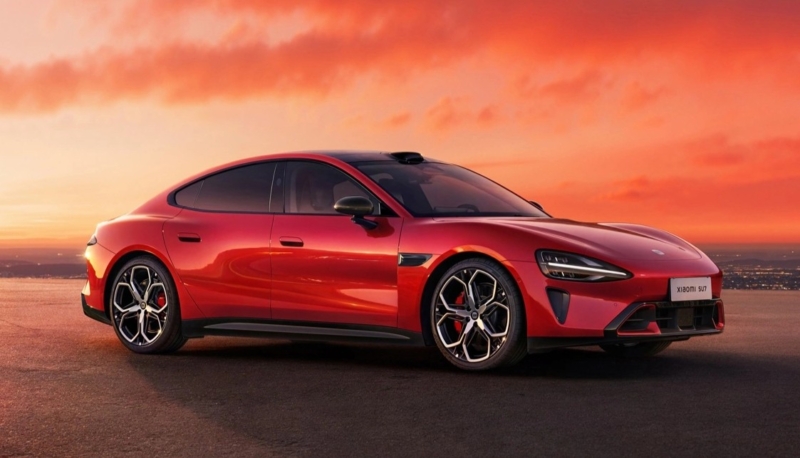
Xiaomi has launched the updated SU7 sedan, described as a new-generation model, introducing upgrades across safety, driving systems, intelligent features, and cabin materials. The model is priced from 219,900 yuan (31,870 USD).
Xiaomi SU7 Gen 2 Variants (2026)
| Variant | Price (yuan) | Price (USD) | Power | Battery | Range (CLTC) |
|---|---|---|---|---|---|
| SU7 Standard | 219,900 | 31,870 USD | 235 kW | 73 kWh (LFP) | 720 km |
| SU7 Pro | 249,900 | 36,220 USD | 235 kW | 96.3 kWh (LFP) | 902 km |
| SU7 Max | 303,900 | 44,043 USD | 508 kW | 101.7 kWh (ternary lithium) | 835 km |
Technical overview
The new SU7 standardises hardware previously limited to higher trims. All variants now include LiDAR, a 4D millimetre-wave radar, and the Nvidia Thor-U compute platform delivering 700 TOPS, supporting Xiaomi HAD driver assistance. Power comes from the V6S Plus motor across the lineup. Output is rated at 235 kW for Standard and Pro variants, while the Max version reaches 508 kW.
Battery options include 73 kWh and 96.3 kWh LFP packs, and a 101.7 kWh ternary lithium battery. CLTC range figures are 720 km, 902 km, and 835 km. Xiaomi lists a high-voltage system spanning 752V to 897V, depending on variant, while describing the platform as 800V-class.
Product context
The sedan retains its fastback proportions, measuring 4997 mm in length and 3000 mm in wheelbase. Exterior updates focus on functional revisions, including radar integration into the front fascia and a wider rear tyre setup.
Inside, Xiaomi has updated materials and interface design. The cabin integrates a 16.1-inch central display, a 7.1-inch rotating instrument panel, and a head-up display, running Xiaomi’s smart cockpit system. The system supports expanded voice control functions and multi-screen interaction across the cabin.
Structural upgrades include the broader use of high-strength materials, with 2200 MPa steel applied in key areas, as well as nine airbags. Xiaomi also introduced a triple-redundant door-unlocking mechanism with multiple power backup pathways, designed to function under extreme conditions. The battery pack receives additional underbody protection and coating enhancements.
The model also introduces Xiaomi’s “Dragon Chassis,” which combines a front double-wishbone and a rear five-link suspension layout. Higher trims add dual-chamber air suspension with adaptive damping, along with predictive control functions based on road-condition monitoring.
Market positioning
The updated SU7 continues to target the mid-size electric sedan segment, competing with models such as the Tesla Model 3. Xiaomi is positioning the new-generation model with a broader set of standardised features, including driver-assistance hardware and high-voltage architecture, now available across all variants.
The launch follows a temporary production adjustment period. Xiaomi SU7 deliveries fell to 218 units in February as the factory underwent retooling in preparation for the new-generation model, according to previous CarNewsChina reporting. The transition indicates a shift in manufacturing focus rather than a demand-driven decline.
Xiaomi’s EV business has continued to expand in parallel. The company previously reported cumulative deliveries exceeding 600,000 vehicles within 22 months and outlined a 550,000-unit delivery target for 2026. This provides context for the SU7’s role as a volume model within Xiaomi’s broader automotive strategy.


Follow us for ev updates