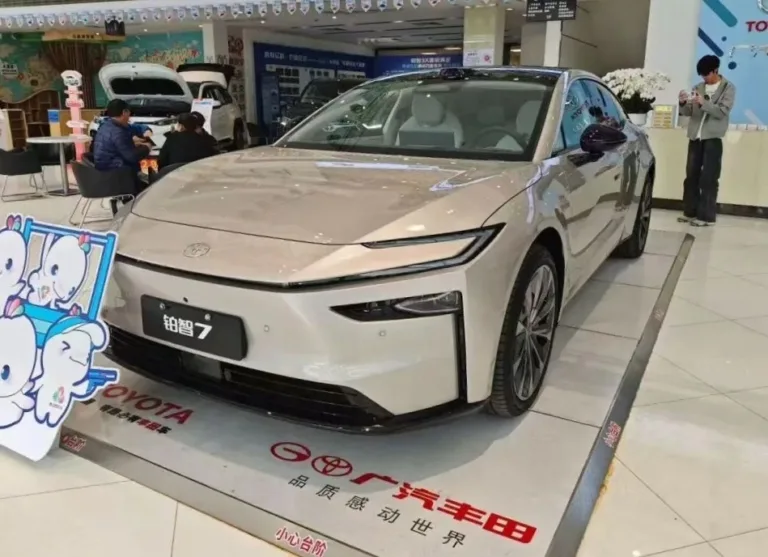

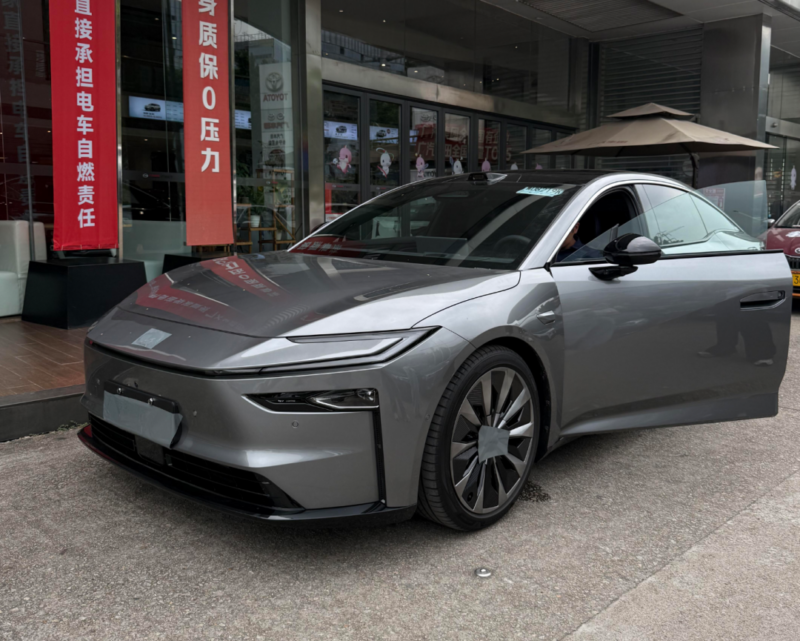
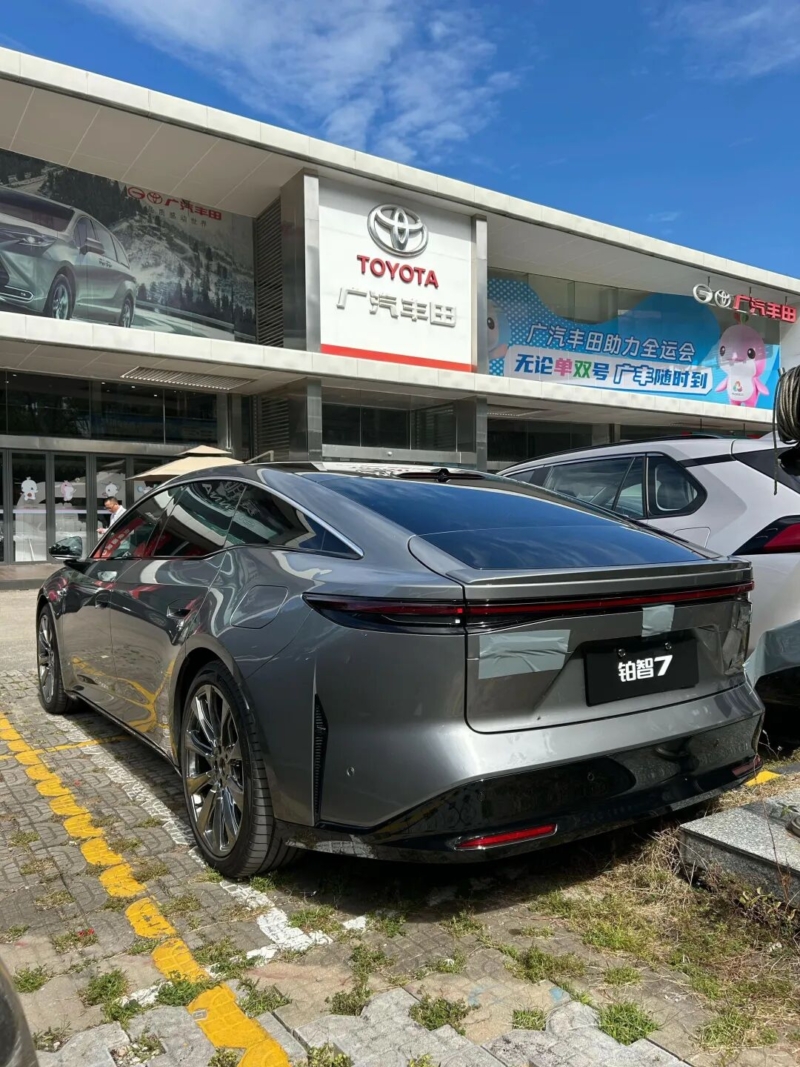
Toyota’s upcoming electric sedan, the bZ7, has appeared in dealership photos ahead of its scheduled market launch in Q1 2026. The bZ7 follows the bZ3X shown at the 2025 Guangzhou Auto Show. It continues Toyota China’s strategy of developing locally focused EVs with extended dimensions, now with a Huawei DriveONE electric-motor system.
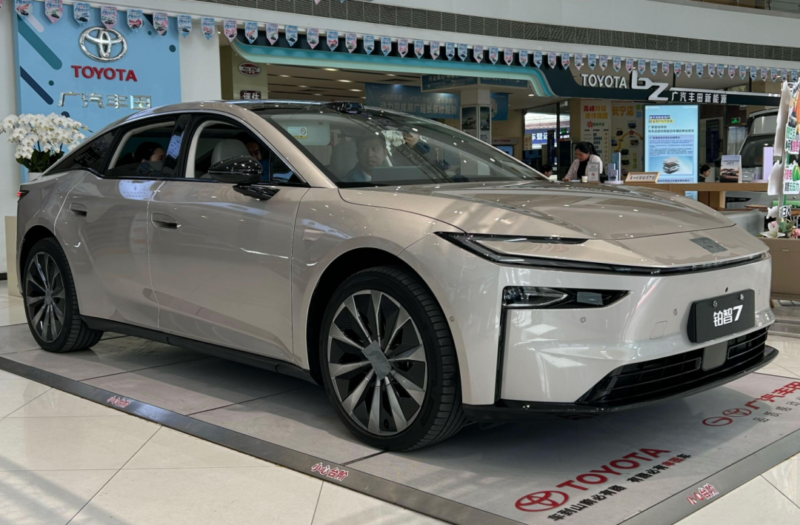
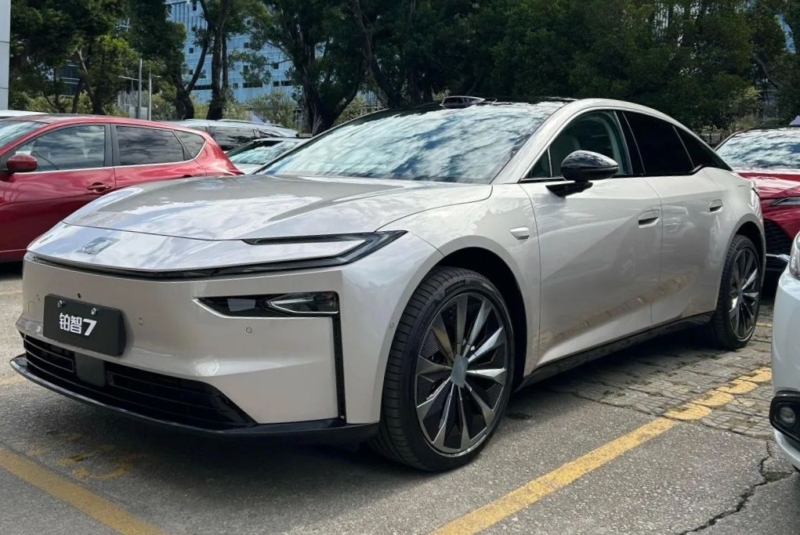
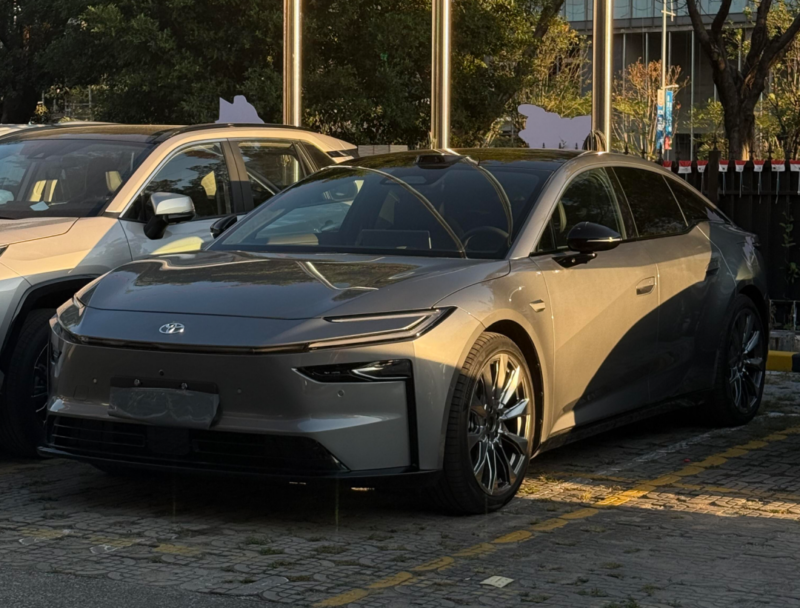
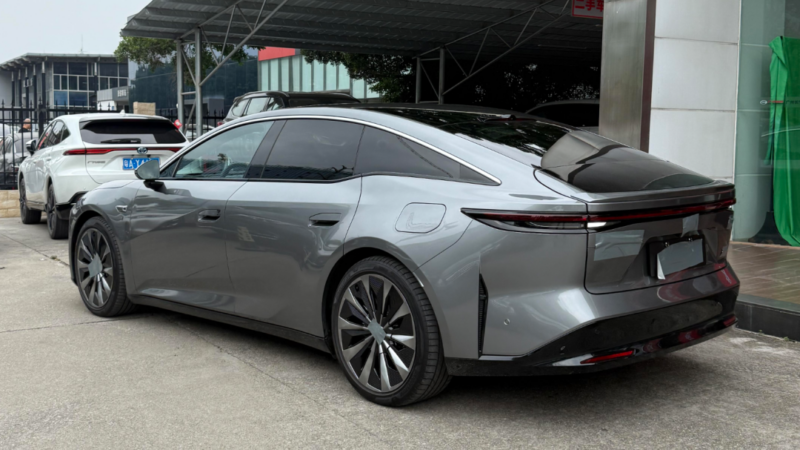
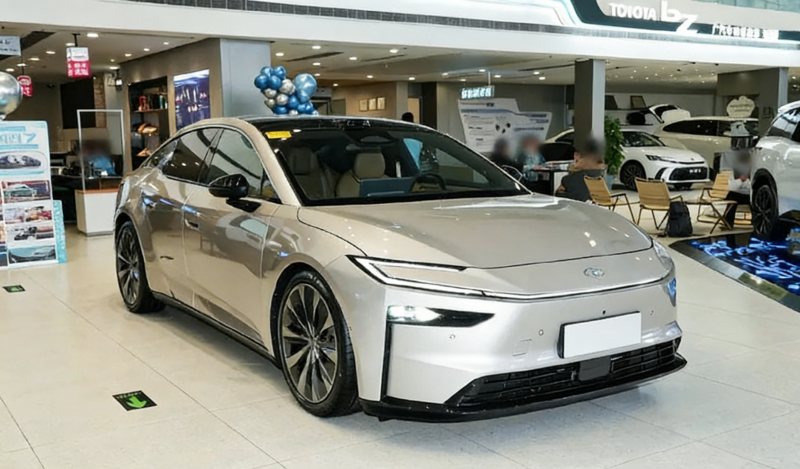
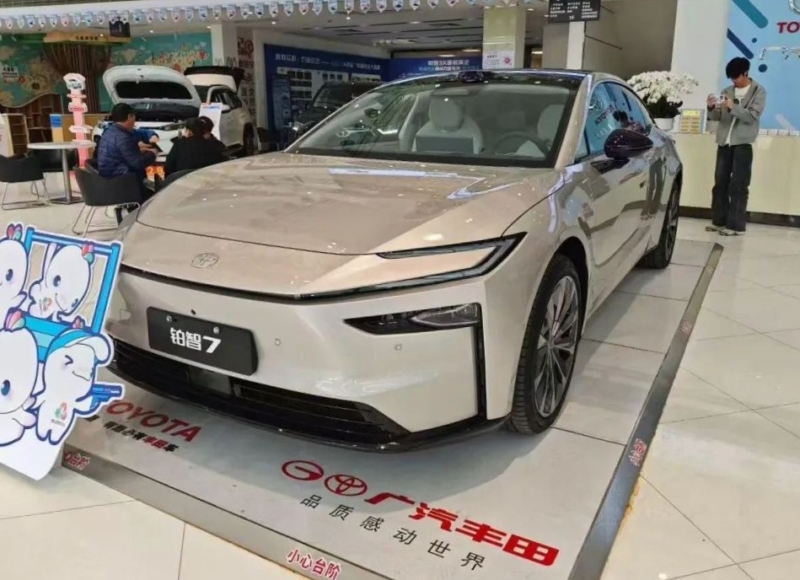
The bZ7 is positioned as a mid- to large-sized electric sedan priced around 200,000 yuan (approximately 28288 USD), with a total length of 5130 millimetres, a width of 1965 millimetres, a height of 1506 millimetres, and a 3020-millimetre wheelbase. These measurements make it larger than models such as the Xiaomi SU7, Xpeng P7 and P7+, and BYD Han EV. Images show a sloping roofline, semi-hidden door handles, frameless doors, and a LiDAR unit mounted on the roof as part of the car’s driver-assistance hardware.
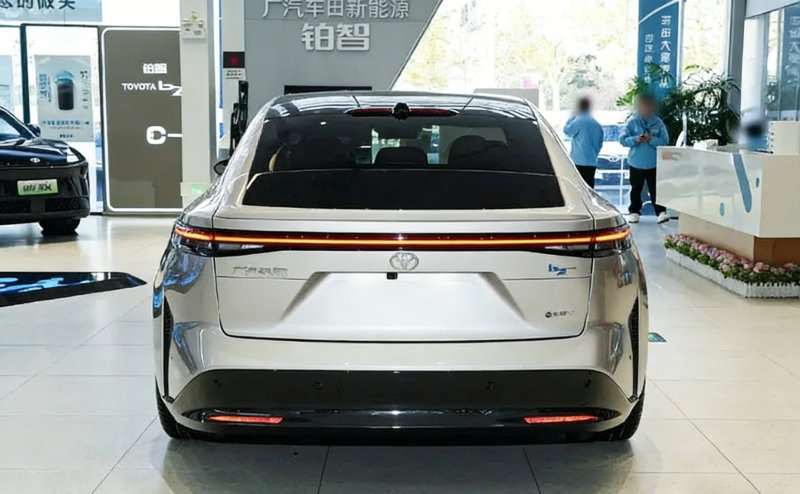
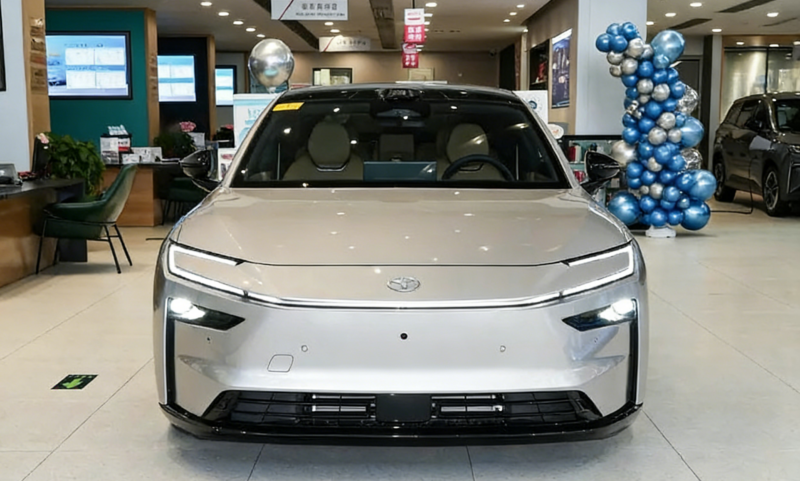
The front adopts Toyota’s recent closed grille design theme, with a C-shaped light strip spanning the upper section of the fascia and an L-shaped lower lighting arrangement combined with vertical air channels. The rear features a through-type crystal taillight and a minor integrated spoiler above a darkened bumper section. Seven exterior colours are planned.
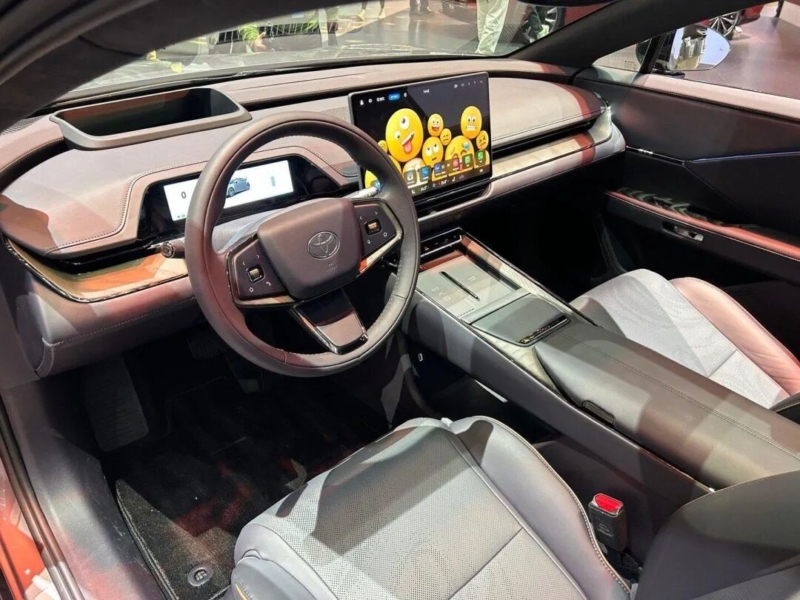
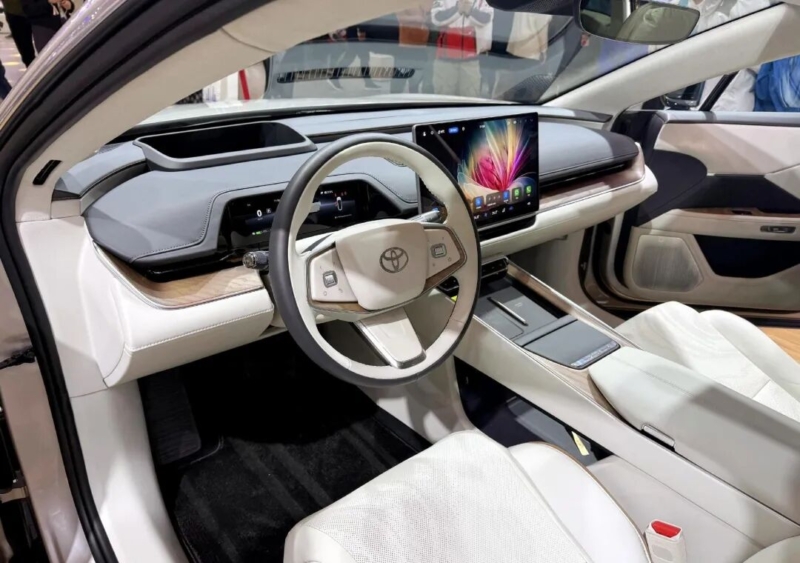
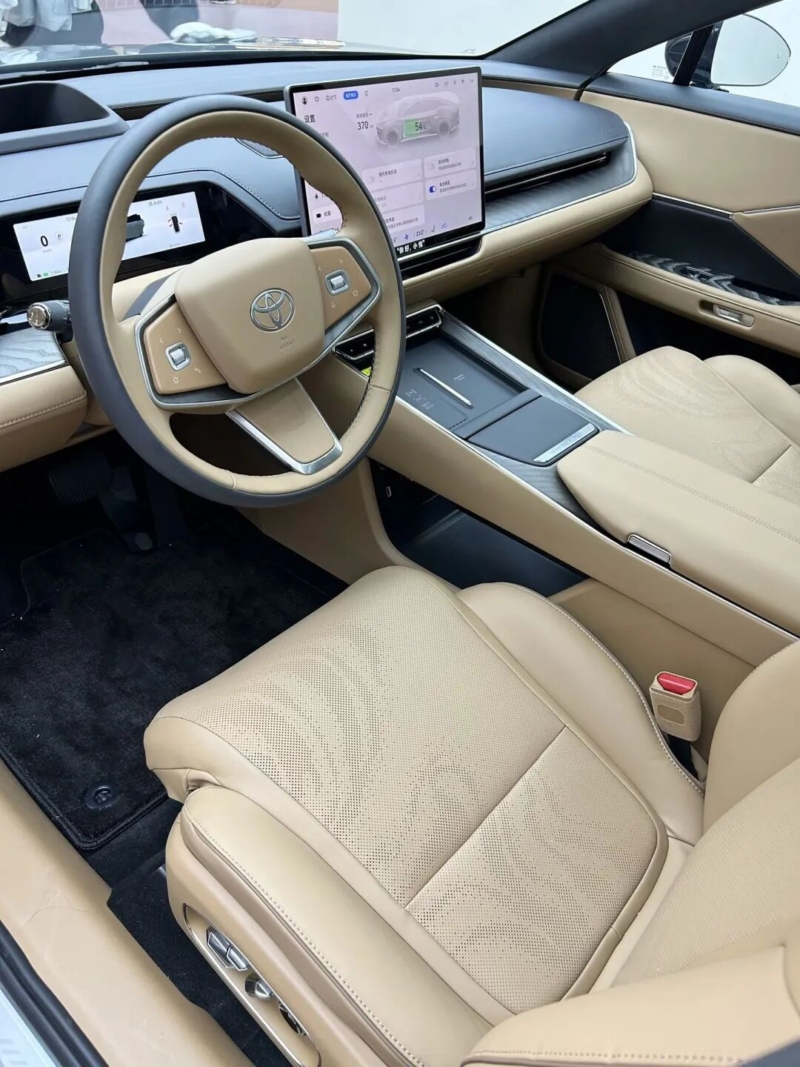
Inside, the bZ7 continues the layout introduced on the bZ3X, including a floating central display, an embedded rectangular digital instrument screen, and a head-up display. The model runs the HarmonyOS 5.0 cockpit, developed with Huawei, and integrates functions from Xiaomi’s in-car ecosystem.
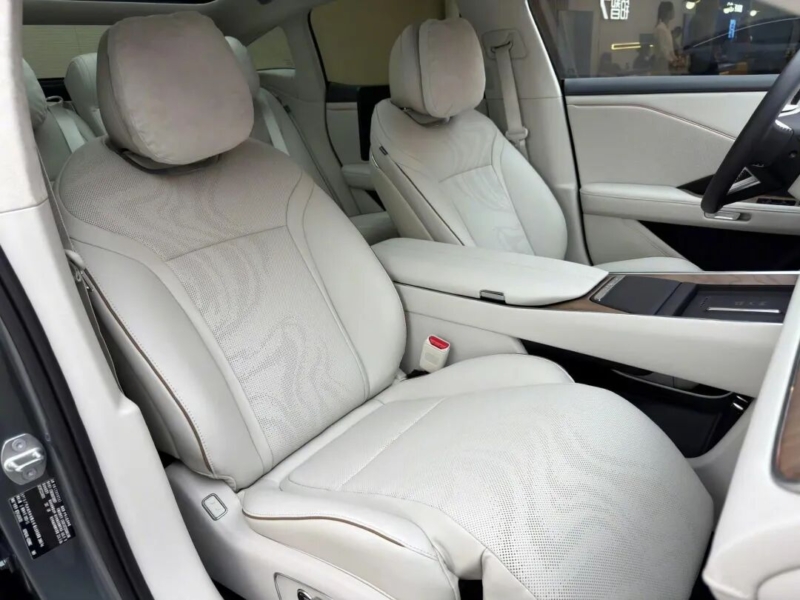
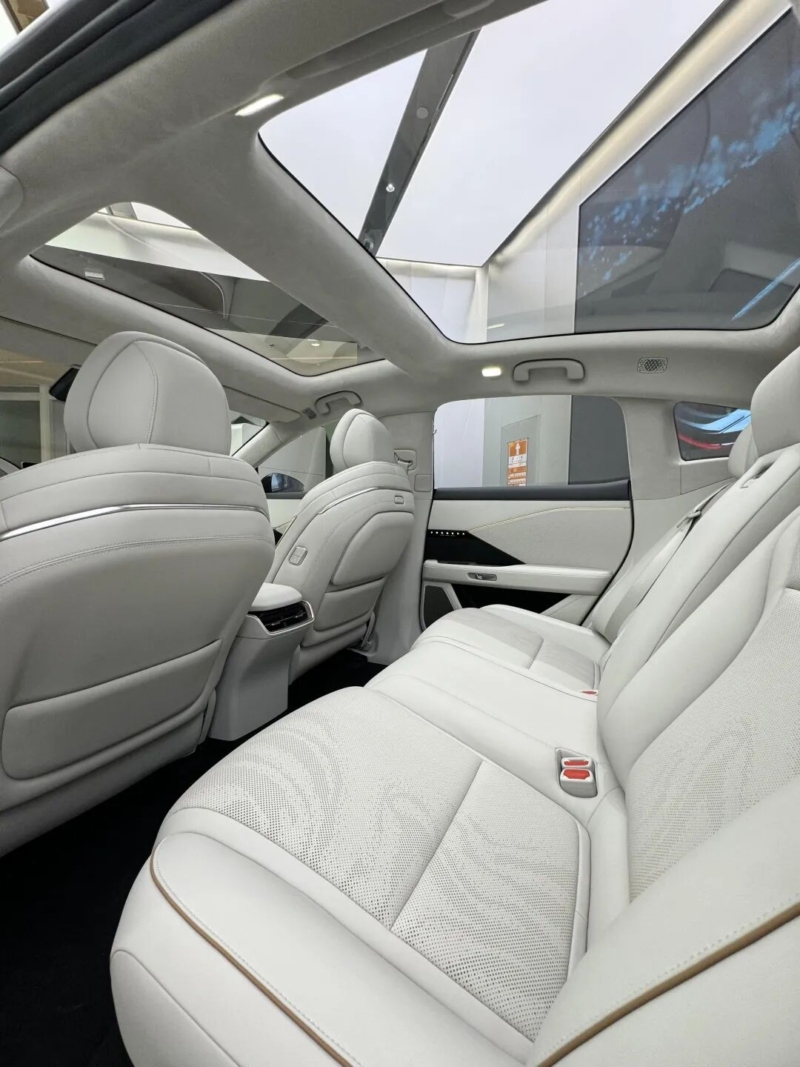
Three interior themes will be offered, featuring wood trim and wide leather-covered surfaces, along with a multifunction steering wheel, wireless charging, and physical switchgear. A zero-gravity passenger seat with an extendable leg rest is included, and all four primary seats support ventilation, heating, and massage. Yamaha audio, a split panoramic roof, and a cooled and heated storage box on the front centre armrest appear in the pre-launch configuration.
Power comes from the Huawei DriveONE electric motor system with a maximum output of 207 kilowatts. Battery capacities of 71.35 kilowatt-hours and 88.13 kilowatt-hours will be offered, corresponding to CLTC ranges of 600 kilometres and 680, 700, or 710 kilometres, respectively. The suspension uses a dual-chamber air setup paired with SDC dampers, following tuning work by Toyota’s luxury and performance teams. Additional details are expected to be confirmed closer to the Q1 2026 rollout.

Follow us for ev updates