


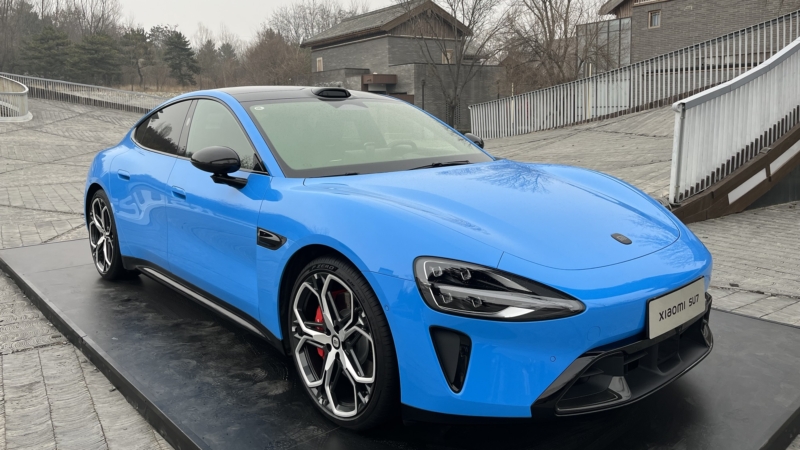
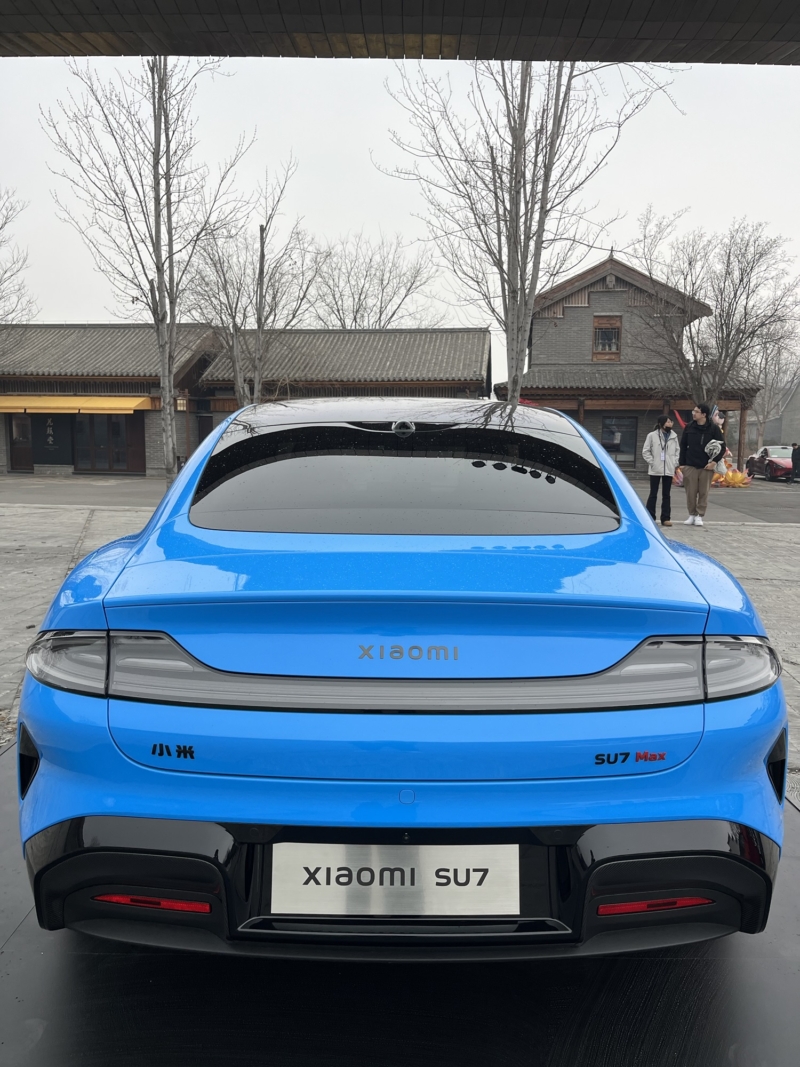
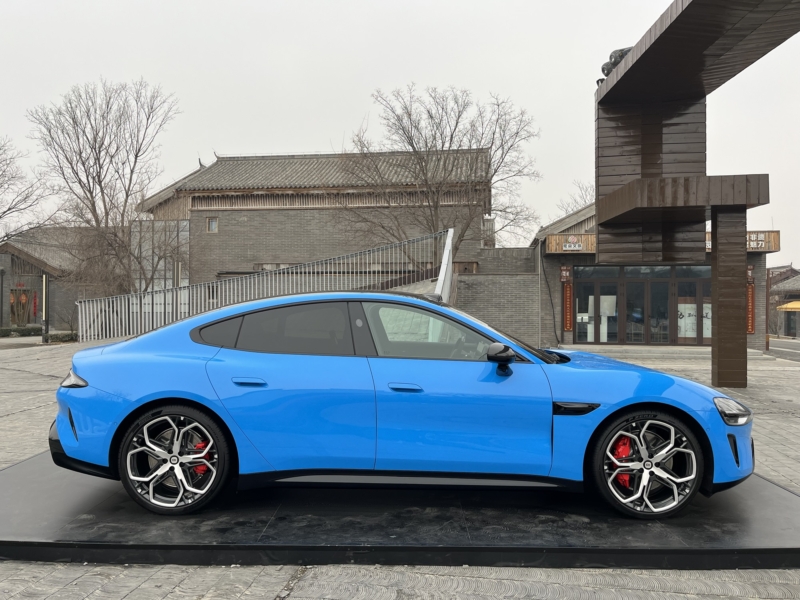
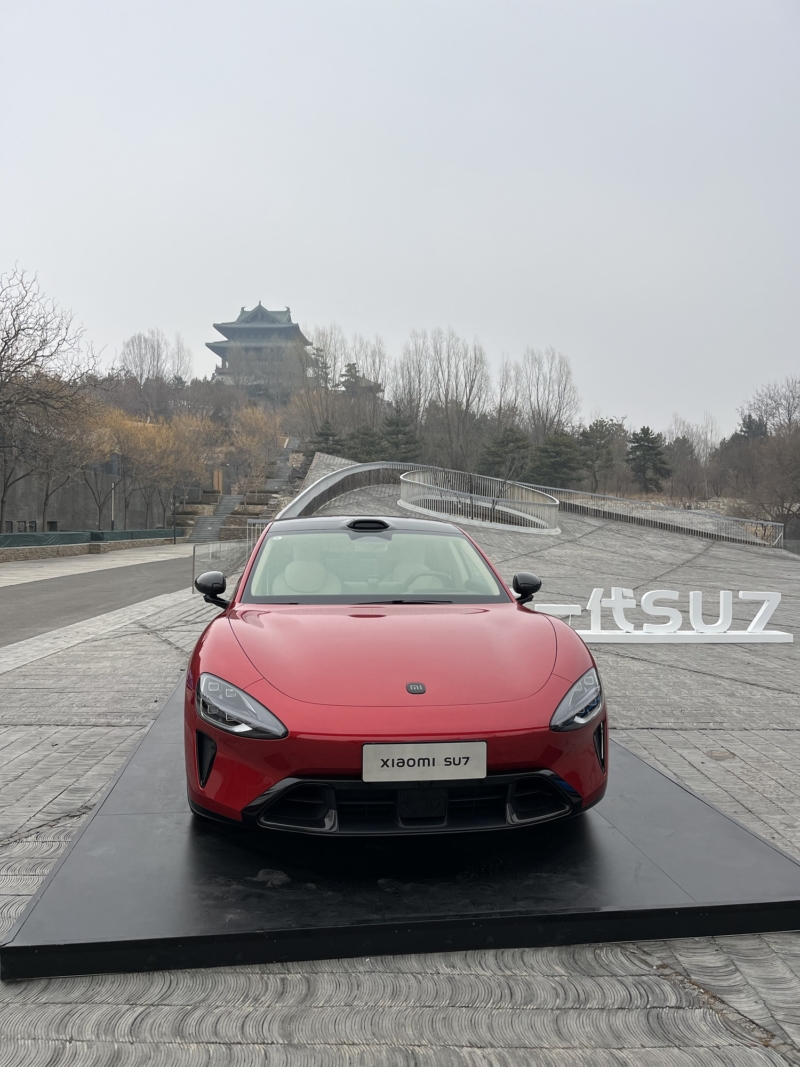
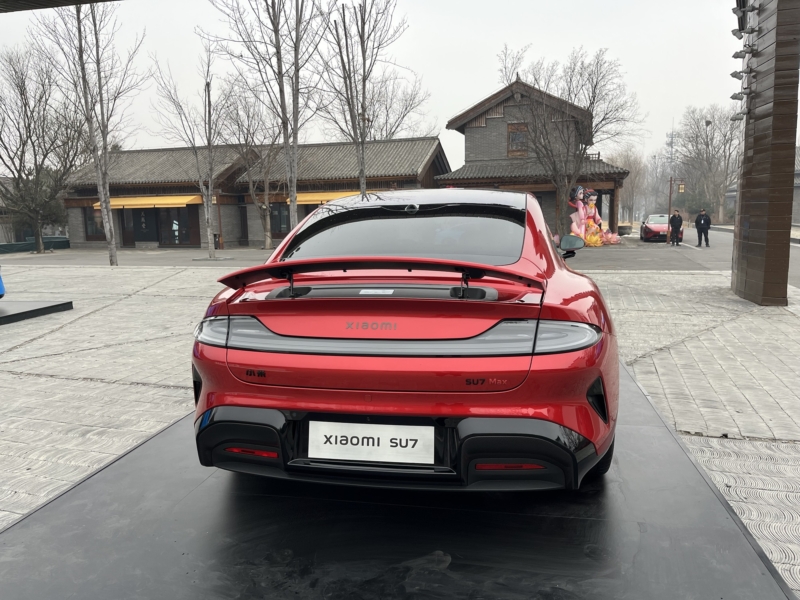
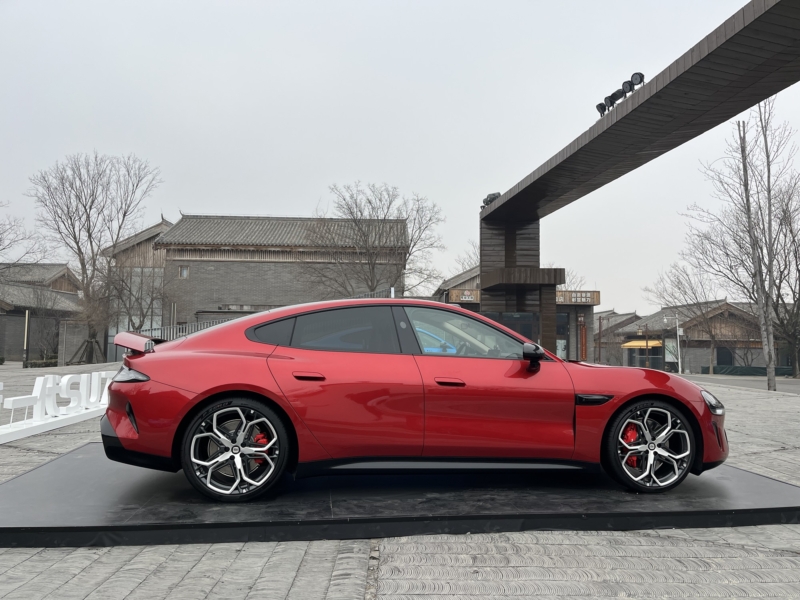
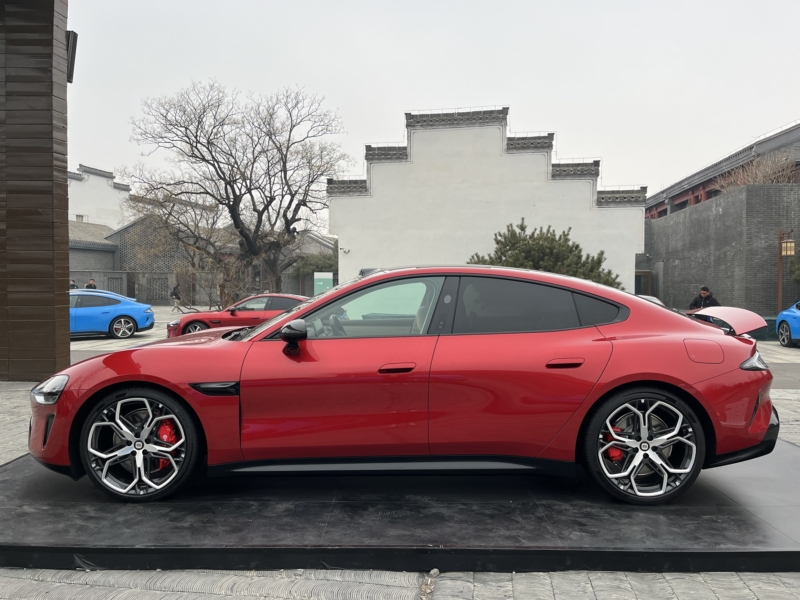
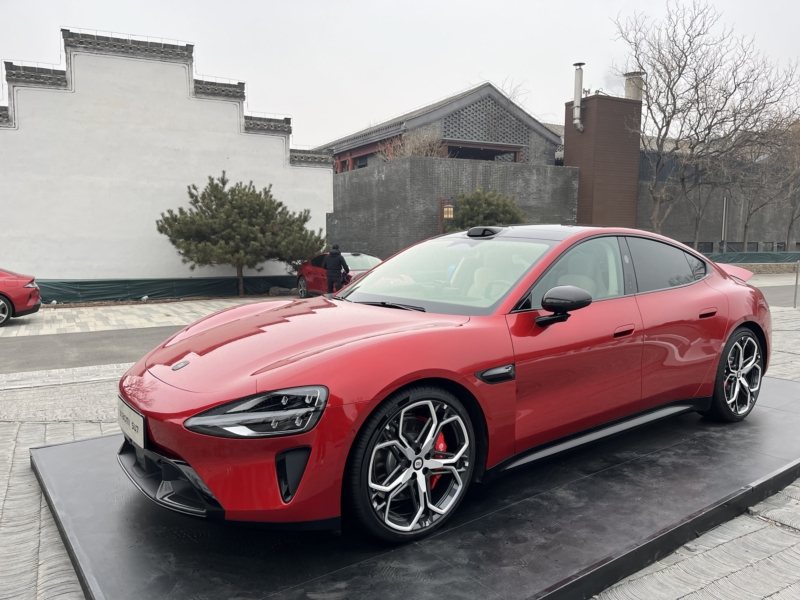
In January of this year, Xiaomi‘s new SU7 began taking pre-orders, and subsequently, its previous SU7 model was discontinued. Last night, the new Xiaomi SU7 officially launched, receiving 15,000 non-refundable orders within 34 minutes.
Exactly a week ago, I test drove the new Xiaomi SU7.
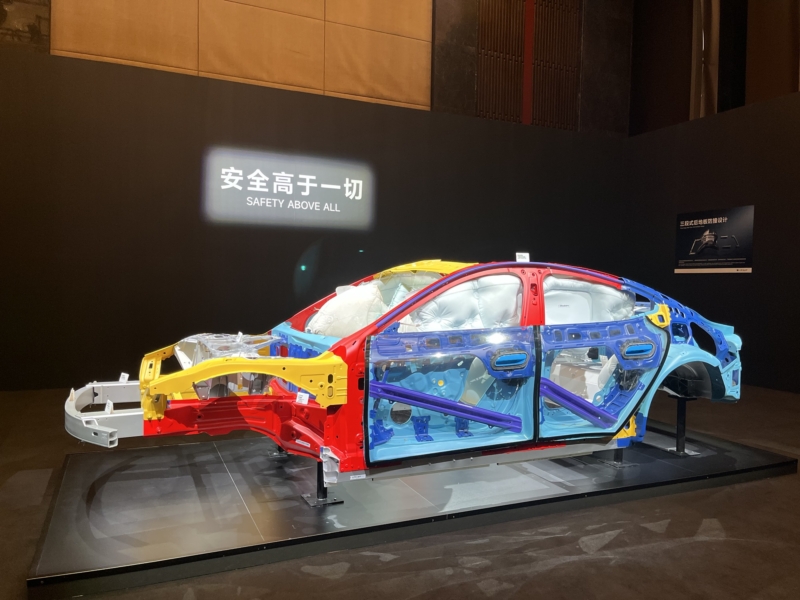
The day before my test drive, Xiaomi staff provided an overview of the car’s upgrades, with a particular emphasis on safety. They even presented a Xiaomi car frame, allowing people to experience how to open the doors after a power failure. Frankly, Xiaomi has done an excellent job in terms of safety, the 2200MPa high-strength steel used in multiple parts of its body is arguably the hardest in the industry today.
First encounter with city autonomy: nerves and trust
Our test drive began at 8:30 AM in downtown Beijing. Xiaomi’s advanced driver assistance systems (ADAS), named HAD (Hyper Autonomous Driving), supports a “parking space to parking space” function. However, when the assisted driving system first started to steer the vehicle out of the parking space, I, being a first-time user of this feature, felt a bit nervous and quickly took over control.
After exiting the garage, I reactivated the autonomous driving function. It was morning rush hour in Beijing on a weekday, and this time I decided to place more trust in the intelligent driving system. I waited for it to complete a turn at a congested intersection. It successfully executed a rather complex left turn, despite the turning lane being obstructed by other vehicles. Nevertheless, I must admit, I was holding my breath and ready to intervene at any moment.

The turn signal paradox
Our destination was a park approximately 80 kilometres away, requiring us to navigate both city roads and a highway to get there. While using assisted driving in the city, I noticed an issue: my car seemed to, much like some drivers (and myself when I first learned to drive), occasionally forget to turn off the turn signal after changing lanes.
Later, I realised it wasn’t forgetting to turn off the signal like me, rather, it was continuously attempting to change lanes to the right, but vehicles in the right lane weren’t giving it an opportunity. The result was that the new Xiaomi SU7 kept its right turn signal on while continuing straight because it couldn’t find a chance to merge.
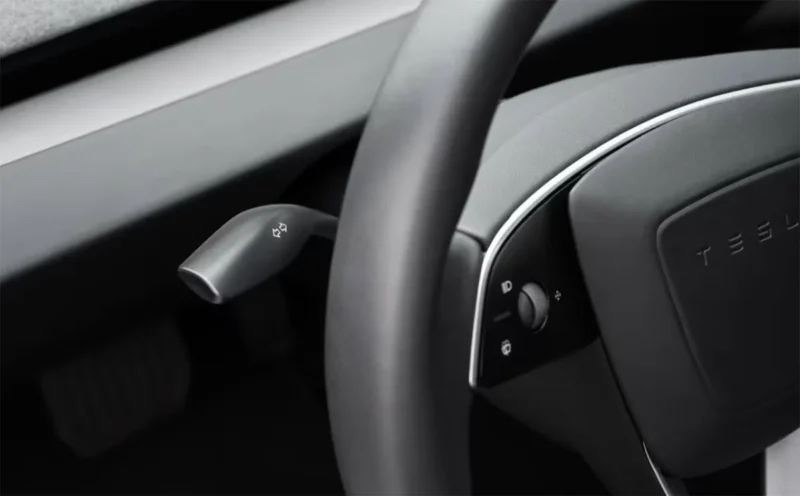
It’s worth explaining a common reality on most roads in China: the use of turn signals is extremely rare. Do you remember when Tesla removed the physical turn signal stalks from the Model 3 and moved the controls to the screen? Actually, this change didn’t affect many Chinese drivers much, because they basically don’t use their blinkers anyway.
Turn signals exist to inform following vehicles of your true intentions, such as turning or changing lanes. However, on most roads in China (perhaps with the exception of Shanghai, where people drive more politely), if you want to achieve your actual objective, it’s often best not to use your turn signal.
Because once the vehicle behind you in the adjacent lane knows you want to merge into their lane, they will suddenly accelerate, thwarting your lane-change attempt.
The correct approach, if you want to change lanes, is to do so abruptly when the vehicle in your blind spot isn’t paying attention, catching them off guard. As the saying goes, “All warfare is based on deception,” it is China here, we are all well-versed in “Sun Tzu’s Art of War.”
Last year, I saw a news report that Beijing was cracking down on this behaviour of changing lanes without signalling, as it had become so prevalent. In 2024 alone, accidents caused by changing lanes without signalling or failing to yield as required accounted for 16.9% of all traffic accidents.
A friend who lives in Beijing told me his trick for driving on the road is to start signalling only mid-lane change.
See, you ADASes still have a lot to learn.
So, when the assisted driving system tried to change lanes far in advance of an elevated road entrance or exit, the result was simply driving straight with the right turn signal continuously on.
This, of course, is not a problem specific to Xiaomi’s HAD, but rather a challenge faced by all intelligent driving systems in China. I sometimes watch videos online of various vehicle intelligent driving system experiences and find that one common shortcoming among many current systems is changing lanes without signalling or crossing solid lines.
However, this experience suddenly made me wonder: Is it possible that the intelligent driving system behaves this way precisely because it has been trained on a large volume of videos showing cars changing lanes without signalling or crossing solid lines? After all, on most roads in China, such manoeuvres are more akin to human behaviour.
At this stage, asking an intelligent driving assistance system to contend with other human drivers during Beijing’s morning rush hour is a tall order. Its only chance of successfully changing lanes is to encounter a kind driver or another car with assisted driving enabled, which might grant it an opportunity to merge.
I took over the car, completed the lane change (I used my turn signal, as I’m based in Shanghai), and then returned control to the intelligent driving system.
Highway experience with a few snowflakes
So, it’s no disgrace for Xiaomi or any other intelligent driving system to fail at changing lanes on Beijing roads during rush hour, a law-abiding human driver would face the same dilemma. However, a small experience on the highway later made me feel that Xiaomi’s intelligent driving system still has some room for improvement.
After getting onto the highway, a very light snow began to fall for a short period. Soon after, I saw a “Lidar is blocked” message on the car’s screen.
At this point, when I tried to activate the assisted driving function again, the vehicle informed me that since the lidar was blocked, assisted driving could not be engaged.
This I found incomprehensible. While I lack experience using assisted driving on urban roads, I am a heavy user of assisted driving on highways. To be precise, for almost all my driving mileage, once I pass a toll booth and enter the highway, I activate lane keeping and adaptive cruise control.
For any company’s intelligent driving solution, highway-assisted driving is the simplest because there are no traffic lights, no turns, and no interactions with pedestrians or non-motorised vehicles. So, when you see news about an intelligent driving solution driving thousands of miles from Los Angeles to New York without any human intervention, don’t take it too seriously, because the vast majority of that journey consists of highways, which any basic intelligent driving solution can handle. The true test of an intelligent driving system’s capability is navigating city roads like Beijing during peak hours.
But now, because there might be a few small snowflakes on the lidar, I was unable to use the most basic lane-keeping and adaptive cruise control functions on the highway. From a hardware perspective, this might be a current limitation of lidar, but I believe that from a software perspective, Xiaomi’s intelligent driving system still needs improvement in this area – specifically, it should still offer basic assisted driving functions, such as lane keeping and adaptive cruise control, even if the lidar is unusable, as these functions do not necessarily rely on lidar themselves.
Let me put it this way: a major upgrade for the new Xiaomi SU7 is that all models are equipped with lidar, whereas the old SU7 Standard version did not have lidar. So, in a similar situation, such as a little snow falling, would it affect the old SU7 Standard’s ability to use basic assisted driving functions on the highway?
I don’t think so. Because the most basic assisted driving functions don’t require lidar at all. I have used assisted driving countless times in heavy downpours with a car that didn’t have lidar.
What Xiaomi’s intelligent driving system needs to do is, when its lidar is blocked, to “pretend” the vehicle isn’t equipped with lidar at all, allowing users to access those intelligent driving features that don’t require lidar participation. After all, the purpose of upgrading to lidar is not to lose the ability to use assisted driving in certain specific scenarios.
Aside from this minor drawback, Xiaomi’s assisted driving system is very effective.
The complete package: flawless product excellence
Beyond that, this car has all the advantages. I can’t find any fault with its handling, chassis, interior, or design. Last month, The Wall Street Journal published an article titled “I Test Drove a Chinese EV. Now I Don’t Want to Buy American Cars Anymore.” I don’t know if you’ve seen it, but the article is behind a paywall, but its title summarises the article well.
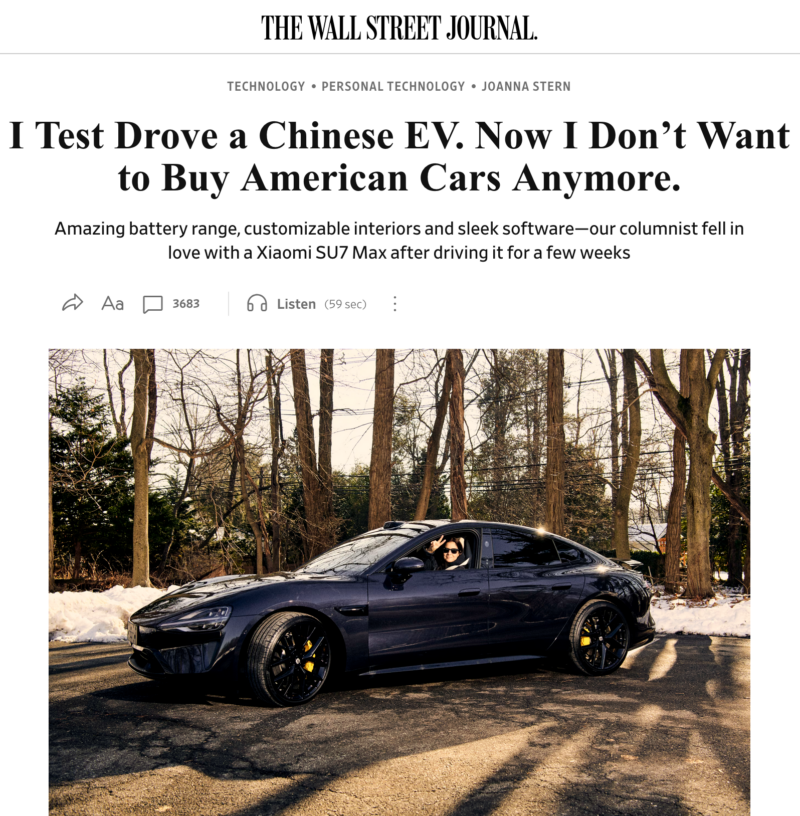
The author of that article test drove the SU7 Max launched two years ago. In that piece, the author said that every time she got into her Ford Mustang Mach-E, she couldn’t help but think of the Xiaomi SU7 Max. Ah, the Mach-E – I’d bet when she said she got into the Mach-E, she meant getting into the driver’s seat, because the second row of that thing is practically unusable.
About three or four years ago, when American cars still had a chance in China, you could see the Mach-E sold in shopping malls. I merely looked at its second-row space in the showroom and abandoned the idea of a test drive. Only three or four years have passed, and I dare say that a Mach-E like that would be too embarrassed to be sold in China today.
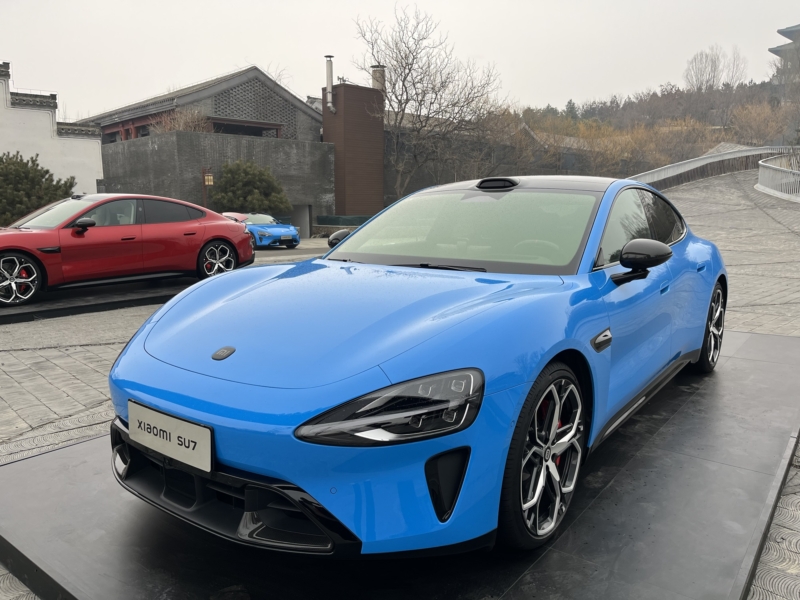
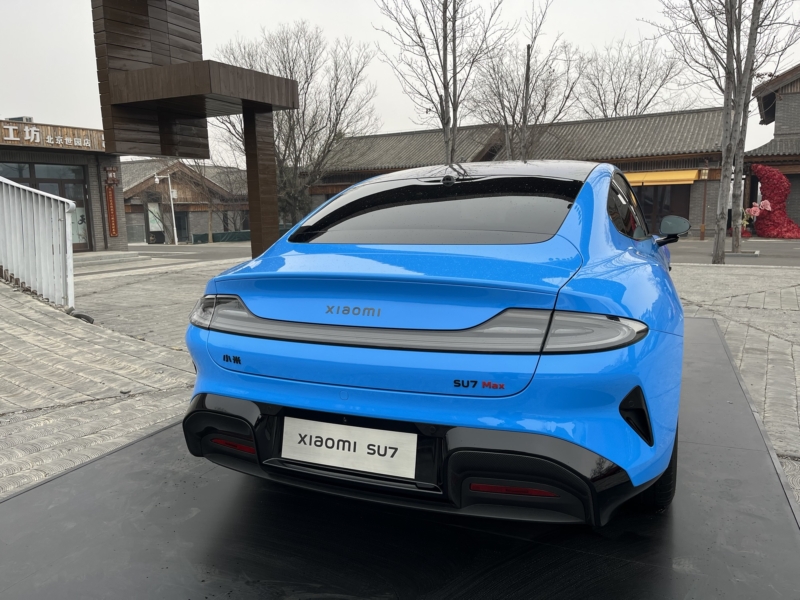
The author drove the previous generation SU7 Max, while I test drove the new SU7 Max, which boasts numerous upgrades.
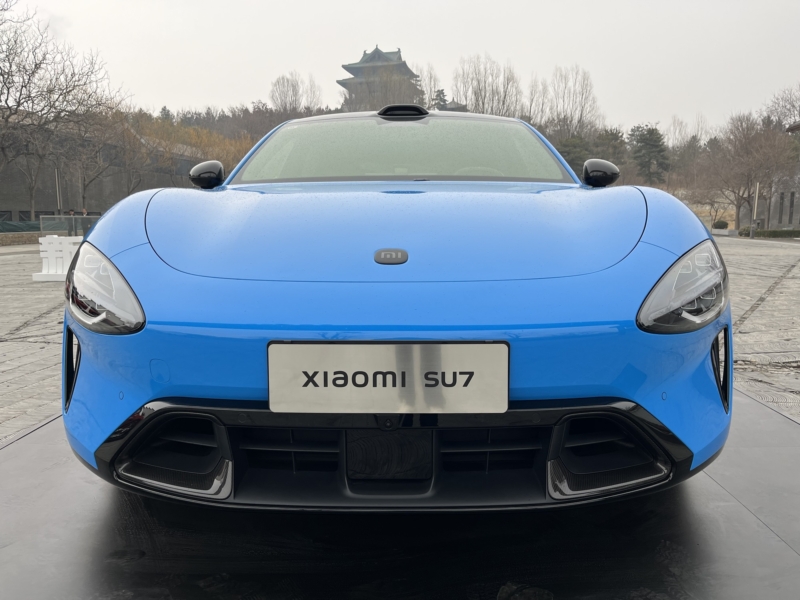
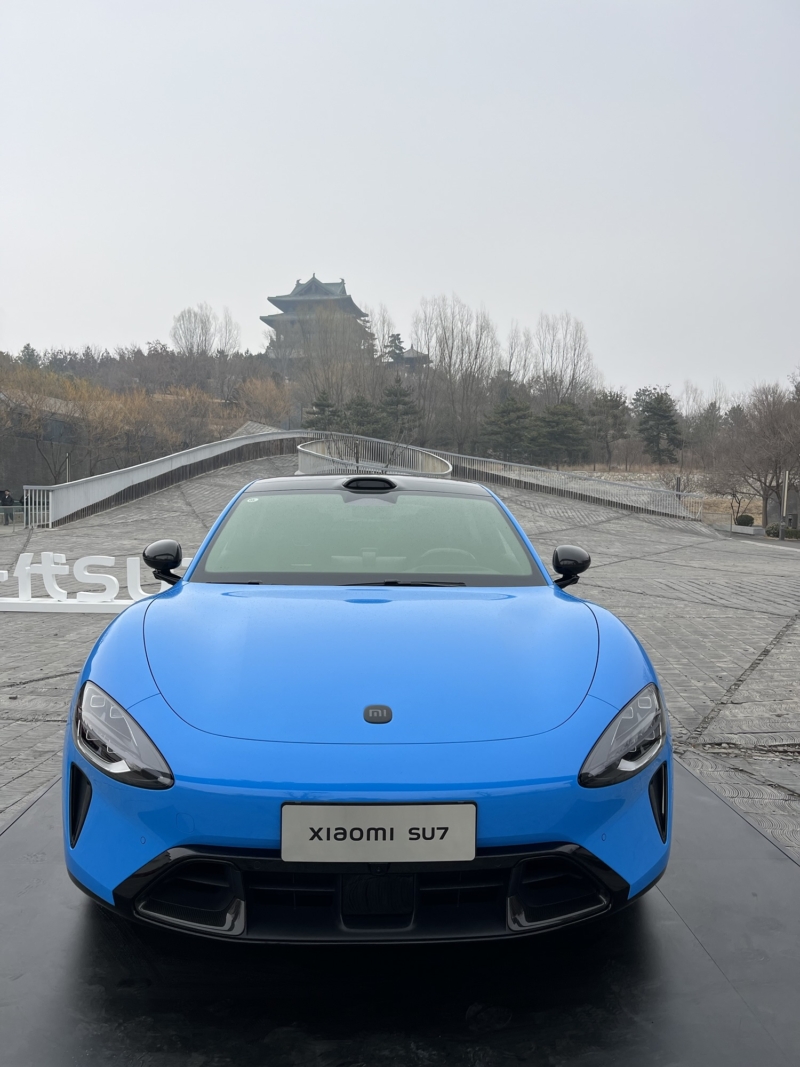
Regarding the merits of the new Xiaomi SU7, I don’t think I need to elaborate. At its price point, it offers exceptional value, and its sales performance is proof – it is the best-selling sedan in the Chinese market. In every aspect, it is superior to the slightly more expensive Model 3, its major competitor.
If you want me to praise it, I can tell you that from today onwards, I agree with all the accolades from other car reviewers and video bloggers online, you’re sure to find many. The Wall Street Journal author said it might just be the Apple Car we dreamed of, and I think there’s some truth to that. This is quite interesting: in the smartphone world, Xiaomi is seen as a budget Apple, but in the automotive world, Xiaomi has become the real Apple.
Two features I’d like to note
Beyond the effusive praise for the new Xiaomi SU7, there are two features I feel need extra mention. One is CarPlay. Many Chinese car manufacturers, either out of confidence in their own infotainment systems or finding the integration with Apple CarPlay too cumbersome, do not offer CarPlay functionality. I’m pleased to see Xiaomi offer CarPlay before Tesla, which also suggests Xiaomi’s intention to sell this car overseas. After all, the Xiaomi ecosystem isn’t as popular abroad as it is domestically, and CarPlay is crucial for overseas car buyers.
Another very cool feature, whose Chinese name I’ve forgotten, but I’d call Xiaomi’s in-car IFTTT (If This, Then That). It allows you to customise combined functions, such as automatically turning on the air conditioning, activating the fragrance diffuser, and playing music after buckling your seatbelt. Like IFTTT, it offers extremely high customizability. You can also activate ready-made solutions created by others by entering a share code, or share your unique settings with others.
For example, having a “Star Wars” theme song play to welcome you aboard as soon as you get in the car? Absolutely no problem.
In summary, this was a very pleasant driving experience. However, as I haven’t driven a Xiaomi car before, beyond the specifications, I cannot compare it to the old SU7 or the YU7. In terms of driving experience, it is an outstanding performer, nearly flawless and exceptionally well-executed.


Follow us for ev updates