


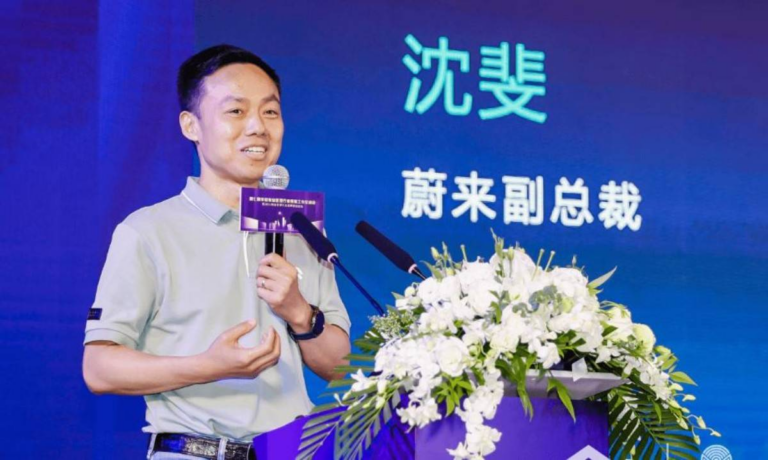

In an interview with Chinese media The Paper, Shen Fei, Nio‘s Senior Vice President and CEO of its Onvo brand, stated that given the increasingly mature charging infrastructure, large-capacity battery range extension represents a significant waste of resources. Not only do these systems occupy valuable cabin space, but the range extender unit itself, which adds an extra 15,000 yuan (2,100 USD) to the cost, also creates an unnecessary financial burden for both manufacturers and consumers.
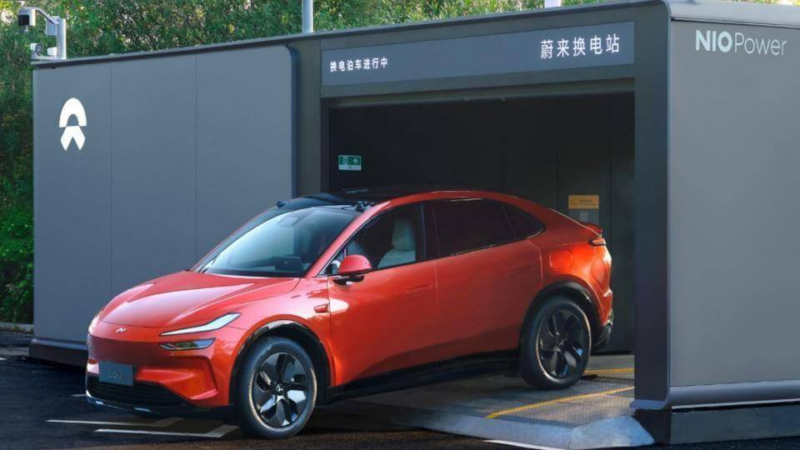
Onvo recently announced an ambitious plan to double its battery swap network capacity, adding over 8,000 new battery packs to its nationwide system by mid-January 2026. This expansion will more than double the current inventory of approximately 7,000 battery packs across 2,300 swap stations.
When questioned about the financial viability of this massive investment for Nio, which is pushing toward break-even in Q4, Shen provided a compelling economic rationale. The company plans to capitalise on peak-valley electricity price differences, potentially generating substantial returns on each battery.
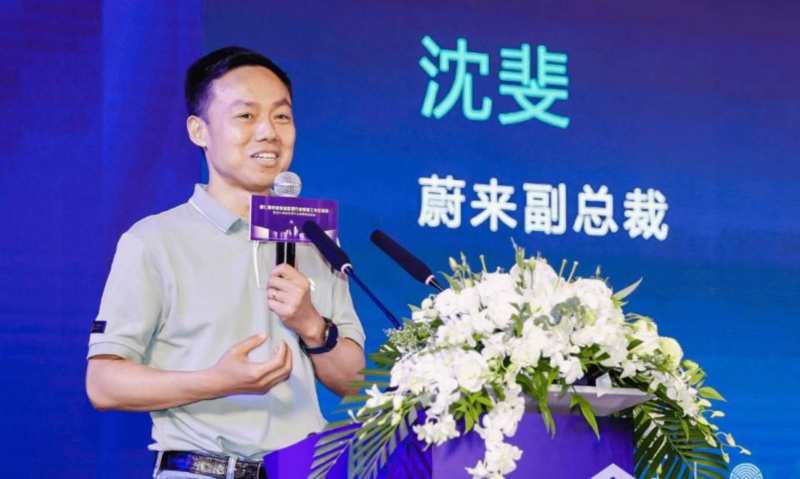
“In regions like Zhejiang, each battery in our swap stations can earn approximately 1.2 yuan (0.17 USD) per kilowatt-hour in price differentials,” Shen explained. “With an average usable capacity of 50 kWh per battery, under reasonable conditions, that translates to 60 yuan (8.4 USD) daily or roughly 20,000 yuan (2,800 USD) in annual profit per battery.” He added that nationwide, the figure averages between 12,000 to 13,000 yuan (1,680 to 1,820 USD), making the investment highly profitable over a battery’s lifecycle.
Most surprisingly, Shen revealed that approximately 40% of Onvo L90 owners, which comes standard with an 85 kWh battery, voluntarily downgrade to 60 kWh batteries under the company’s Battery-as-a-Service (BaaS) program. This not only saves customers 3,600 yuan (504 USD) in annual rental fees but also reflects diminishing range anxiety as charging infrastructure improves.
This consumer behaviour stands in stark contrast to the industry trend toward increasingly larger batteries in extended-range electric vehicles. Shen criticised this approach as wasteful in an era of improving charging infrastructure.
“Adding larger batteries and fuel tanks is merely incremental innovation,” Shen stated. “Battery swapping represents systemic innovation that requires comprehensive solutions beyond single technological approaches.”
With approximately 120,000 Onvo vehicles currently on the road compared to 2,300 available swap stations, the vehicle-to-station ratio of 60:1 already exceeds industry standards. However, Shen believes each station should ideally maintain between 4 to 7 battery packs to adequately serve customer needs across different range requirements.
Editor’s comment
At Nio’s battery swap stations, a prominent slogan often displayed is: “Hybrids culminate in pure electric vehicles, and pure electric vehicles culminate in battery swapping.” In terms of user experience, range extenders (regarding power, noise, etc.) are inferior to pure electric motors. Furthermore, with electricity prices in China being considerably lower than gasoline prices, many hybrid and range-extended vehicle owners are reluctant to use their internal combustion engines. However, their small battery capacities necessitate frequent charging, severely diminishing the overall user experience.
Automakers, recognizing this dilemma, have responded by equipping their hybrid vehicles with increasingly larger batteries. The largest example to date is likely the upcoming Leapmotor D19 range-extended model, featuring an 80 kWh battery. This capacity significantly exceeds that of most pure electric vehicles. For instance, the pure electric Onvo L90, a BEV, offers an 85 kWh battery, yet 40% of its owners actively choose to downgrade to a 60 kWh option.


Follow us for ev updates