


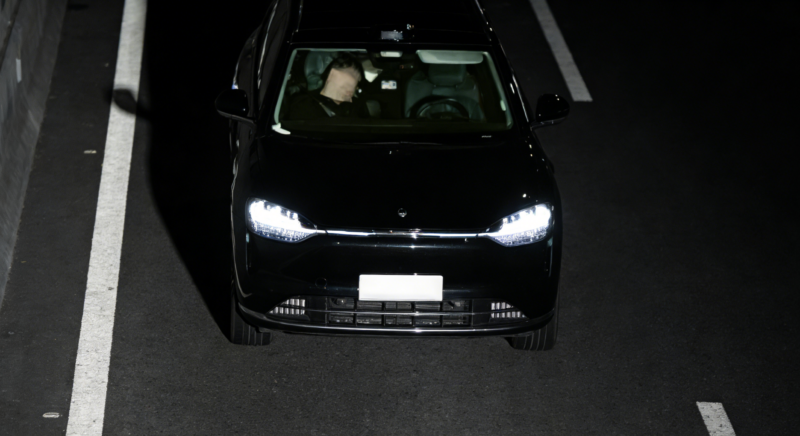
The Supreme People’s Court of China released its first criminal guiding case on road traffic safety. Case No. 271 clarifies that drivers cannot transfer driving responsibility to vehicle-assisted driving systems. Even when activating such systems, drivers remain legally responsible for the safe operation thereof. Circumventing system monitoring via aftermarket devices does not absolve the driver from liability, according to IT-home.
In September 2025, Wang Mouqun, a resident of Hangzhou’s Linping District in Zhejiang Province, drove under the influence and later engaged the vehicle’s Level 2 autonomous driving system. Using an illegally installed device referred to as a “smart driving gadget,” Wang left the driver’s seat, reclined in the passenger seat, and slept while the vehicle was in motion toward a preset destination. The vehicle stopped on a local road, drawing the attention of passersby, who called the police. Officers arrived at the scene, and blood tests confirmed a blood alcohol concentration of 114.5 mg/100 ml.
The vehicle was equipped with a Level 2 driver-assistance system. This system prompts drivers to resume control if their hands leave the steering wheel for more than two minutes and will slow or disengage if the driver fails to respond. Wang had been trained on system safety protocols and understood that activating assistance while intoxicated violated both system rules and traffic law. Despite this, he installed a device designed to simulate hands-on-wheel input, bypassing system safeguards.
Previously, Wang had his driver’s license suspended for six months in July 2024 for alcohol-related driving violations. In September 2025, the Linping District People’s Court issued a ruling (2025) Zhe 0113 Xing Chu 596, sentencing Wang to 1 month and 15 days of detention and imposing a fine of 4,000 yuan (576 USD). The judgment has since become legally effective.
Legal Interpretation
National standards (GB/T40429‑2021) define automated driving levels from 0 to 5, with Level 0–2 categorised as driver-assistance. Such systems cannot replace the driver and are technically incapable of guaranteeing safety under all road conditions. Wang’s actions are divided into two stages: conventional intoxicated driving and assisted driving with circumvention. In both stages, he is considered the responsible driver.
Under Article 133‑1 of China’s Criminal Law, driving under the influence constitutes dangerous driving. Guidance from the Supreme People’s Court, Supreme People’s Procuratorate, Ministry of Public Security, and Ministry of Justice (2023) specifies that prior alcohol-related violations within two years warrant heavier penalties. Wang’s repeated offences and circumvention of safety mechanisms led to a conviction for dangerous driving.


Follow us for ev updates