


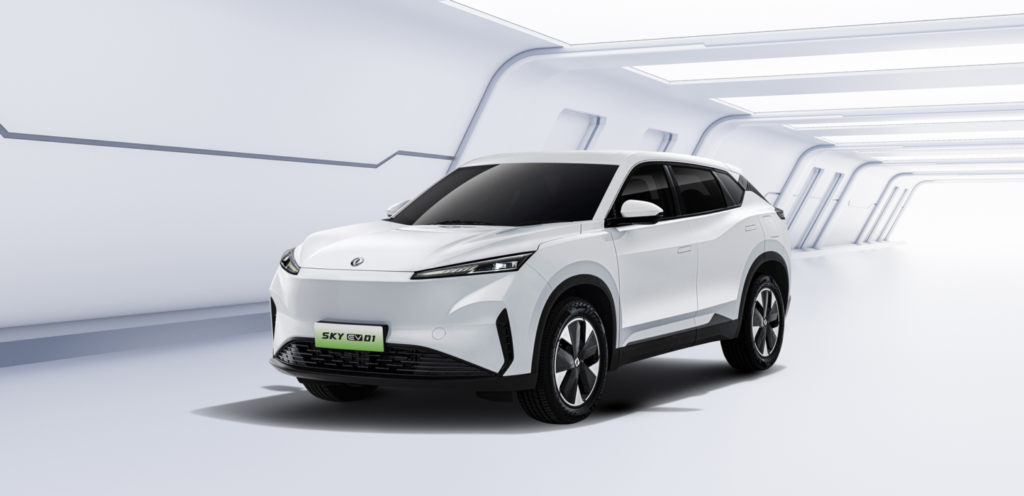

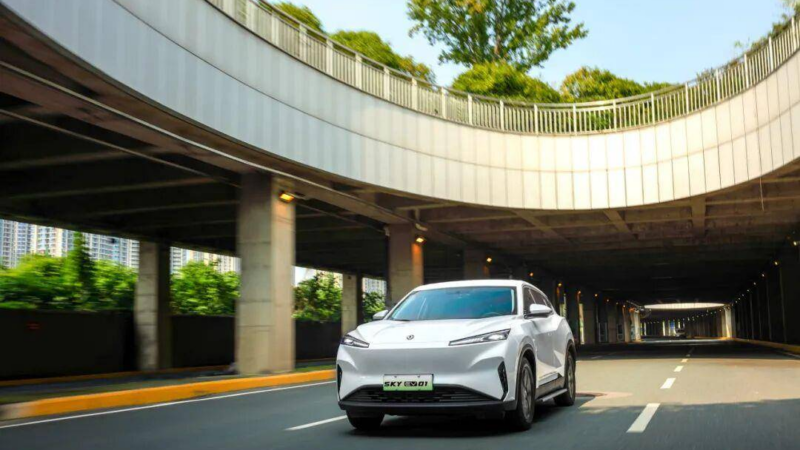
Dongfeng Aeolus launched the first mass-produced passenger vehicle, the Sky EV01, equipped with China’s independent Beidou satellite navigation system.
According to the report by Chinese newspaper Hubei Daily, the Beidou system offers particularly strong signal coverage and precise positioning in the Asia-Pacific region. Even in remote areas or weak signal zones, it ensures uninterrupted vehicle communication and reliable tracking, enhancing operational safety and user experience.
The Sky EV01, launched in 2023, is a mid-sized electric SUV with impressive dimensions of 4670/1900/1613mm (length/width/height) and a wheelbase of 2775mm. Available in two power configurations, the electric motor produces either 120 kW (161 hp) or 160 kW (215 hp) of maximum power, with 0-100km/h acceleration times of 8.6 and 6.9 seconds, respectively. The vehicle offers CLTC pure electric ranges of 445km and 520km, depending on the model.
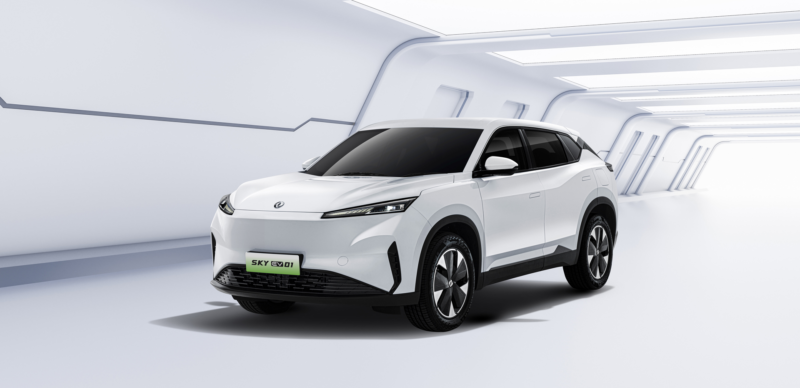
The Sky EV01 has a price point of around 120,000 yuan (16,700 USD).
About Beidou Navigation System
The Beidou Navigation Satellite System (BDS) is China’s answer to the US Global Positioning System (GPS). Since launching its first positioning satellite in 2000, China has rapidly developed the system, which now has 35 operational satellites—surpassing GPS’s 31 satellites.
Beidou, along with GPS, Europe’s Galileo, and Russia’s GLONASS, is one of the world’s four major satellite navigation systems. The Chinese system has been gaining ground globally, with 130 of the UN’s 195 member countries now having more Beidou satellites visible in their capital cities than GPS satellites.
Unlike GPS, which only sends signals to ground terminals, Beidou has both signal transmission and reception capabilities, allowing for two-way communication. This feature is particularly valuable in emergency situations and remote areas.
The Beidou system has already been integrated into over 480 million operational vehicles in China and is being used in various sectors, including transportation, logistics, fisheries, and defence. Most modern smartphones already support Beidou positioning through their processors, with brands like Huawei, Xiaomi, Oppo, Vivo, and others incorporating Beidou compatibility.


Follow us for ev updates