


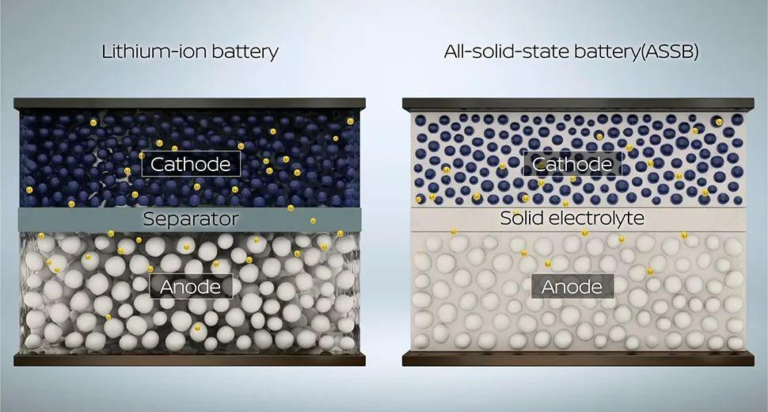

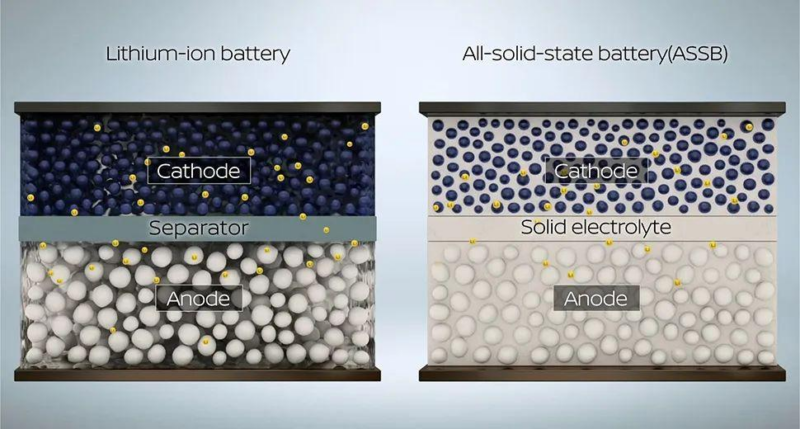
As 2026 unfolds, the pace of solid-state battery commercialization continues to accelerate. Following announcements that the first part of the national standard for automotive solid-state batteries is set for release in July this year, several major automotive and battery manufacturers—including Geely, Chery, BYD, and Sunwoda—have recently disclosed their technological approaches and industrial plans for solid-state batteries.
According to information obtained by Cailian Press, Geely Automobile has deployed three major technological routes in the solid-state battery field, utilizing polymer (organic), sulfide, and halide (inorganic) composite solutions to address different market demands. Simultaneously, Geely has developed specialized high-nickel ternary cathode materials for solid-state batteries and composite electrolytes with flame-retardant and self-extinguishing capabilities, along with inventing in-situ lithium dendrite repair technology.
Regarding application plans, Shen Yuan, Senior Vice President and CTO of Geely Holdings, revealed that Geely’s short-term goal is to complete prototype vehicle launches by 2026. By 2027, Geely aims to achieve small-scale industrialization of solid-state batteries with 1,000 demonstration vehicles in operation. The long-term objective is to complete the industrial layout for solid-state batteries by 2030, with mass production for high-end models. By then, Geely’s solid-state battery cell energy density is expected to exceed 500Wh/kg, with BOM costs controlled within 0.6 yuan (9 cents)/Wh.
As another major player in vehicle manufacturing, Chery Automobile has also defined its solid-state battery commercialization timeline. Gu Chunshan, Vice President of Chery Automobile, recently stated that the company plans to achieve 0.5GWh pilot line production and pack sample completion in 2026, accomplishing continuous production of 60Ah-level solid-state battery cells while strengthening supply chain development. In 2027, Chery will officially launch solid-state battery vehicle demonstration work, driving technology from production lines to real-vehicle validation and gradually achieving scaled application.
Furthermore, according to earlier news from FAW Group, its independently developed Hongqi solid-state battery prototype vehicle rolled off the production line in January this year, achieving a series of breakthroughs in key areas such as sulfide electrolytes, 10Ah cell performance, and 60Ah cell processes. The Hongqi solid-state 66Ah battery cells successfully passed extreme thermal abuse tests at 200°C, with conductivity of sulfide electrolytes exceeding 10mS/cm.
While major automakers are anchoring small-batch production targets, battery suppliers are similarly advancing solid-state battery technology development and production line planning. BYD’s investor relations department recently disclosed that the company is focusing on sulfide solid-state batteries as a key technology direction, with breakthroughs in battery life and fast charging, expecting small-batch production by 2027.
On February 2, Sunwoda responded on an investor interaction platform regarding their battery progress, stating that their first and second-generation semi-solid-state batteries have already achieved scale production, with fully solid-state batteries expected to reach mass production by 2027.
Policy guidance and industry standard improvements have clarified the development path for solid-state battery industrialization, becoming important guarantees for industry development.
On February 11, Cailian Press exclusively learned that Wang Fang from China Automotive Technology & Research Center recently stated at an industry conference that GB/T “Electric Vehicle Solid-State Batteries Part 1: Terminology and Classification” completed its drafting work for public comments in December 2025, with the comment period ending on February 28, 2026.
The center will organize validation testing from January to February 2026 to further improve test methods and confirm assessment indicators, with a comment resolution meeting scheduled for March 2026. The standard is expected to be reviewed and submitted for approval in April 2026 and officially released in July. This national standard will clarify terminology definitions for liquid batteries, hybrid solid-liquid batteries (semi-solid-state batteries), and solid-state batteries (fully solid-state batteries).
Earlier on January 13, at the 2026 annual work meeting of the Inter-ministerial Joint Conference on Energy-Saving and New Energy Vehicle Industry Development, the Ministry of Industry and Information Technology emphasized the need to enhance the autonomous control capability of industrial chains and supply chains by implementing a new round of high-quality development actions for key industrial chains. In terms of core technological breakthroughs, it called for accelerating breakthroughs in critical core technologies such as solid-state batteries and advanced autonomous driving.
“China’s battery industry maintains rapid growth with fast technological iterations, expanding application scenarios from automobiles and energy storage to robots and low-altitude aircraft. Current battery technology still requires systematic improvements, with continuous optimization needed around three major goals: all-climate fast charging, full-process safety, and high efficiency across all working conditions,” stated Ouyang Minggao, an academician of the Chinese Academy of Sciences. He added that the expansion of related application scenarios demands accelerated mass production of solid-state batteries, emphasizing that “solid-state batteries represent a major strategic direction for next-generation batteries.”
Although solid-state batteries are widely recognized in the industry as a primary future development direction, Shen Yuan believes they still face fundamental scientific challenges such as unclear material systems and microscopic interface contact failures. Engineering challenges include difficulties in controlling electrolyte film thickness, easy sedimentation of slurry, and edge shearing and collapse during isostatic pressing processes that can cause short circuits. These ultimately lead to key problems such as insufficient battery safety redundancy and poor cycle life.
“Domestic solid-state batteries in the medium term (2026-2030) will evolve along the path from semi-solid-state scale production to small-batch fully solid-state production to high-end large-scale fully solid-state production,” an industry analyst quoted by Cailian Press stated. Throughout this process, core risks such as technological route iterations, raw material supply fluctuations, and overseas patent barriers must be guarded against. Different technological approaches carry significantly different risk exposures, requiring targeted risk avoidance strategies.


Follow us for ev updates