


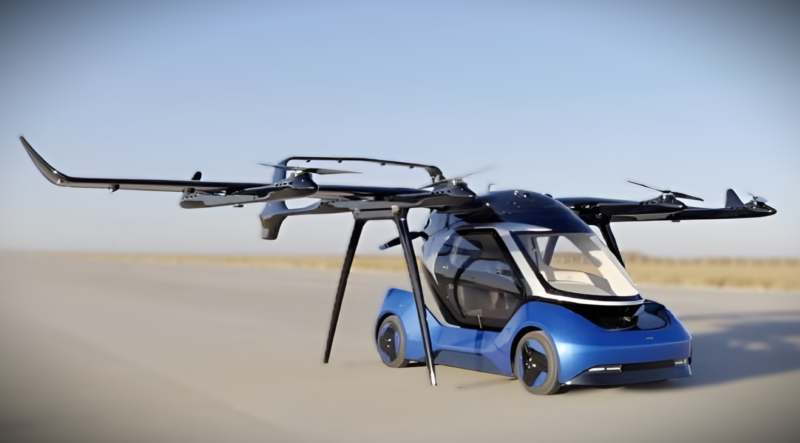
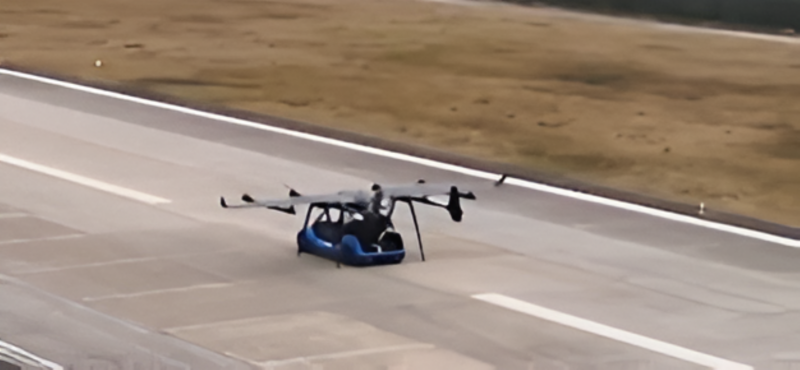
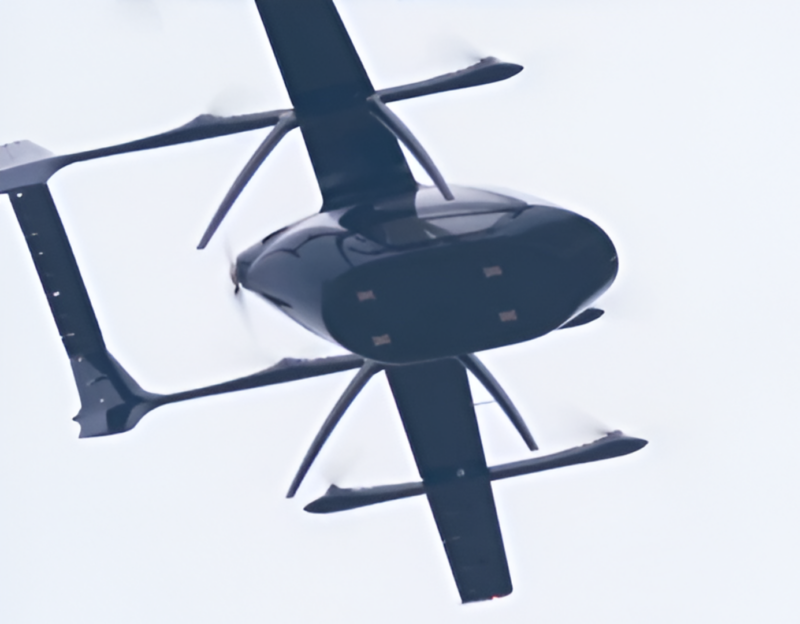
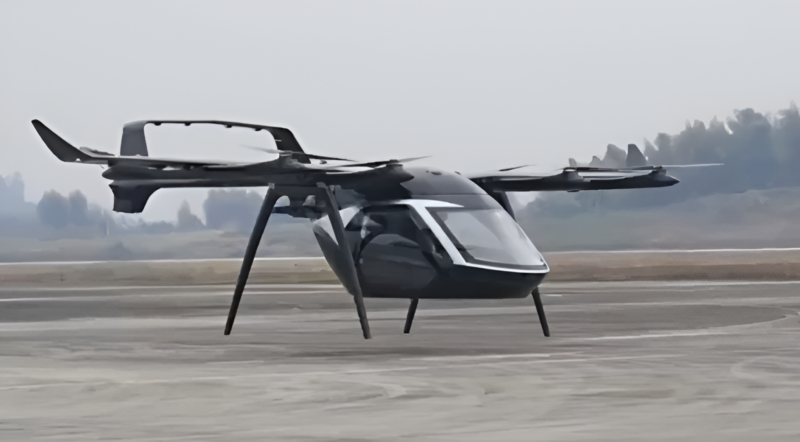
An electric vertical takeoff and landing (eVTOL) aircraft developed by the Ninth Academy of China Aerospace Science and Technology Corporation successfully flew for the first time on February 6, at Yongchuan Da’an Airport in Chongqing Municipality. The flight marks the first test of this specific modular eVTOL design, which can operate both in flight and on the ground, according to People’s Daily.
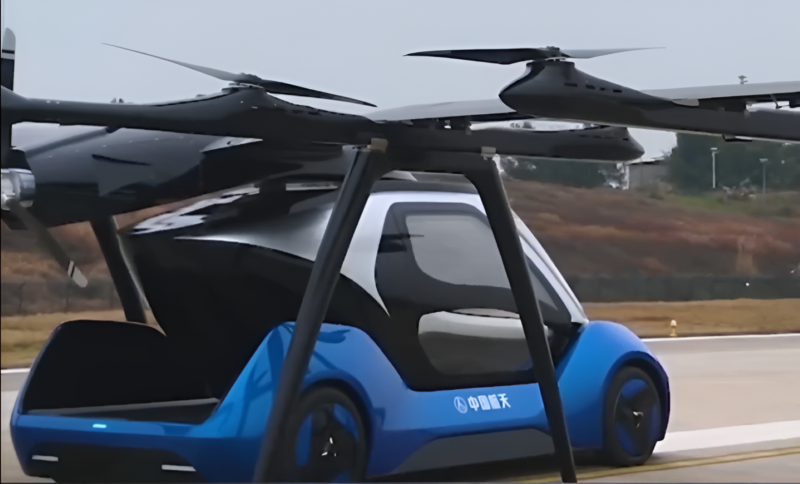
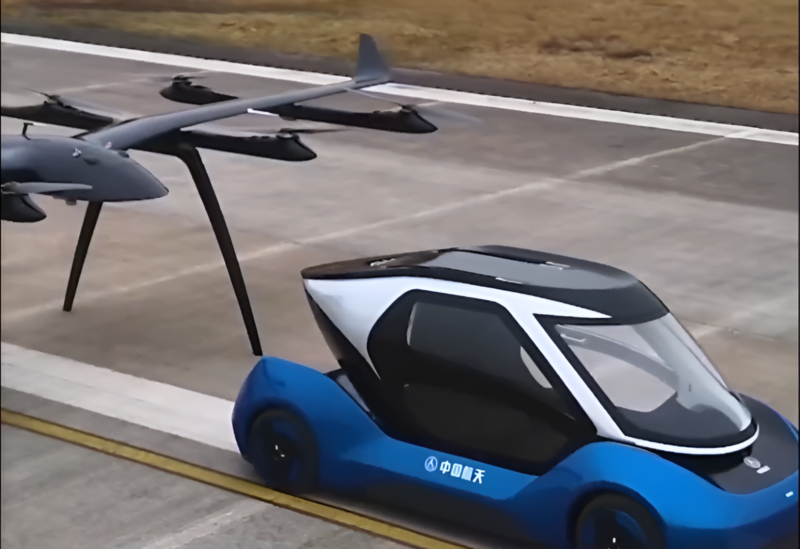
The vehicle uses a split-type configuration with three main components: wings, a central cabin, and a chassis, forming an airborne module and a road-going module. During the flight test, the airborne module carried two passengers at speeds up to 150 kilometres per hour at altitudes below 3,000 metres. The land module, based on a fully electric, intelligent, by-wire chassis, offers a reported driving range exceeding 300 kilometres.
The modular design includes an automatic alignment and detachment mechanism that enables programmed connection and separation between the airborne and land modules. Developers state that this arrangement supports customizable cabins, various chassis types, and multiple wing configurations to accommodate different operational requirements.
The aircraft was developed in compliance with airworthiness standards and integrates technologies from both aerospace and automotive domains. Potential applications include urban transportation, logistics, and emergency response.
The successful flight completed initial performance verification tasks, including controlled vertical takeoff, forward-flight stability, and transitions between air and ground modes. Further flight testing and regulatory approvals are required before operational deployment.
This project shares conceptual similarities with Xpeng’s eVTOL initiatives, including modular flying-car designs such as the X2 and the Land Aircraft Carrier. Xpeng’s X2 completed crewed test flights in 2023 and has performed multiple trans‑river and lake flights in China. Both the CASC and Xpeng platforms integrate electric flight with ground mobility, but Xpeng’s efforts are commercial EV-led, while CASC’s project is state-led and currently at the demonstration phase. The CASC modules are physically separable units, whereas Xpeng’s flying car stores the eVTOL within a larger EV chassis.
The first flight adds to recent developments in China’s low-altitude aviation sector, where multiple entities are advancing eVTOL designs and related certification efforts.


Follow us for ev updates