


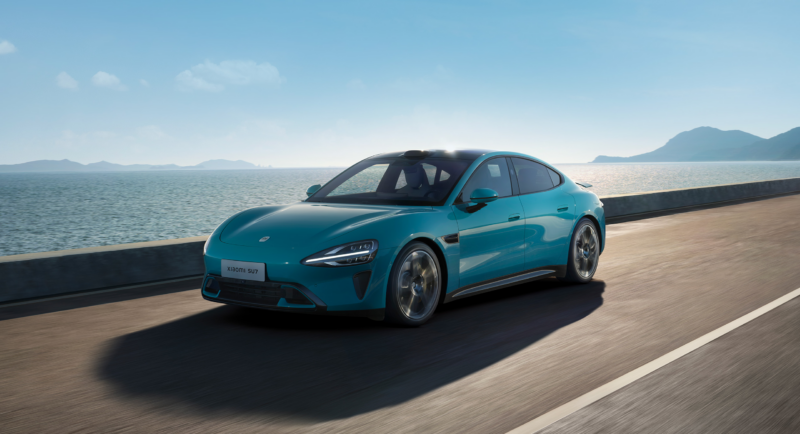
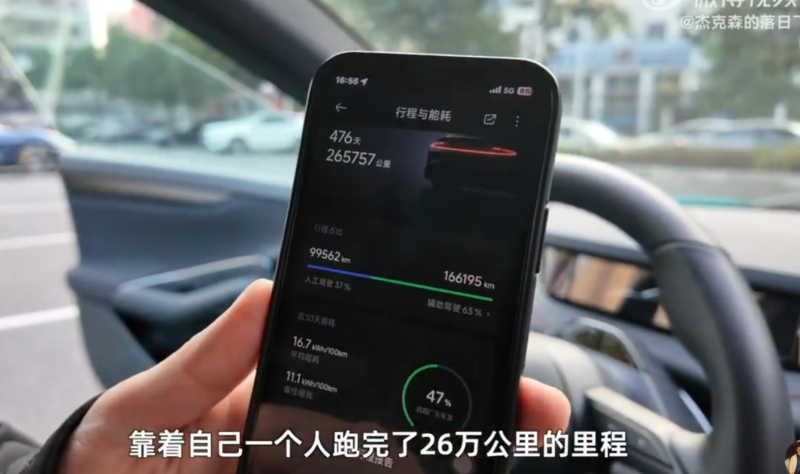
In a testament to electric vehicle durability, a Xiaomi SU7 owner has reported his vehicle retains 94.5% battery health after accumulating 265,000 kilometers (approximately 165,000 miles) in 18 months of ownership.
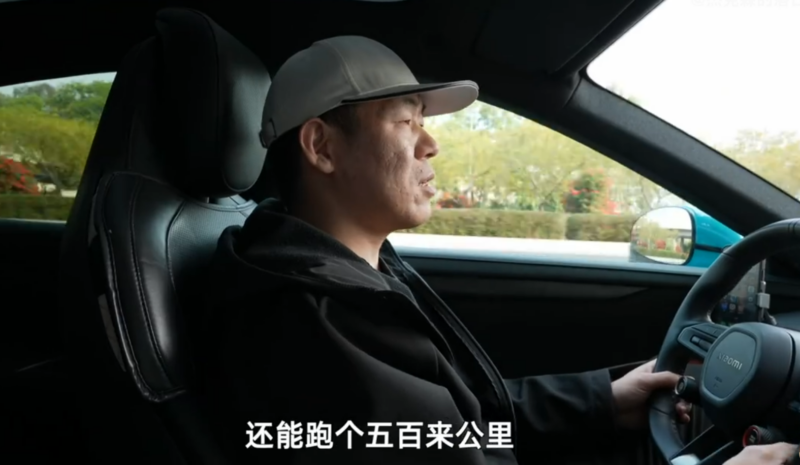
“Xiaomi staff told me the results, and I was genuinely shocked,” said Mr. Feng, the vehicle owner. “I had assumed it would be down to 90% at best. To see 94.5% was truly surprising.”
The data came from the owner’s Xiaomi SU7 Pro rear-wheel-drive model, which has been driven an average of 600 kilometers daily—almost equivalent a round trip between New York and Boston. This intensive usage pattern would be challenging even for conventional gasoline vehicles to maintain until the end of their service life.
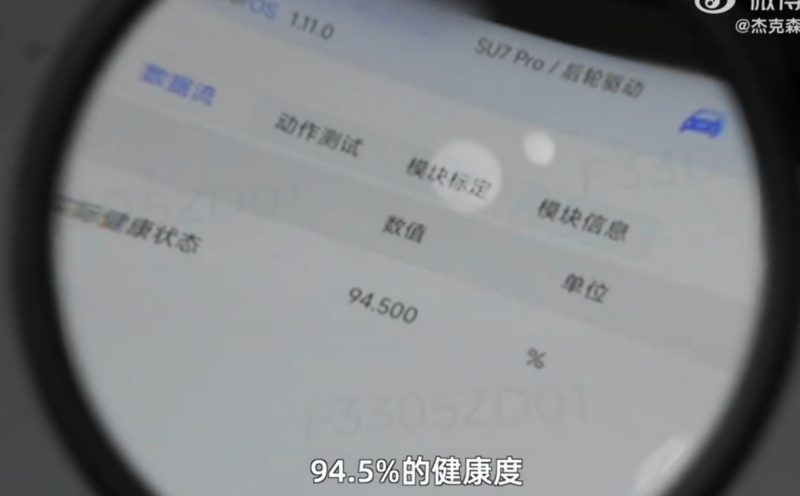
The vehicle’s battery pack, with a capacity of 94.3 kWh, has theoretically undergone approximately 506 complete charge-discharge cycles based on an estimated energy consumption of 18 kWh per 100 kilometers. In practical terms, the actual number of partial charging cycles is likely much higher, as most EV owners follow the 20-80% charging recommendation rather than fully depleting the battery before recharging.
Industry context makes this achievement particularly noteworthy. Most electric vehicle manufacturers warranty their batteries for 8 years or 150,000 kilometers, with acceptable degradation thresholds of 20-30%. Even Tesla, known for battery technology leadership, warranties its Model 3 and Y rear-wheel-drive versions for 8 years or 160,000 kilometers, with a minimum retained capacity requirement of 70%.
Beyond battery performance, the vehicle shows minimal wear on other components. Tire tread depth remains at 8mm—within normal new car specifications—and the vehicle has never needed brake pad replacement. The coolant contains zero percent water, maintains proper purity levels, and has a freezing point of -38°C.
The data was shared by social media user “Jackson’s Sunset Drive” in a video (in Chinese) that has garnered millions of views on Weibo and Bilibili combined. The topic has sparked extensive discussion, even catching the attention of Lei Jun, Xiaomi’s CEO, who shared the post.

Mr. Feng now plans to push the boundaries further, aiming to become the first person to drive an SU7 to 600,000 kilometers within three years.
“I’ve calculated the operating costs,” Feng noted. “Compared to a conventional vehicle, I’ve saved over 100,000 yuan (14,300 USD) in fuel costs alone.”
This real-world demonstration of electric vehicle longevity comes at an interesting time for Xiaomi. The first-generation SU7 has officially ended production, with a new version expected to launch in April 2026. For current owners concerned about residual value, this durability data provides reassurance that their vehicles may maintain performance far beyond typical warranty periods.
While one vehicle’s experience doesn’t necessarily represent the entire fleet, this SU7’s journey offers a rare glimpse into the potential longevity of modern electric vehicles under intensive use conditions.


Follow us for ev updates